Beyond the Showroom: What Actually Drives the Price of Solid Wood Furniture in Singapore
I still remember the Tuesday I spent forty minutes trying to fit a 2.4-metre dining table through the service lift at a Punggol Waterway Terrace block. The lift opening measured 1.2 m wide x 2.1 m high. The table, in its crate, was 2.45 m long. It would not tilt sideways because the dining chair legs caught the ceiling rail. Two movers, one engineer, and one very patient neighbour holding the corridor door open later, we worked out that the table would only fit if we removed the legs first, brought them up separately, and reassembled in the flat. That single afternoon taught me more about solid wood furniture pricing than three trade shows ever did. Logistics is a real cost line — and in Singapore, it is one of the most underestimated.
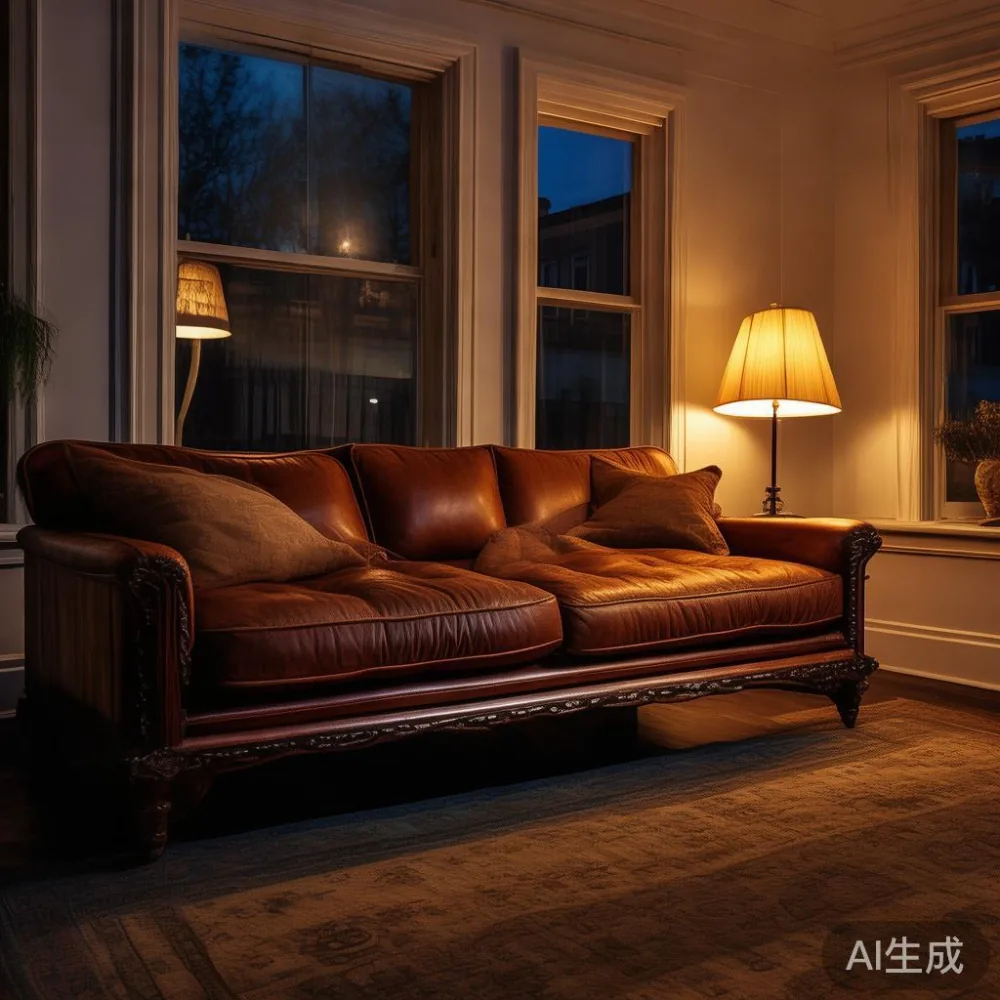
If you have ever compared two solid wood sofa listings that look almost identical in the photos and found a SGD 1,800 gap between them, the photos are not lying to you. Something underneath is different. The same goes for a bed frame, a dining table, a wardrobe, or a nightstand. Below, I want to walk through the ten cost drivers I see most often when sourcing from a Foshan maker such as MIDHILL — a brand that has been pressing, kiln-drying, and assembling solid wood pieces since the late 2000s and now ships to more than fifteen countries from its Guangdong base.
1. The Species of Wood — and Why "Solid Wood" Is Not One Category
Solid wood furniture pricing starts at the sawmill. In the Foshan cluster where MIDHILL operates, three species dominate the export catalogue: Chinese ash (Fraxinus mandshurica, sometimes labelled "ash wood"), white oak (mostly Quercus alba imported through Shanghai ports), and rubberwood (Hevea brasiliensis, a by-product of the latex industry). Each one has a different cost curve.
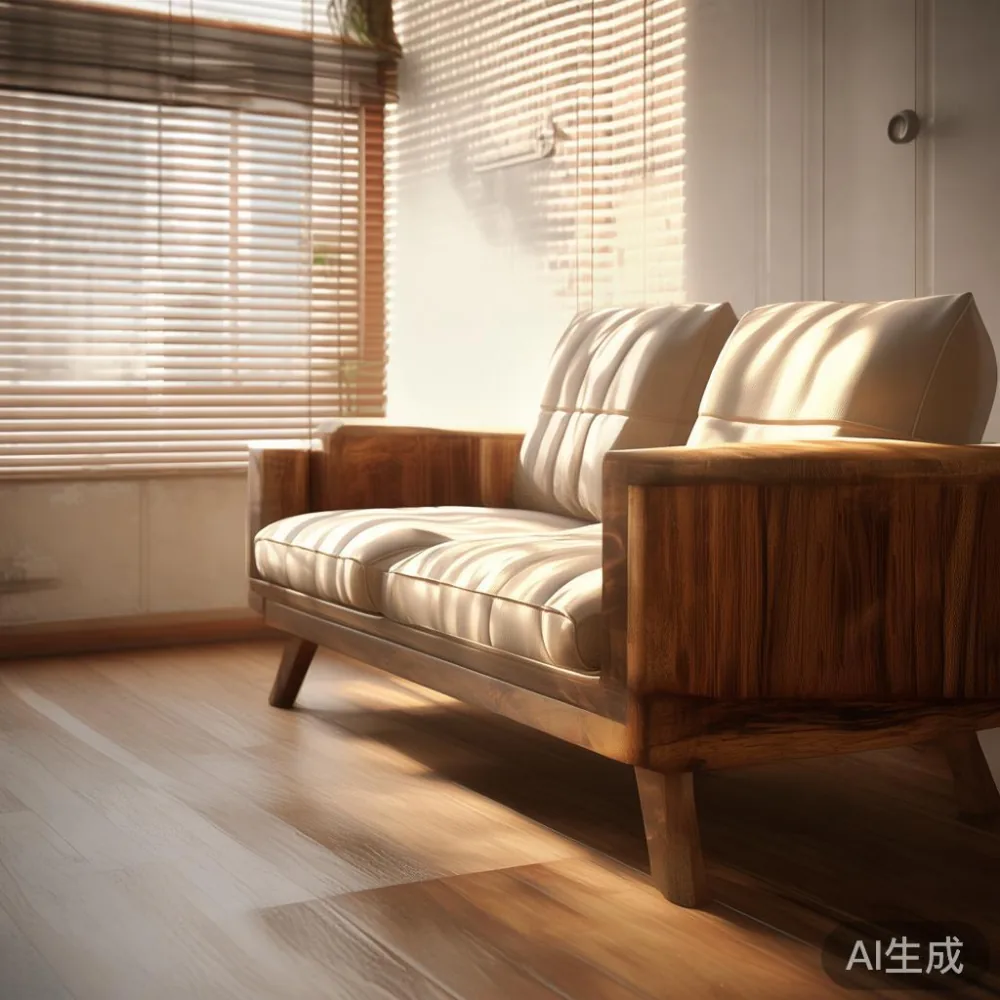
Chinese ash sits in the middle of the range and is the workhorse behind most mid-priced solid wood sofa frames I have seen in Tampines and Bedok showrooms. A sofa frame in ash, kiln-dried to 8–10% moisture content, will typically cost the manufacturer 35–50% less than the equivalent frame in white oak. White oak, the species most often associated with French light luxury and post-modern light luxury silhouettes, can run 1.8–2.4× the price of ash per cubic metre, and it is also slower to dry (28-day cycles versus 14–18 days for ash), which ties up factory capital.
Rubberwood is the budget end. It is genuine solid wood, not an engineered panel, but the Janka hardness is roughly 1,800 N — about half of white oak. It dents. For a dining table that sees daily family use in a four-room HDB, I would personally avoid it. For a bedside nightstand that holds a lamp and a book, it is acceptable if the price difference is meaningful to you. Knowing the species — and the kiln schedule — is the first price driver most shoppers never ask about.
2. Kiln-Drying, Moisture Content, and the Singapore Climate
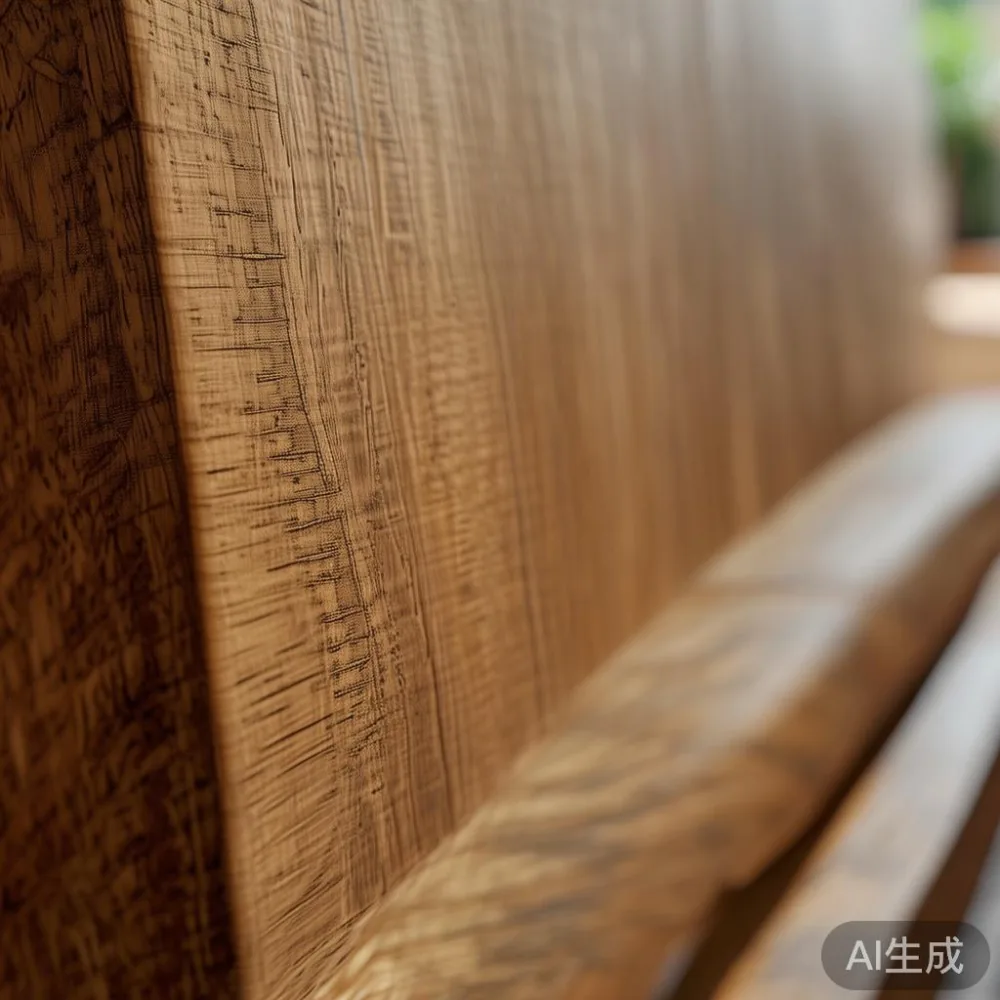
Singapore sits at roughly 1°N latitude with average relative humidity of 80–90% for most of the year. Furniture built for export often starts life in a Foshan or Dongguan factory where the indoor humidity is closer to 60–70%. If the wood is not dried to a moisture content matching the destination climate (roughly 10–12% for a tropical interior), the piece will move once it lands in your Punggol flat. Drawers will swell. Table tops will cup. Bed-frame side rails will crack.
Proper kiln-drying is expensive. A modern dehumidification kiln in Guangdong costs a manufacturer anywhere from SGD 60,000 to SGD 180,000 to install, plus electricity. A 14-day schedule for ash at 2.5 cm thickness, plus a 7-day conditioning cycle, then a 3-day equalising period, ties up about 6 m³ of kiln space per dining table. That is real floor space the factory cannot use for other orders. I have walked into factories that run three shifts on the kilns and others that run one. You can smell the difference — well-dried wood has almost no scent; under-dried wood smells faintly of sap and will tickle your nose in a closed room.
For a buyer in Singapore, ask the brand what moisture content they kiln to, and whether they acclimatise the wood for at least 48 hours after assembly before packing. MIDHILL publishes a 10-year structural warranty partly because they have invested in this step. Most warranty claims on solid wood in the tropics trace back to moisture mismanagement at the factory, not to design faults.
3. Joinery: Mortise-and-Tenon, Dowel, or Just Screws?
Open the door of a wardrobe and look at the top corners. If you see a triangular wooden key driven into a slot, that is a corner-lock joint — a version of mortise-and-tenon. If you see a wooden peg with no key, that is a dowel joint. If you see a metal cam lock or a hex screw, that is a knockdown fitting meant for flat-pack.
Mortise-and-tenon is the strongest, the quietest (no squeaks in a bed frame at 2 a.m.), and the most labour-intensive. A trained joiner can produce about 12–18 mortise-and-tenon joints per day on a CNC-assisted line, versus 40–60 dowel joints or 80+ cam-lock assemblies. That labour differential flows straight into the price. A bed frame with mortise-and-tenon corners will typically retail 20–35% higher than an equivalent dowel-joined version in the same wood.
For dining tables, look underneath the top. A solid wood top with breadboard ends, glued and pinned with elongated slots (not round holes) so the top can expand and contract, is the mark of a thoughtful maker. The slots take longer to route. The breadboard takes longer to fit. The price reflects it.
2.1 What is the difference between Post-modern king bed and modern furniture?
A Post-modern king bed is a king-size bed frame (roughly 183 cm x 191 cm mattress footprint) whose silhouette borrows from the post-modern light luxury vocabulary: thick frame proportions (often 8–12 cm rather than the 4–6 cm of slim modern frames), softened edges with rounded fillets rather than crisp 90° corners, and a headboard upholstered in a textured boucle or velvet rather than left as bare wood, while the structure itself remains solid wood — typically ash or white oak — with mortise-and-tenon corner joinery. Modern furniture, by contrast, refers to the broader design movement that prioritises clean horizontal lines, exposed joinery, tapered legs, and minimal ornamentation, often in lighter wood tones with thinner frame profiles (4–6 cm) and very little upholstery. In short, a Post-modern king bed is a specific size and style category within solid wood bed manufacturing, whereas modern furniture describes a wider design language that can apply to any piece — from a nightstand to a dining table to a wardrobe — and across many sizes.
That distinction matters when you are price-comparing. A Post-modern king bed at 183 cm x 191 cm uses more board footage than a queen (152 cm x 191 cm), more upholstery labour for the headboard, and heavier corner joinery. A queen version from the same production line will typically retail 18–25% lower in SGD.
3. Finish — Lacquer, Oil, Wax, or Conversion Varnish?
Finish is one of the easiest places for a showroom to cut cost and one of the hardest for a buyer to detect. In Foshan factories, the four common finishes behave very differently.
NC lacquer (nitrocellulose) is the traditional choice. It builds a thin film on the wood, polishes to a high gloss, and feels cool to the touch. It is also the easiest to repair — a light buff and re-spray, and the scratch disappears. A seven-coat NC finish on a dining table top adds roughly SGD 180–260 to the factory cost versus a two-coat sealer.
PU (polyurethane) lacquer is tougher, more chemical-resistant, and the standard for export-grade kitchen cabinetry. It yellows slightly over time, which buyers either love or hate. PU costs about 10–15% more than NC at the factory gate.
Hardwax oil — Osmo and similar — soaks into the wood rather than sitting on top. The surface feels warmer, more matte, and is repairable with a re-coat and a cloth. The trade-off is lower resistance to water rings and wine spills. Hardwax oil is the finish I most often see on post-modern light luxury dining tables and on marble table tops with a solid wood base, where the customer wants the wood grain to read clearly.
Conversion varnish is the toughest, used on commercial bar tops and restaurant tables. It is rarely used on residential solid wood furniture because the smell takes 30+ days to fully off-gas and Singapore homes are small. If a salesperson offers you a conversion-varnish finish on a residential dining table, ask why.
4. Hardware — The Quiet SGD 200 You Never See
On a four-door wardrobe, hardware can account for SGD 180–420 of the landed cost without you ever noticing. Soft-close hinges from Blum or Hettich run SGD 8–14 per hinge at trade price. Standard zinc alloy hinges run SGD 1.20–2.50. A wardrobe with eight doors has 16 hinges. The math is straightforward. Drawer slides are the same story: full-extension soft-close slides at SGD 18–32 per pair versus basic roller slides at SGD 3–6.
On a solid wood sofa, the suspension system underneath the cushions is another hardware line. Sinuous springs (the S-shaped wire) cost less and feel bouncier; webbing (jute or polypropylene) costs more in labour and feels plushermold sensation but sags faster; eight-way hand-tied coils cost the most and last the longest. The price gap between a sinuous-spring sofa and an eight-way hand-tied sofa in the same upholstery can exceed 40%.
5. Upholstery, Foam Density, and What Goes Inside the Cushion
If you are buying an upholstered solid wood sofa or a Post-modern king bed with a fabric headboard, the inner fill is more important than the cover fabric. Foam is sold by density (kg/m³) and by indentation load deflection (ILD). For a daily-use sofa seat cushion, look for 32–35 kg/m³ density with an ILD of 30–40. Anything below 28 kg/m³ will bottom out within 18 months.
Down-wrapped foam (a foam core wrapped in a down-and-feather ticking) is the post-modern light luxury default. It looks soft, sits soft, and requires regular fluffing. A 60/40 down/feather wrap on a 32 kg/m³ core adds about SGD 320–480 per three-seater sofa versus foam-only. That is why two sofas that look identical in the showroom can be priced a full tier apart.
For pet owners shopping for sofas in Singapore — and I have helped a friend in Bedok Reservoir source one — also look at the cover fabric. A removable, washable slipcover in a tight weave will outlast any "pet-proof" marketing claim. If your concern is claws and fur, mention it; a sensible brand will guide you toward a performance weave rather than the softest boucle. This is also the natural place to flag that the same wood-frame discipline applies to Modern solid wood pet furniture such as raised feeding stations or crate-side tables — the wood species and the finish matter as much there as they do on a dining table, because the pet furniture will be wiped, licked, and chewed.
6. Marble, Stone, and Hybrid Pieces — Why a Marble Table Costs More Than the Marble Itself
A marble table with a solid wood base is a hybrid product, and hybrid products carry costs from two supply chains. The marble top — usually a 2–3 cm slab of Carrara, Calacatta, or Guangxi white — is cut, edged, sealed, and then mounted on a kiln-dried solid wood base. The marble itself is heavy: a 1.6 m round top in 2 cm marble weighs roughly 95–110 kg. The base must be engineered to carry that load without racking, which usually means thicker corner blocks and a central stretcher.
On the factory floor, marble processing adds a separate dust-control cost, a separate polishing line, and a separate QC station. A small chip on a corner can ruin a top; insurance and rejection rates add 4–7% to the marble line's unit cost. None of this is visible in the showroom, but it is in the SGD.
When pricing a marble table, ask whether the top is sealed with a penetrating sealer (which needs reapplication every 12–18 months) or a surface coating (which lasts longer but can scratch). Both are acceptable; what matters is that the answer is specific.
7. Logistics: Lift, Corridor, Staircase, and the Singapore-Specific Layer
This is the layer I learned about in Punggol. Older HDB blocks in Bedok and Tampines have lift openings closer to 0.9 m wide x 2.0 m high, and corridor turns that punish long bar-length tops. Newer BTOs in Punggol and Sengkang are more generous, but the service lift door is still the bottleneck for almost every sofa. sg delivery.
Disassembly-and-reassembly at the flat adds roughly SGD 120–280 to a typical delivery, depending on whether the crew carries basic tools or full assembly kits. Lifting a 110 kg marble top up four floors by staircase, where the lift simply will not take it, can add SGD 380–650. This is not padding; it is the actual physical work plus the insurance the mover carries.
Brands that quote flat-rate shipping above a threshold — MIDHILL, for instance, offers free shipping above US$350 to most export markets — have absorbed some of this uncertainty into their pricing. Brands that quote "free delivery, lift-level" often mean exactly that: the movers will hand you the boxes at your lift door and you are responsible for getting them inside.
8. Warranty, Returns, and the Lifetime Refinishing Question
Solid wood furniture can be refinished. A dining table top that has water-ring damage can be sanded back to bare wood and re-finished, typically two or three times across the life of the piece depending on top thickness. A brand that offers lifetime refinishing has priced that future labour into today's SGD. It is a quiet form of insurance.
A 10-year structural warranty on a bed frame, a wardrobe, or a dining table covers joint failure, frame cracking under load, and significant finish delamination. It does not cover surface scratches, sun fading, or damage from prolonged moisture exposure (a Singapore balcony in the afternoon rain is a moisture exposure). Read what is not covered as carefully as what is.
A 14-day return window is now standard for cross-border furniture e-commerce. The catch is usually the return shipping cost on a 60–110 kg package. If the brand offers free returns within 14 days, that is meaningful. If the brand deducts 50% restocking, that is also meaningful, but in the other direction.
9. The Question Buyers Ask Me Most Often
Do I really need solid wood, or is engineered wood acceptable?
For a sofa frame, the answer depends on how long you want the sofa. A solid wood frame should outlast a plywood-and-MDF frame by a comfortable margin — 15–25 years versus 6–10 — but the cushion, the upholstery, and the suspension will all need refreshing on the solid wood sofa before the wood gives out. For a bed frame, solid wood makes a clearer difference because the joinery at the corners carries real cyclic load every night. For a wardrobe, the side panels bear the weight of hanging clothes plus shelves, and solid wood resists sagging better than MDF at the same thickness.
For a nightstand, the load is small. Here, a high-quality plywood with a solid wood face veneer can be a rational choice if the price difference is meaningful to you, and if the brand is honest about what is inside.
10. Putting the SGD Together — A Worked Example
Here is a transparent worked example using the cost drivers above. Take a Post-modern light luxury dining table in white oak, 1.8 m x 0.9 m, with breadboard ends, a hardwax oil finish, and a metal-trimmed base.
White oak board footage at factory gate: roughly SGD 720 for the top alone. Mortise-and-tenon base joinery, including the breadboard: SGD 180–240 in labour. Hardwax oil, seven coats, with hand-buffing between coats: SGD 220. Hardware (levelers, corner brackets, anti-tip strap): SGD 45. Quality control and packing (2.2 m crate, foam, edge protectors, ISPM-15 stamp-duty corners): SGD 95. Inland freight from Foshan to the Singapore consolidator: SGD 110. Sea freight, Singapore port, customs, and GST at 9% on the landed value: SGD 280. Last-mile delivery to a fourth-floor HDB in Tampines, with assembly: SGD 160.
Add the factory overhead and a 22–28% margin, and the dining table lands somewhere around SGD 2,350–2,950. If you see the same specification at SGD 1,200, one of those lines is being under-spent. Usually it is the kiln schedule, the joinery, or the finish — in that order of how often I have seen it cut.
11. Sofa SG: How to Read a Sofa Price Tag Without Guesswork
For a solid wood sofa in Singapore, the questions I would ask before paying are simple and specific: what species is the frame, and is it kiln-dried to what moisture content; what joinery at the corners; what suspension; what cover fabric, and what foam density; what finish on the exposed wood arms and legs; what warranty in years, and what does it exclude; what delivery included, and what is the lift access at my block. With those seven numbers, you can compare any sofa sg listing against any other without trusting the photograph.
That is the entire game. The price of solid wood furniture is not mysterious — it is just specific. Once you can name the species, the joinery, the finish, the hardware, the foam, the logistics, the warranty, and the aftercare, the SGD makes sense. And the photo, finally, stops doing all the work.