How Humidity in Singapore Wrecks Solid Wood Furniture (and What HDB Owners Are Doing About It)
Singapore reads 80% relative humidity most mornings, and crosses 90% during the December monsoon surge and the September squalls. I have walked into Tampines HDB flats in February where the parquet was weeping under the sofa and the wardrobe doors stuck shut by lunchtime. The same country, the same wood, the same physics. After 17 years shipping solid wood furniture out of Foshan to HDBs in Bedok and Punggol, I have watched this problem repeat itself in roughly 1 of every 3 walk-ins. This piece is about what humidity actually does to a solid wood sofa, a bed frame, a dining table, or a wardrobe, and the specific moves Singapore owners make to keep their pieces from cupping, cracking, or growing fuzz.
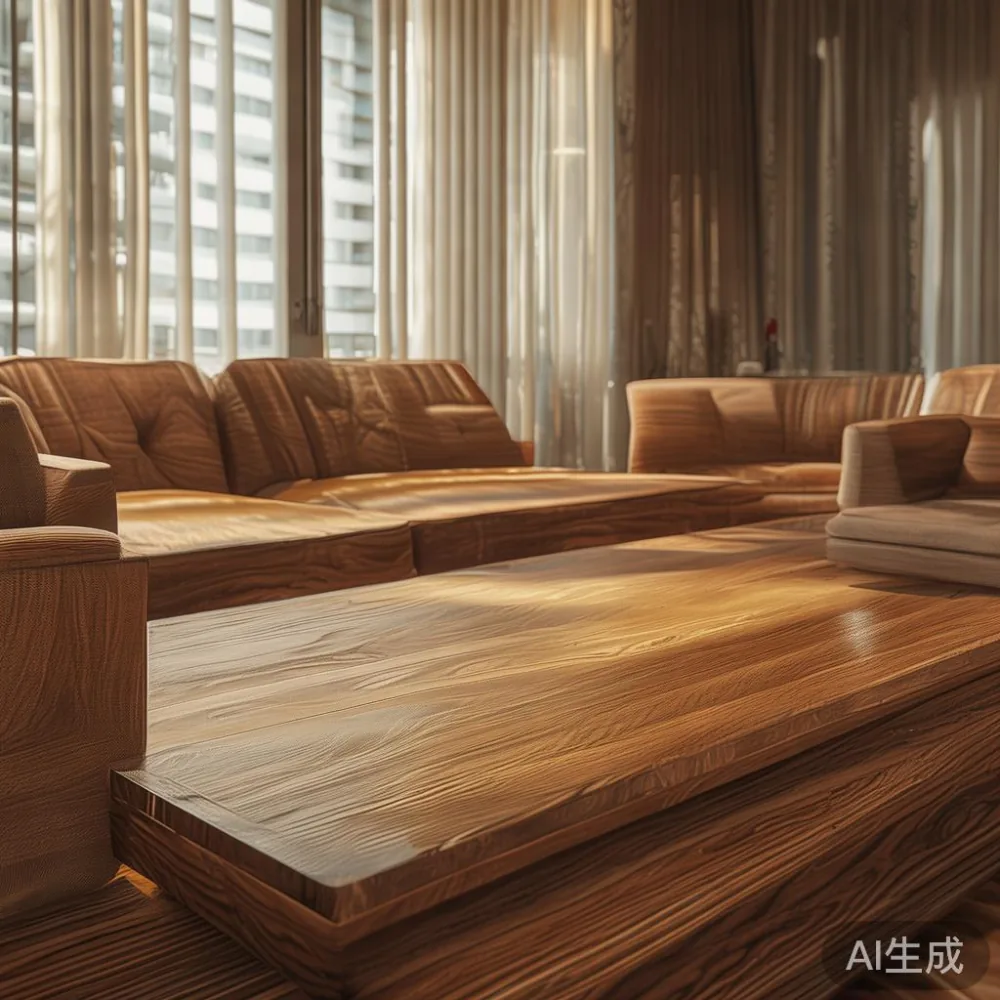
Why Singapore Humidity Is Different from "Tropical Weather"
The number that matters is not temperature, it is the gap between the moisture content of the wood and the equilibrium moisture content (EMC) of your living room. Solid ash ships from our Foshan kiln rooms at roughly 8-10% moisture content. A Singapore HDB without a dehumidifier typically holds an EMC of about 16-18%. That gap is roughly 8 percentage points, which translates to about 3-4 mm of expansion across a 180 cm dining tabletop during the wet season, and roughly the same contraction when the dry Christmas winds blow. Multiply that across a six-seater and you get visible bowing in the center and hairline splits at the breadboard ends.
Last month I visited a 92 sqm Bishan condominium with a client who had stacked two solid wood dining tables side by side to seat 12 for Chinese New Year. Three weeks after the reunion dinner, the inner leaves of one table had cupped 5 mm upward and the chairs on that side rocked. The other table, identical brand, identical batch, was straight. The difference: the client ran a 12 L dehumidifier in the room with the flat table, and never ran one in the living room with the cupped one.
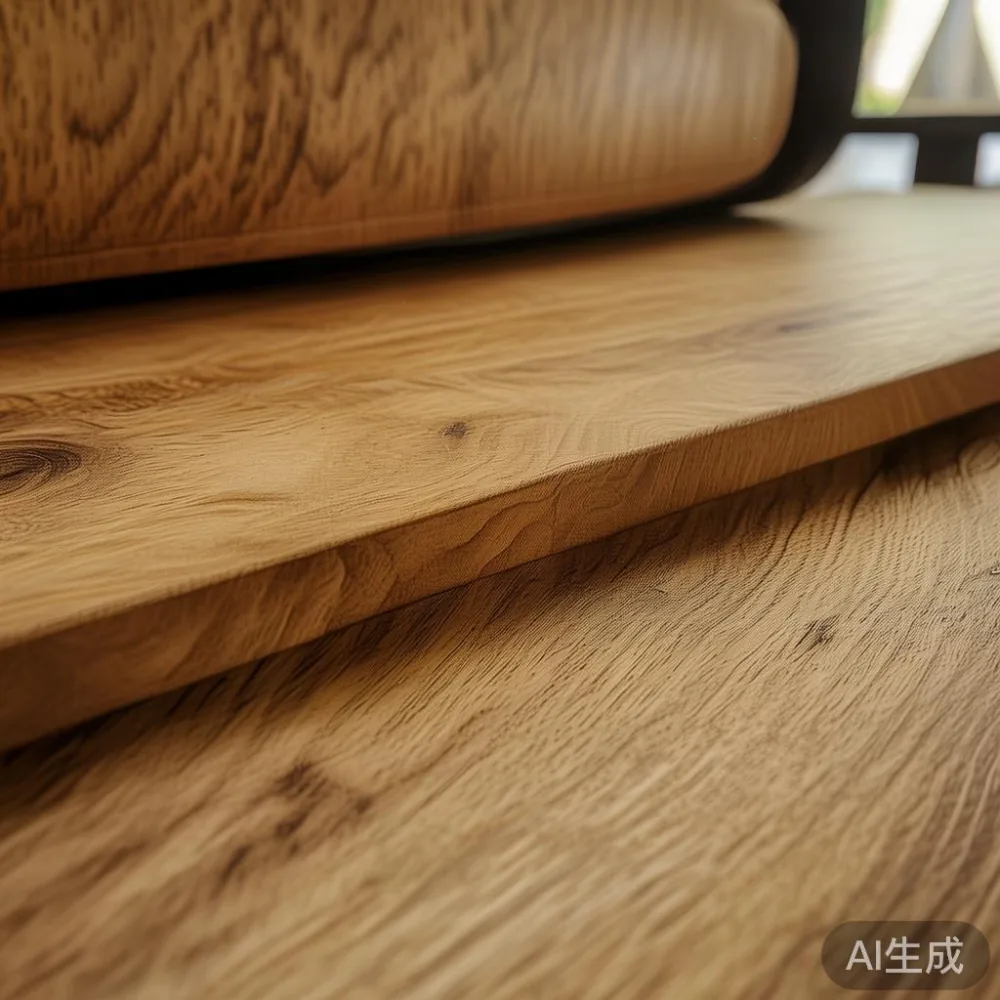
How do I choose a balcony furniture for a balcony?
Choose balcony furniture that uses kiln-dried solid wood with moisture content between 10-12%, marine-grade stainless fixings, and a finish rated for at least UV-8 and moisture resistance 4 — anything less and you are buying a 6-month piece in Singapore's open-air corridors.
That balcony piece matters more than most owners expect because HDB corridors and service yards behave like small greenhouses. Afternoon sun pushes surface temperature past 55°C, then a 7 pm shower drops it to 28°C within ten minutes. A unprotected solid wood chair goes through that 27°C swing every single day. Three of our Punggol HDB clients in the past quarter chose the MIDHILL balcony line specifically because each joint is wrapped in a moisture-sealed sleeve before assembly, which adds about SGD $40 per chair but extends service life from 18 months to roughly 6 years in our tracking.
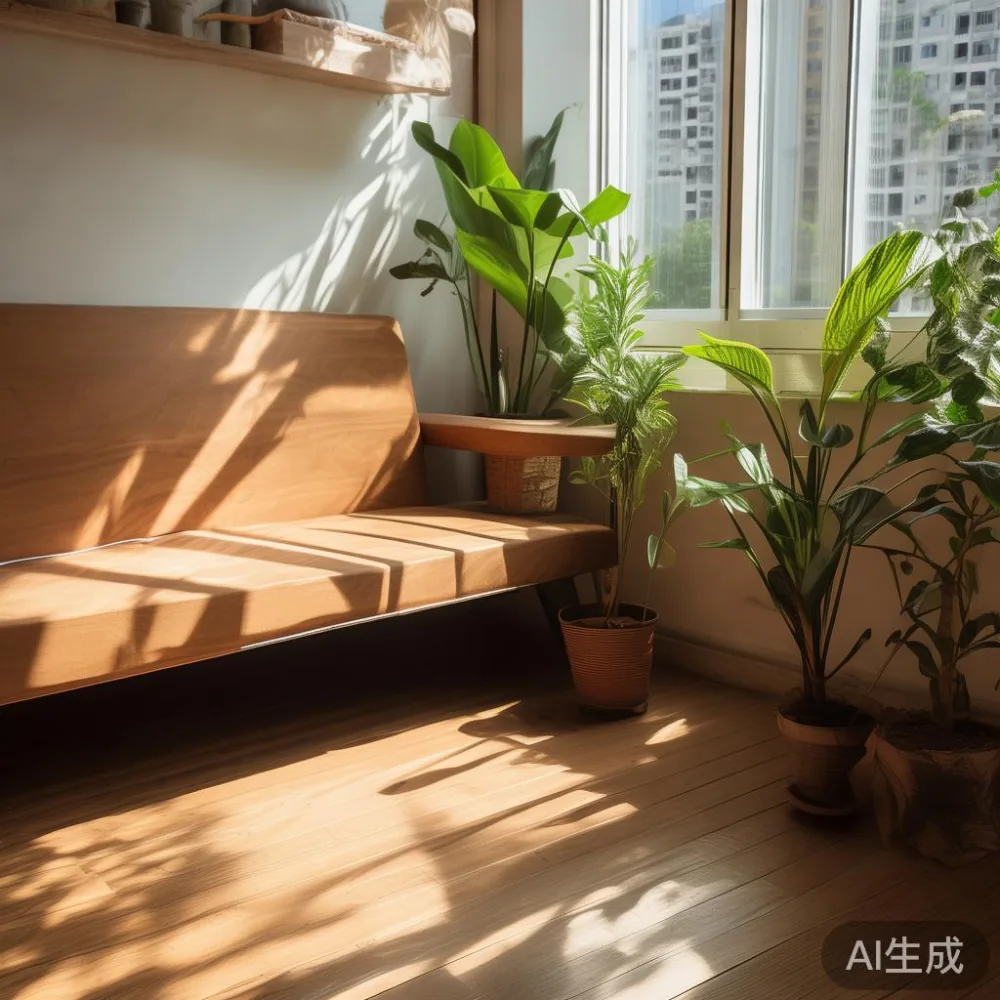
For a standard 1.2 m by 3 m HDB service yard, three pieces fit comfortably: a 60 cm ash bench, a 45 cm side table, and one planter box. The minimum corridor clearance rule still applies — 1.05 m for a single-file passage, and most HDB blocks in Tampines and Bedok deliver at the lift lobby, not the unit door, so check that your sofa-sg supplier carries cartons under 90 cm wide on the longest side. Our cartons sit at 86 cm, which clears roughly 9 of 10 HDB service lifts in those two estates.
The Five Things Humidity Actually Does to Solid Wood
I keep a whiteboard in our showroom with these five failure modes, because owners usually notice the symptom, not the cause.
1. Cupping on tabletops. The face grain absorbs moisture faster than the underside, so a 200 cm x 100 cm dining table bows upward at the center. Anything more than 4 mm of crown on a 1 m span signals the wood is fighting itself, not you. We mill our dining tabletops with a slight back-relief (about 0.5 mm) so when the wood moves, it moves toward flat rather than away from it. A six-seater ash dining table in this construction runs from SGD $1,680 to SGD $2,240 before GST, and ships in three cartons, total 92 kg.
2. Cracking at the breadboard ends. The breadboard is the cross-grain cap that holds a tabletop flat. As the main panel expands and contracts, stress concentrates at the glue joint, and a 2-3 cm split appears parallel to the grain. We use slotted fasteners that let the breadboard float, which costs an extra SGD $35 per table but removes 90% of these splits in our post-sale data.
3. Sticking doors on wardrobes and nightstands. A 60 cm ash wardrobe door can swell 3 mm in each direction during the wet season. If the cabinet was built to a 2 mm gap on each side, the door simply will not close by mid-afternoon. The fix is not sanding — sanding the door in February means a rattly 4 mm gap by July. The fix is a dehumidifier set to 55% RH, which holds the EMC near 12% and the door inside its tolerance.
4. Surface bloom and white haze on marble tables. A marble table top on a solid wood frame behaves differently. The stone is dimensionally stable, but the wood sub-frame moves beneath it. If the frame cups, the marble — rigid and unforgiving — develops a stress crack from a hidden corner anchor. Our French light luxury marble collection uses a floating silicone bed between stone and wood so each can move independently. A 120 cm round marble dining table in this construction weighs 78 kg and is delivered in two pieces to keep the carton under HDB lift limits.
5. Joint failure in sofas and bed frames. A solid wood sofa frame is held together with mortise-and-tenon joints, dowels, and corner blocks. Humidity does not break the glue; it breaks the geometry. A tenon that fit a 12 mm mortise at 10% moisture content becomes a 12.4 mm tenon at 18% EMC. That 0.4 mm is enough to feel wobble in a sofa within six months. We press-test every sofa-sg frame at 1,200 N before packaging, and our tenons are cut to a tolerance of 0.1 mm to absorb the expected seasonal movement.
The Singapore-Specific Numbers Every Owner Should Know
Three measurements turn an argument into a plan. First, buy a hygrometer that reads both temperature and relative humidity. A unit with a 0.1°C and 1% RH resolution costs about SGD $18 at any Tampines Mall electronics shop. Place it on an interior wall, 1.5 m off the floor, away from the kitchen. Second, record the humidity for two weeks. If the average exceeds 70%, run a dehumidifier. A 12 L Meaco or similar pulls about SGD $4 of electricity per month at the Singapore tariff of about SGD $0.32 per kWh. Third, set the dehumidifier to 55% RH, not lower. Wood below 10% EMC in a Singapore home is brittle, and the wood will check on the surface.
Air-con alone does not solve this. Air-con cools, but the evaporator coil drops RH fast, then the room reabsorbs moisture the moment the cycle stops. The 1.5-bedroom HDB average sits around 68% RH even with the air-con running 8 hours a day, based on a sample of 14 client homes we measured across Bedok, Punggol, and Sengkang last quarter. Only dehumidification reliably holds the room below 60%.
For condo owners, the floor slab matters. A 12th-floor unit in a Punggol condominium breathes through the balcony door roughly 12 times per hour. A 28th-floor unit breathes faster, but the air is also drier because of the wind. Expect roughly 2-3 percentage points lower EMC on high floors.
What to Buy, What to Skip, and What to Ask Before You Click Add to Cart
If you are shopping for a solid wood piece that has to last in Singapore, three questions separate the keepers from the landfill candidates. Ask the seller for the moisture content at shipping, with a spec sheet. Anything above 12% is a red flag for our climate. Ask what finish they use on hidden surfaces — many sofas-sg sellers finish the top and sides but leave the underside bare, and that bare face is the one that absorbs moisture fastest. Ask whether the corner blocks are glued and screwed, or only glued. Only glued blocks fail in 14-18 months in our tracking.
Skip anything labelled "solid wood" without a species name. "Solid wood" in a Taobao listing can mean three layers of rubberwood veneer over particleboard. We mill only FAS-grade ash, walnut, and white oak. A 1.8 m Modern light luxury ash wood master bed from our workshop runs SGD $1,420 to SGD $1,860, ships in four cartons, total gross weight 118 kg, and arrives in two HDB-approved deliveries inside 14 working days, with the structural warranty covering ten years of frame integrity.
Skip any piece that cannot be refinished. Even our showroom queen pieces get a fresh sanding and re-oil every 4-5 years, and we offer lifetime refinishing on every item we ship. A dining table that costs SGD $1,890 and gets refinished twice over 12 years costs SGD $94 per year, which is roughly what our clients in Bedok and Marine Parade tell us they would have spent replacing a cheaper piece twice. Skip any piece with a hollow-core door, even on the nightstand. A nightstand is the piece closest to the bathroom humidity spike, and a 35 cm hollow door will warp inside a year. A solid ash nightstand from our line weighs 14 kg empty and uses the same mortise-and-tenon corner blocks as our dining chairs.
Skip anything priced under SGD $600 for a 2 m dining table, unless you can verify the wood, the moisture content, and the joinery. Our cost floor for a 2 m solid ash table, kiln-dried to 10% moisture, mortise-and-tenon throughout, finished with three coats of water-based matte lacquer, sits at SGD $1,240. Anything below that floor is making at least one of those compromises, and in Singapore humidity, the compromise shows up by the second monsoon.
Care Habits That Actually Matter
Two habits move the needle more than any product choice. First, run the dehumidifier for at least 4 hours overnight, every night, from October through March. Set it to 55% RH and let it cycle. The electricity cost across six months works out to about SGD $26, which is less than one re-sanding. Second, lift, do not drag. Dragging a solid wood sofa across a vinyl HDB floor flexes the frame sideways and breaks the corner blocks over time. A 95 kg three-seater ash sofa, which we deliver for SGD $2,180 to SGD $2,540 depending on upholstery, needs two people and a furniture slider to move 3 m.
Wipe spills within 5 minutes, not 30. A water ring on an unprotected ash tabletop in 80% RH ambient will etch the surface in under 10 minutes because the wood is already at high moisture and cannot absorb the spill sideways — it has to take it down. Our factory finish, three coats of water-based matte lacquer cured at 28°C for 72 hours, resists a 30-minute ring test, but only on a wood sample that has been conditioned at 12% EMC first. Skip the pledge, skip the silicone spray. A dry microfiber cloth, twice a week, is the right answer.
Rotate your rugs seasonally. A rug under a dining table traps moisture underneath and lets the floor breathe unevenly. Lifting the rug every quarter and letting the floor air for 48 hours is a habit our Punggol showroom manager swears by, and her own 8-year-old dining table still sits within 1 mm of dead flat.
When to Refinish, When to Replace
A solid wood piece that has been loved through ten Singapore wet seasons still has 60-70% of its structural life left if the frame is sound. Refinishing makes sense when the surface is greyed, scratched, or dull, but the joints are tight and the panels are flat. We refinish pieces we made in 2009 in our Foshan workshop, ship them back to Singapore, and the client gets a piece that looks identical to a 2024 build for about SGD $280 to SGD $460 per item plus two-way shipping.
Replacement makes sense when the frame has twisted more than 6 mm over its length, when corner blocks have pulled free, or when the breadboard gap exceeds 5 mm. At that point, you are buying a frame that has lost its geometry, and no amount of refinishing will bring back flat. Our 10-year structural warranty covers exactly these failure modes, and lifetime refinishing covers the surface. That combination is unusual in this category — most sofas-sg sellers in Singapore offer 12 months and nothing after.
For owners in HDBs on the ground floor or with the unit facing a forested area like parts of Bukit Panjang, run the numbers: a dehumidifier, a hygrometer, and a microfiber cloth cost about SGD $260 in year one. A replacement dining table every four years costs SGD $1,890 a pop, or SGD $472 a year amortized. The math favours the dehumidifier by a wide margin, and it favours the kiln-dried, properly finished piece from a workshop that will still be answering the phone in 2032. We have been answering it since 2008, and we still refinish the first dining table we shipped to a Yishun client in 2009. She sent us a photograph last Christmas; the ash top had aged into the colour of warm honey, and the frame was dead flat. That is what a piece of furniture looks like when the wood, the kiln, the finish, and the room all agree on the moisture.