Solid Wood vs Veneer: A 5-Year Cost Comparison for Singapore Homes
Choosing a sofa for an HDB flat or a condo in Tampines, Bedok, or Punggol is rarely just a style decision. The frame material affects the purchase price, delivery weight, maintenance needs, repair prospects, and resale value over 5 years. A solid wood sofa may cost more at the outset, while a well-made veneer sofa can suit a smaller home and a tighter lift opening. Comparing only the showroom price gives an incomplete picture.

This guide compares representative solid wood and veneer sofas in Singapore dollars, assuming one three-seat sofa used in a family home, normal indoor use, and ownership for 5 years. It also considers related MIDHILL products such as bed frames, dining tables, wardrobes, nightstands, and marble tables only where material choices affect the same household budget.
For context, MIDHILL is a Foshan solid wood furniture maker established in 2008. Its products are exported to more than 15 countries, with a 10-year structural warranty and lifetime refinishing service. Prices here are realistic planning estimates rather than live quotations; dimensions, timber species, upholstery, access requirements, and promotions can change the final SGD amount.
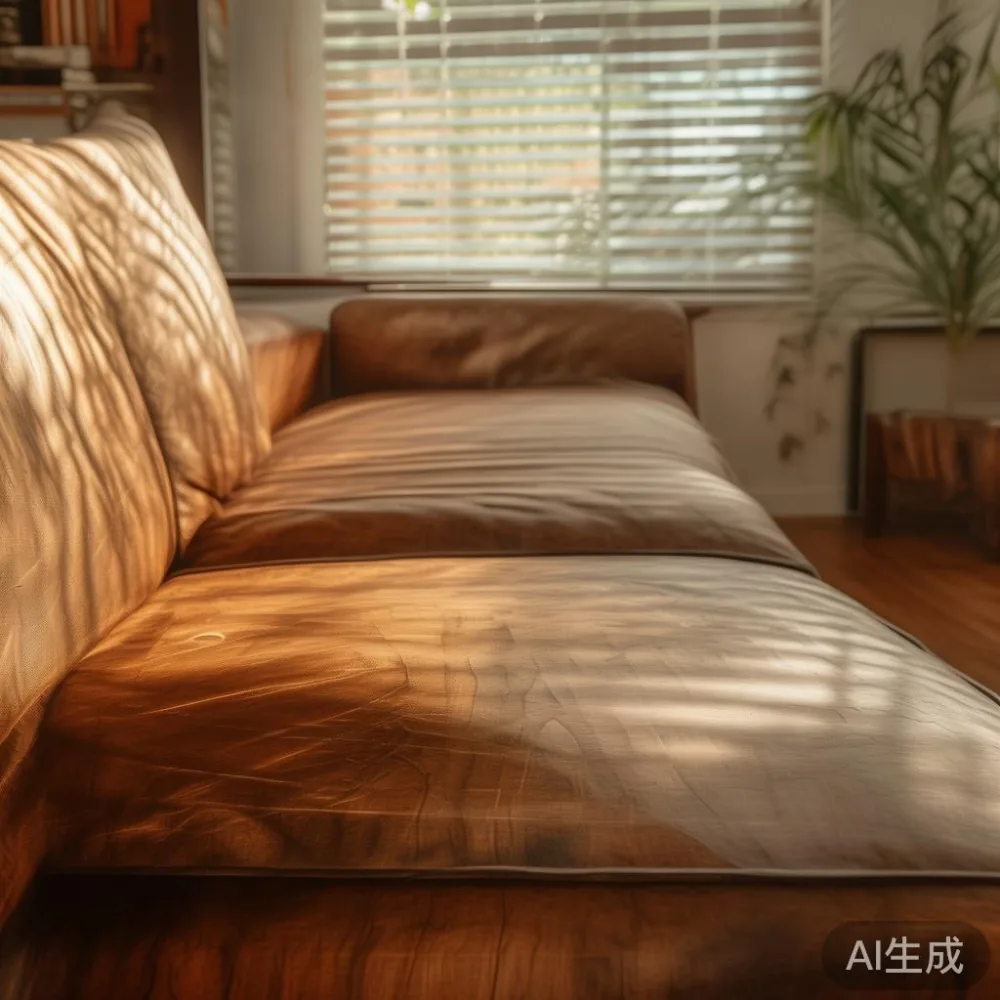
What does “solid wood versus veneer” really mean?
A solid wood sofa uses solid timber in structural areas such as the frame rails, legs, arm supports, or back frame. The species may include rubberwood, oak, ash, beech, or a mix documented by the manufacturer. It does not mean that every visible surface is one continuous board. A veneered sofa uses a relatively thin layer of timber, commonly about 0.6 mm to 2 mm, bonded to a panel or engineered-wood core.
Veneer is not automatically a poor material. A stable core and well-aligned veneer can create a smooth surface, lighter weight, and repeatable colour. The important questions are how the core is made, whether the joints are dowelled and screwed, how the edges are finished, and whether the supplier offers meaningful after-sales support.
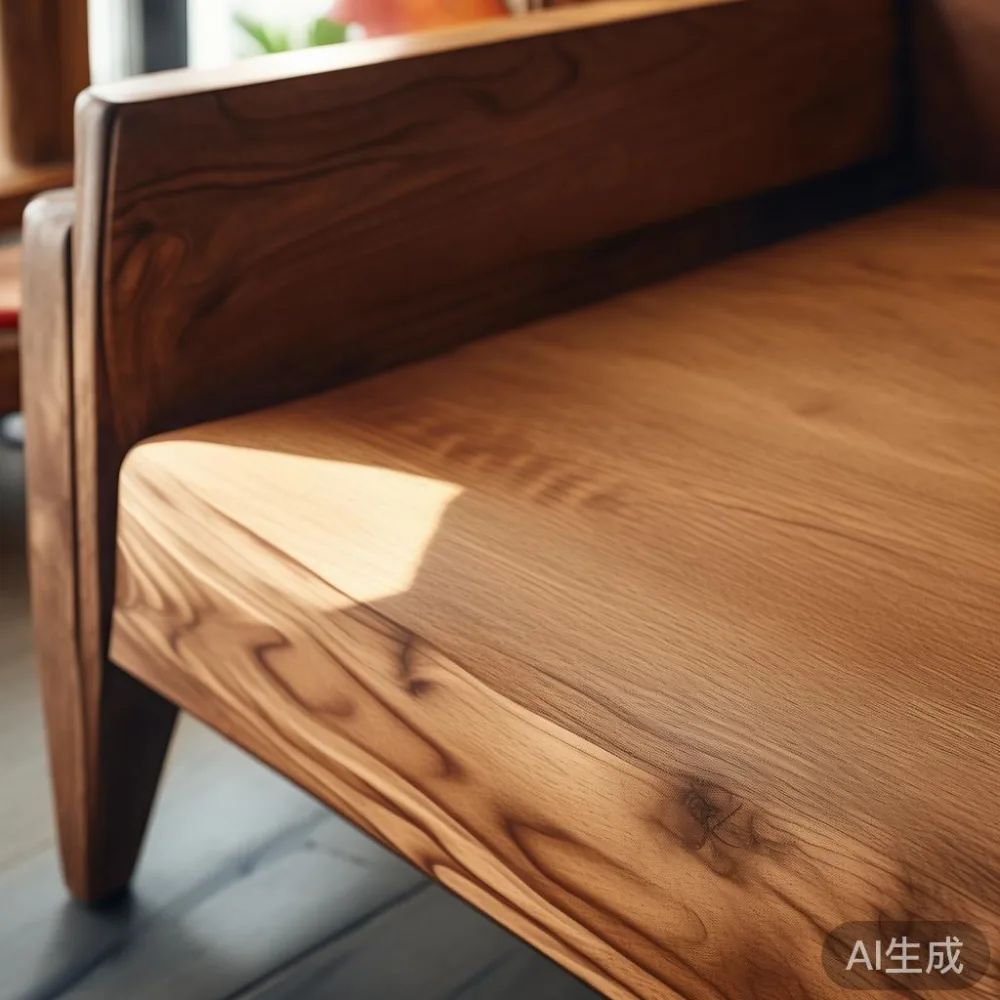
For Singapore conditions, air-conditioning reduces routine humidity swings, but coastal air, condensation near windows, and frequent wet-weather footwear still matter. A sensible target is indoor relative humidity around 40% to 65%. Neither material should sit against a damp wall or receive repeated water exposure.
What would a realistic 5-year cost comparison look like?
The following example uses a 210 cm three-seat sofa with a timber frame, removable seat cushions, and polyester upholstery. The solid wood option is estimated at SGD 3,200 before delivery, while the veneered option is estimated at SGD 2,100. Both figures include GST when quoted by a Singapore seller. A second tier covers maintenance and likely repairs during years 1 to 5.
| 5-year item | Solid wood sofa | Veneer sofa |
|---|---|---|
| Initial purchase price | SGD 3,200 | SGD 2,100 |
| Delivery to HDB lobby | SGD 0 | SGD 0 |
| Average annual care allowance | SGD 60 | SGD 60 |
| 5-year care allowance | SGD 300 | SGD 300 |
| Likely minor repair reserve | SGD 120 | SGD 220 |
| Estimated resale value after 5 years | SGD 900 | SGD 550 |
| Estimated net cost over 5 years | SGD 2,720 | SGD 2,070 |
On these assumptions, the veneered sofa costs about SGD 650 less over 5 years after resale value is deducted. If the solid wood sofa requires no major repair in that period and retains SGD 1,200 at resale, its net cost falls to SGD 2,400, making it SGD 270 more economical. The result can therefore reverse because of condition, documentation, and resale demand.
Delivery is often free above US$350 on qualifying MIDHILL orders, but a Singapore household should still check whether local freight, lift booking, or curbside drop-off is included. For a condo, the management company may charge a booking fee of roughly SGD 20 to SGD 80 and require a move-in time slot. A mover may charge SGD 80 to SGD 180 for bringing one sofa from the lobby to the unit.
Measure before ordering. A typical HDB lift door is about 90 cm wide and 100 to 110 cm tall, while corridor turns can be tight. A sofa with a 210 cm body may not fit as a single rigid piece. If its removable sections are 85 to 95 cm wide and no taller than 95 cm, it has a better chance of passing through the lift. For a Punggol or Bedok walk-up, measure the stairwell, landing turns, and door clearances too.
Is a solid wood sofa cheaper or more expensive to own?
A solid wood sofa normally has the higher starting price because solid timber requires more stock, machining, drying, and joint work. The example starts at SGD 3,200, compared with SGD 2,100 for a veneered construction. That difference buys thicker structural members, easier local repair, and a stronger claim to refinishing potential.
Solid wood can respond better to sanding and refinishing when scratches reach the timber. A small scratch may need only 15 to 30 minutes of touch-up work. Deeper damage could take 2 to 4 hours. Veneer cannot usually be refinished through the full thickness in the same way because the 0.6 mm to 2 mm face layer can be removed or cut through. Instead, a veneer repair may mean replacing a panel, patching an edge, or covering the area with a matched sheet.
That difference is especially relevant to MIDHILL’s lifetime refinishing commitment, where applicable. A registered product can be sent for refinishing rather than discarded after a child scratches the arm. Buyers should still confirm which surfaces are covered and what transport or service charges apply in Singapore.
The material also affects handling. The solid wood example weighs about 72 kg, while the veneered sofa weighs about 52 kg. Carrying an extra 20 kg upstairs may require two movers and add SGD 40 to SGD 120 in a Singapore service. At 1,200 kg, an HDB lift might have a posted limit, although load and dimensional restrictions should be checked with the building management.
Can veneer be a sensible choice for a compact Singapore home?
Yes. Veneer can be the more practical choice when the priority is a lighter frame, a lower initial budget, and a straightforward appearance. A compact apartment may have a living room only 3.2 m by 3.5 m. A 210 cm sofa placed against one wall leaves 110 cm across the room, enough for a narrow circulation route but not much for a dining table with chairs.
A 180 cm loveseat can work better in a 3 m by 3.4 m room. It leaves 120 cm across the space, and a 45 cm wide coffee table can be moved when guests arrive. The expected prices in the comparison would be roughly SGD 2,450 for a solid wood loveseat and SGD 1,650 for a veneer loveseat, with the same 5-year and resale assumptions applied.
Veneer suits contemporary, Scandinavian-inspired, Japandi, or restrained French light luxury schemes because clean panels create a calm visual field. French light luxury often pairs warm upholstery with curved profiles and pale timber. If a buyer is comparing light luxury sofa vs Japandi sofa, the material may be secondary to proportion, leg clearance, and upholstery colours.
Families should ask for a sample edge and a written construction sheet. Look for a continuous 0.6 mm to 2 mm veneer face, sealed edges, a stable core, and concealed fasteners where possible. Avoid products that describe the frame only as “wood” without identifying the components. For apartment layouts, also check whether the arms can be detached and whether the sofa can enter through the lift without forcing the package.
Which material needs less work during years 1 to 5?
Both options benefit from routine care. Vacuum the frame and under the cushions every 1 to 2 weeks. Rotate loose cushions monthly so compression develops evenly. Keep the sofa at least 20 cm from a wall where possible, and use a breathable cover rather than sealing the timber in plastic.
A reasonable annual allowance in the comparison is SGD 60 for each sofa. It covers upholstery cleaning, small hardware replacements, and occasional treatment of exposed timber. A professional clean every 12 to 18 months may cost SGD 180 to SGD 320, though a full clean is not required every year if the family uses the sofa carefully.
Solid wood may develop small dents, colour variation, and light scratches. These can often be addressed without replacing an entire component. Veneer is more exposed to edge lifting, bubbling, or delamination if moisture reaches the core. Bubbling is uncommon in a dry, ventilated living room, but a kitchen leak or persistent dampness can accelerate it.
Preventive habits matter more than a broad label. Wipe spills within 10 minutes, keep drinks away from the side, and check after monsoon rain for any incoming dampness. Families with children should add fabric protection costing about SGD 40 per metre. Families with pets should budget SGD 120 to SGD 250 for a replaceable seat cover or tighter fabric upgrade.
Do not test-match timber with a generic “wood” colour chart. Request photographs under daylight and warm indoor lighting, plus a physical sample of at least 5 cm by 5 cm. A sample viewed at 2 metres should have a consistent pattern and a finish that feels smooth under the palm.
What about matching a bed frame, dining table, wardrobe, nightstand, or marble table?
A single material decision can influence several rooms. A solid wood bed frame may cost SGD 1,800 to SGD 3,600, while a veneered bed frame may cost SGD 1,100 to SGD 2,200. A queen bed in the example weighs 55 kg if solid timber is used and 41 kg if veneers are used on a stable core.
A dining table is more exposed to heat and spills. A solid oak dining table might be quoted at SGD 2,600, with a comparable veneer table at SGD 1,600. Place protective mats under hot dishes and use coasters with a 3 mm clearance from the edge. A marble table adds a different maintenance profile: it is hard and heat resistant, but the surface can stain, scratch, or chip at an exposed corner.
For storage, a MIDHILL wardrobe should be assessed by construction, not by the name “wood” alone. The MIDHILL wardrobe range can include solid wood frame components and selected panel surfaces; buyers should request the exact build sheet. For anyone comparing the best French wardrobe for 2026, hinge type, drawer runners, internal dimensions, and wall clearance may matter as much as veneer or solid timber.
A wardrobe beside an HDB bedroom wall may need an installation gap of 5 cm at the top for levelling and ceiling movement. Its doors also add weight to the frame and can stress weak hinges. A nightstand usually receives a harder wear pattern because it holds water rings, chargers, and small objects. A solid wood nightstand can often be sanded locally; a veneered top may need a replaceable mat.
The required phrase under 2000 Mid-century modern furniture is relevant when searching for a coordinated table or storage piece. Yet the price must be checked for the actual dimensions and materials. A listing below SGD 2,000 may use a thin veneer, particleboard back panels, and imported hardware, while a solid wood nightstand above that amount may last longer.
How do I compare French provincial, Boho, and post-modern light luxury designs?
Style labels can obscure useful construction details. If you are learning how to choose French provincial sofa, inspect the frame, cushion density, skirt treatment, and removable covers. A curved sofa with a solid timber frame may weigh 80 kg, whereas a decorative veneer version may weigh 58 kg. The heavier model may feel stable but will be harder to move through a 90 cm lift.
For a rattan-look Boho bed, shoppers comparing the best Boho bed for 2026 should separate the decorative material from the structural load-bearing parts. The frame may combine solid timber rails with woven panels or synthetic fibre. Confirm the mattress size, centre support, floor clearance, and maximum load, ideally 250 kg per bed.
Post-modern light luxury often mixes clean lines with tactile timber and one expressive feature. This can suit a Bedok condo without making the room visually crowded. French light luxury may use a 75 to 80 cm sofa height, while Japandi styling often favours lower profiles around 68 to 74 cm. An older resident may prefer a 45 to 48 cm seat height, which can make a 70 cm model easier to stand from.
Users should sit for 10 to 15 minutes before buying. Check that the seat does not slide, the arms support the elbows, and the lumbar area remains comfortable. Recliners, electric functions, and massage mechanisms can add SGD 500 to SGD 2,500 and require more power access than a fixed-frame sofa.
What should I include in a 5-year ownership budget?
Build the budget from the total amount paid, not only the invoice subtotal. For the 210 cm example, add GST if it is not already included, delivery, lift fees, and assembly. Keep receipts, the product specification, care instructions, and warranty documents for at least 5 years.
For the solid wood route, reserve SGD 300 for care and SGD 120 for a likely minor repair across 5 years. For the veneer route, reserve the same SGD 300 for care but SGD 220 for repair. These are planning figures, not predictions. A low-use sofa in a dry flat may need less, while one beside an open window may need more.
Add a moving reserve of SGD 100 for either model and SGD 150 if a professional mover is needed. Consider the sofa’s occupied footprint too. A 210 cm model may require 15% to 20% more visual and physical space during delivery, especially around a corridor turn. Modular sections can reduce handling risk but may add joints and visible seams.
At resale, solid wood often has broader repair options, while a high-quality, lightly used veneer sofa may still be attractive. Clean the timber, photograph the serial number, and keep the original cushions and hardware. A documented 10-year structural warranty can support confidence during resale, but buyers should verify whether it covers the full frame, how claims are assessed, and whether freight is included.
Which option should a Singapore buyer choose?
Choose veneer when the initial budget is important, the sofa must fit a constrained lift or corridor, and the family expects to move it within 5 years. Choose solid wood when the sofa is a long-term fixture, the household values repairability, and the extra SGD 1,100 can be justified by expected use and retained value.
My own test was practical rather than showroom-based. Last month I visited a family in Tampines and measured their lift opening at 88 cm, with a sharp 90-degree turn in the corridor. A 205 cm solid wood sofa had 92 cm wide, non-detachable sections, so it could not enter without turning it on its side and risking the arm. A similar sofa with two removable 87 cm sections passed through in 12 minutes and needed SGD 0 in extra delivery because it had been assembled for collection.
That visit showed why width, weight, and removable parts deserve the same attention as timber species. A buyer can also compare a sofa in situ for 14 days if the seller permits it. MIDHILL’s 14-day returns policy can reduce uncertainty for eligible orders, subject to the stated condition requirements.
For the representative 210 cm models, veneer produced the lower estimated 5-year net cost of SGD 2,070, while solid wood cost SGD 2,720. With stronger solid wood retention and a minor repair, solid wood could reach SGD 2,400. The sensible choice is therefore the construction that fits your flat, your budget, and your next 5 years of plans—not a universal winner based on material alone.