Cost-Compare Veneer vs Solid Wood Sofas in Singapore Homes
Choosing furniture for a Singapore home often comes down to two appealing labels: veneer or solid wood. The choice affects the purchase price, delivery logistics, maintenance, repairability and resale value. It can also determine whether a sofa, bed frame or dining table suits a compact HDB flat in Tampines, a high-rise condo in Bedok or a newer home in Punggol.
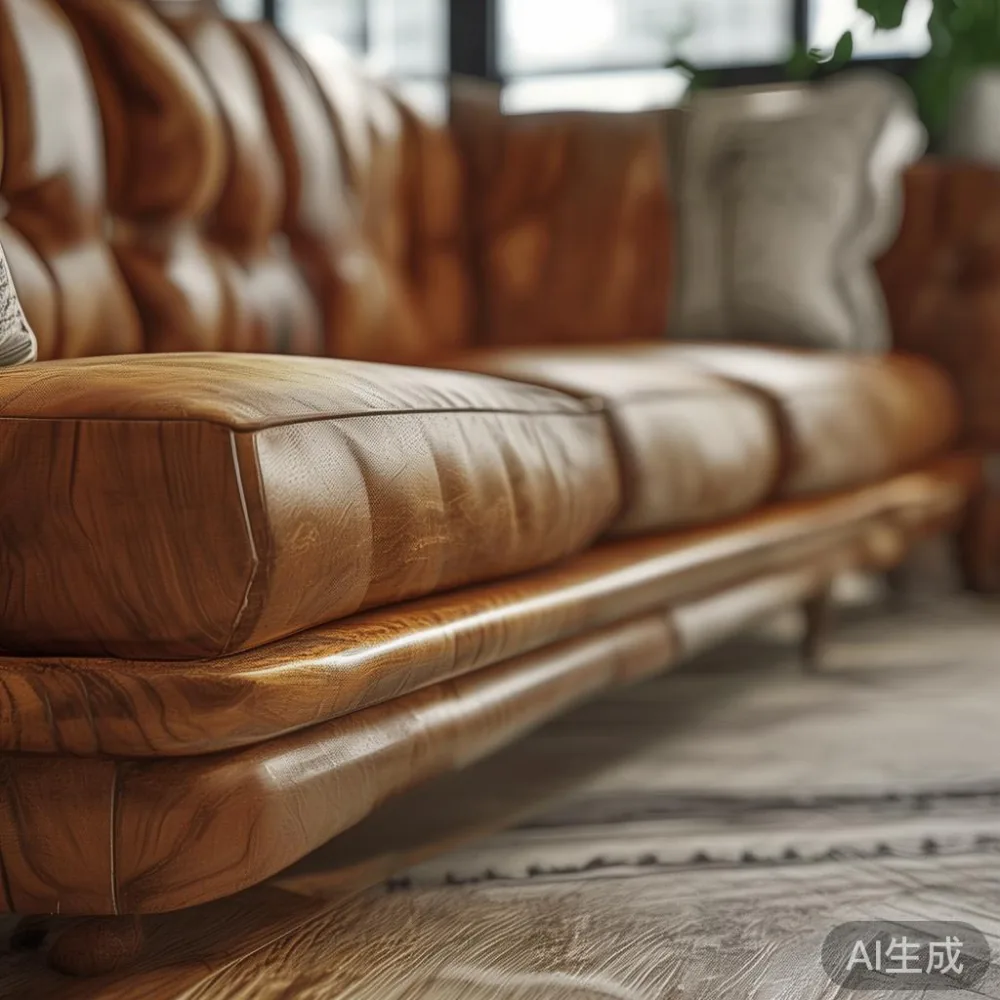
This comparison uses a five-year ownership period and a household budget in SGD. It follows a typical three-seat sofa sg purchase, a queen-size bed frame, a four-seat dining table and a 2-door wardrobe. The figures are practical planning estimates, not fixed quotations. Timber species, finishes, dimensions, access conditions and supplier pricing can change the final total.
What is the real difference between veneer and solid wood?
Veneer furniture uses a thin layer of real timber, commonly 0.6 mm to 1.2 mm, bonded to a engineered board or another stable core. It can provide the appearance of oak, walnut or teak without the material cost of a solid timber component. The grain may be sliced, rotary-cut or sanded, so boards from one batch should be inspected for variation.
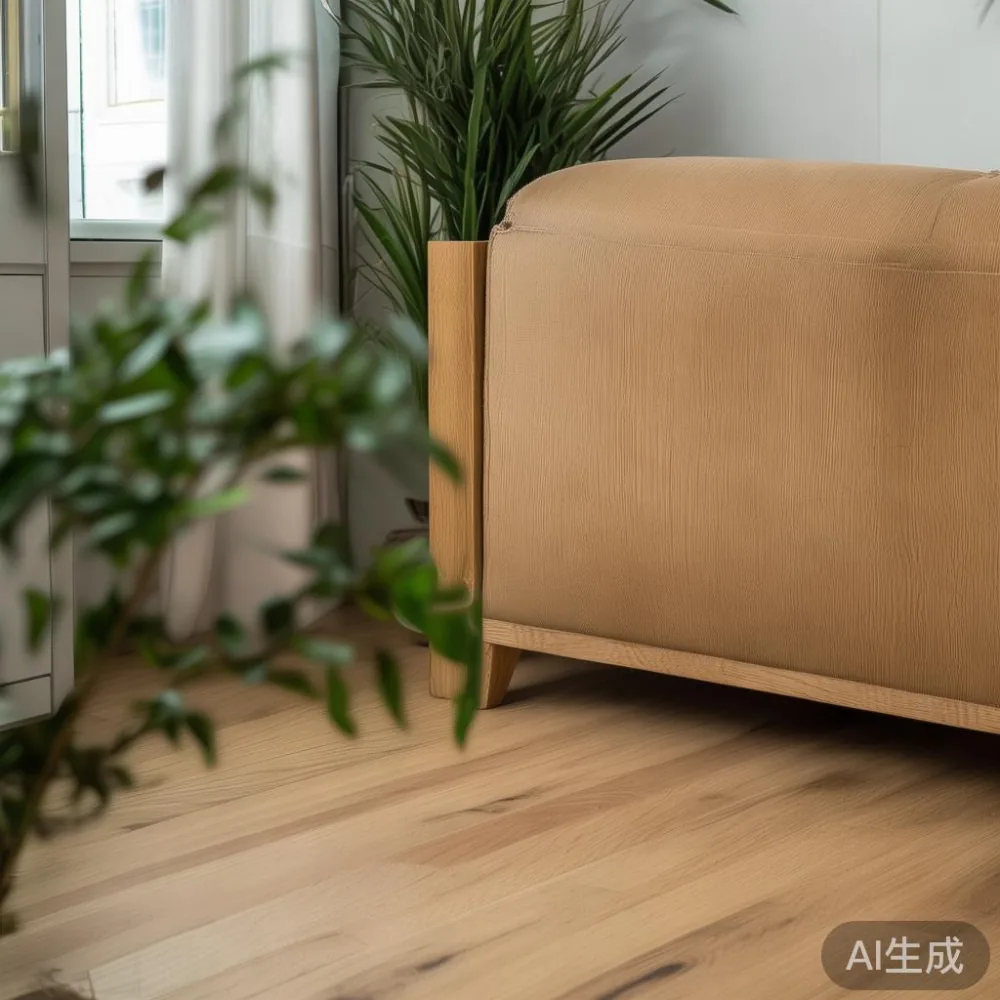
Solid wood furniture uses timber throughout the visible and structural parts. A sofa frame might contain kiln-dried hardwood, plywood or engineered timber in hidden areas, while the exposed rails, legs or bed components use solid wood. A dining table can have a solid top with supports from another engineered material, but the specification should be checked rather than inferred from a photograph.
For Singapore conditions, solid wood reacts more to humidity. A relative-humidity range of roughly 45% to 65% is sensible, although the ideal range depends on the species and the maker’s finish. Veneer is less demanding about small dimensional changes, while neither material should be placed against a persistently wet wall or exposed to air-conditioning condensation.
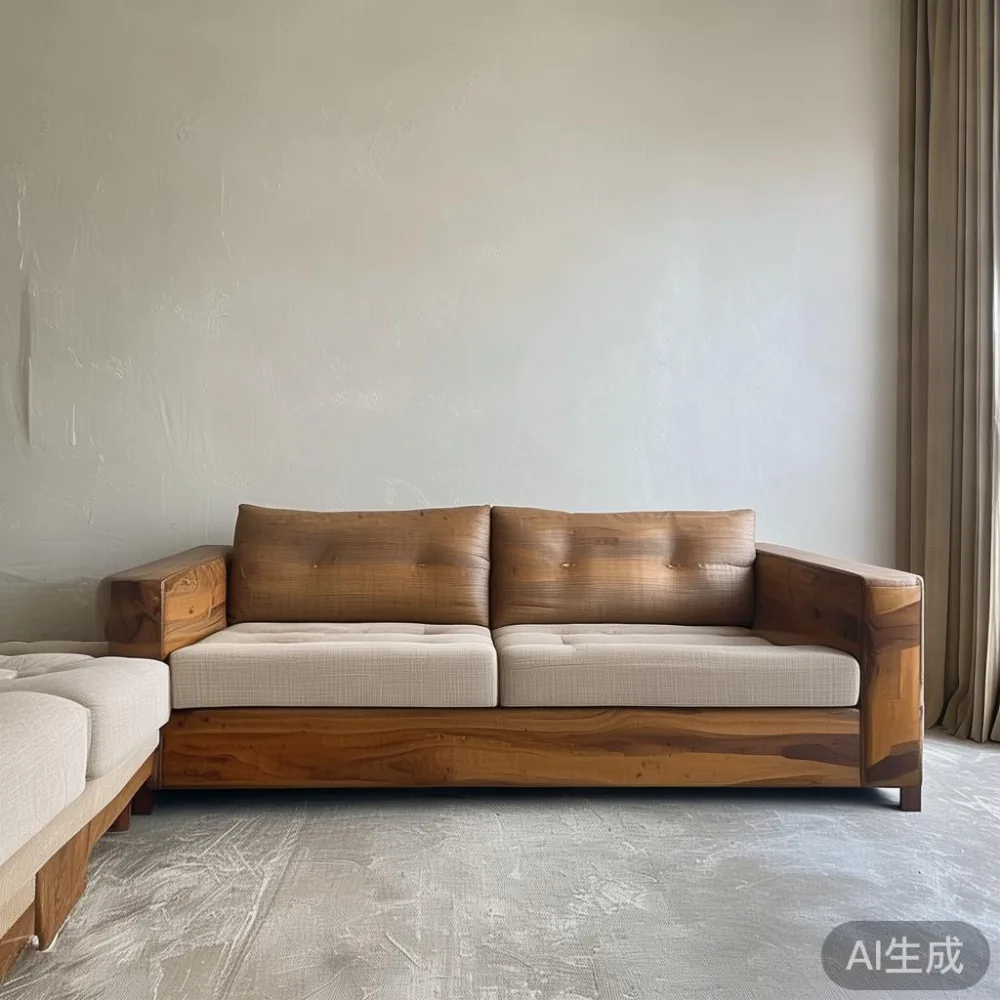
The furniture industry also uses “solid wood” for different levels of construction. MIDHILL describes its relevant structural products and warranty terms clearly, but buyers should still request a drawing or a written material schedule for a specific model. For example, a 210 cm solid wood sofa may have hardwood rails and legs, plywood seat panels and fabric-covered cushions. These are different components serving different jobs.
How much does veneer cost over five years?
For the sample sofa sg package, assume a three-seat sofa priced at SGD 1,450 in veneer and SGD 2,250 in solid wood. The bed frame is estimated at SGD 750 versus SGD 1,250, the dining table at SGD 980 versus SGD 1,700, and the wardrobe at SGD 1,280 versus SGD 2,300. These prices use ordinary Singapore retail assumptions before any promotion, and they include the base product rather than premium marble or leather options.
Across these four items, veneer starts at SGD 4,460, compared with SGD 7,500 for solid wood. The difference is SGD 3,040 before GST. At Singapore’s standard 9% GST, that is SGD 3,713.60. The first-year cash outlay is therefore lower for veneer, which can help a household keep more money available for a deposit, renovation or moving costs.
Maintenance estimates make the gap more meaningful. Over five years, allow SGD 220 for veneer care across the sofa, bed frame, dining table and wardrobe: SGD 80 for cleaning products and small fixes, SGD 60 for one hardware replacement and SGD 80 for touch-up work. A solid wood set could require SGD 560 over the same period: SGD 180 for maintenance materials, SGD 180 for two refinishing sessions and SGD 200 for parts or joinery work.
That produces a simple five-year planning total of SGD 4,680 for veneer and SGD 8,060 for solid wood, excluding GST. Including 9% GST gives SGD 5,101.20 and SGD 8,785.40. The estimated difference is SGD 3,684.20. These are ownership estimates, not guarantees against cracking, staining or impact damage.
The comparison also assumes the same usage pattern: four people in a 120 m² HDB flat, one sofa used daily, one bed occupied nightly, meals at the dining table five days per week and clothing stored in the wardrobe. A heavier use pattern would increase replacement risk for both materials.
Which material costs less after maintenance and repairs?
Veneer usually wins on initial price in this model. Solid wood can become more economical if the buyer values repairability and intends to keep the furniture for more than five years, especially for a bed frame or dining table that receives gentle use. The result is not universal; a poorly specified veneer product may need replacement earlier than a well-built solid wood product.
Consider the kitchen-dining case in a Bedok condo. A 160 cm veneer dining table may use a 20 mm particleboard or MDF core, while a 160 cm solid wood table might use a 25 mm hardwood top. Veneer can be lighter by approximately 18 kg. Solid wood can require two people for delivery, whereas veneer may be manageable with one helper, depending on the design.
For a 180 cm corridor and a lift with a 110 cm door opening, the table should be measured before purchase. A 160 cm top may turn sideways if its depth is under 75 cm, but the legs, carton and turning radius still matter. Solid wood also creates a larger dead-weight risk during transport. A dropped solid timber leg can be damaged before it reaches the landing, and refinishing may not restore the original tone exactly.
Repair cost should be estimated in Singapore dollars. A veneer dining table may need SGD 40 for a hinge or screw replacement and SGD 90 for a local edge repair. A solid wood dining table may need SGD 70 for a minor joint repair in year two and SGD 180 for sanding and refinishing in year four. The numbers depend on the finish and the extent of the damage.
For bedding, a queen bed frame may use 140 cm by 200 cm mattress dimensions in Singapore, though actual mattress sizes vary by brand. A veneer frame might cost SGD 750, while a solid wood frame costs SGD 1,250. Add SGD 150 for labour and SGD 50 for delivery if the item must be carried through a narrow corridor. A second repair visit at SGD 100 is possible with either material, but solid wood may be easier to patch when the frame is exposed.
What should a Singapore buyer ask before paying?
Ask whether the “sofa sg” listing refers to solid wood, plywood, MDF, veneer or a mixed frame. Request the dimensions in centimetres, the weight in kilograms, the finish type and the expected delivery lead time. A seller who can provide these details gives the buyer a more useful basis for comparison than one who only uses a broad timber label.
For a solid wood sofa, inspect the underside, rails, legs and back structure. Confirm whether the visible surfaces are solid timber and whether hidden panels are plywood or another material. For a bed frame, check the centre support, slat spacing, floor clearance and headboard thickness. For a wardrobe, ask about door alignment, drawer runners, moisture resistance and wall anchoring.
Delivery planning deserves the same attention. A lift with an internal depth of 140 cm and a door opening of 90 cm may reject a flat-pack wardrobe carton even if the unit fits into the flat after assembly. Provide the building name, floor, lift size, corridor width and parking distance at order. Allow 7 to 14 delivery days for a Singapore made-to-order item and 14 to 30 days for a customised finish or special timber.
MIDHILL has operated since 2008 and exports to more than 15 countries. Its stated 10-year structural warranty and lifetime refinishing policy can matter over a longer ownership period, but the warranty terms should be read for exclusions, registration and normal wear. A written specification is more helpful than assuming that every surface receives unlimited refinishing.
Can a lighter furniture package fit better into an HDB flat?
Yes, lighter construction can simplify a move from Tampines to Punggol or from a rental flat to an HDB home. It does not automatically reduce the total price, and it does not remove the need for measurements. A 220 cm solid wood sofa may weigh 75 kg, while a comparable veneer sofa may weigh 52 kg. Both can fit through many Singaporean lift doors, but the solid wood version may require two movers instead of one.
Weight also affects the home’s use of space. A lighter sofa frame can be easier to reposition when cleaning a 90 cm-wide living-room passage. However, an overly light frame may flex if the design is poorly braced. Ask for the load rating, the number of seat occupants and the frame construction rather than choosing by weight alone.
A 90 cm bed frame can work in a 105 cm bedroom, leaving only 7.5 cm on each side if placed centrally. A 140 cm by 200 cm queen bed needs more clearance for side tables and lifting paths. A 45 cm nightstand might fit beside a 150 cm bed, but a 55 cm marble table needs a stronger base and more careful handling. Marble is unrelated to the veneer-versus-solid-wood question, yet it illustrates how material weight changes delivery planning.
For a local style comparison, American light luxury often pairs a solid wood bed frame or sofa with neutral upholstery and visible timber grain. French light luxury may use a refined solid wood dining table, curved profiles and a paler finish. Post-modern light luxury may combine a veneer wardrobe with metal details and clean lines. Each direction can work in a condo, but the visual effect should be supported by the construction specification.
If searching for under 2000 Boho furniture, treat the budget as a total category limit rather than a promise that every piece is solid wood. A 90 cm nightstand at SGD 180, a 120 cm side table at SGD 240 and a 160 cm dining table at SGD 980 can remain under SGD 2,000, before GST, if the buying list is disciplined. Add delivery and finishing fees before checkout.
How do you choose an American bed or a solid wood sofa?
Start with the room, mattress and access measurements, then compare materials over the intended service period. A solid wood bed frame at SGD 1,250 may suit a buyer who expects to move it once and keep it for 10 years. A veneer bed at SGD 750 may suit a renter who expects to replace it after 5 years. Both are reasonable decisions when the budget and expected tenure are clear.
For people researching how to choose American bed, the bed’s structural system matters more than the country label. Check the slat count, centre rail, leg joints and clearance under the mattress. A platform design may sit about 25 cm above the floor, while a traditional frame may be 35 cm high. Make sure the room’s corridor and lift measurements can accommodate the carton and assembled components.
Similarly, people comparing American sofa vs Japandi sofa should compare frame construction, seat height, cushion density and dimensions. An American sofa may use a broader profile and deeper seat, while a Japandi sofa may have a slimmer arm or a lower, simpler silhouette. The style comparison is less useful if both products are described only by their wood finish.
For French sofa vs Japandi sofa, consider the timber finish rather than assuming one style requires one material. French styling may use a warmer oak tone and rounded edges; Japandi styling may use a pale matte finish and straight lines. A veneer option can suit either style when the edge banding, face veneer and frame are well documented.
The exact phrase “Minimalist for guest room” belongs in a search for compact furniture, but the practical Singapore example is a 90 cm sleeper sofa or a 120 cm daybed. Check that the unfolded depth is no more than 185 cm and that the product can be moved through a 90 cm corridor. A 22 kg folded package may still be awkward, so request the actual carton dimensions.
Which choice gives better long-term value?
For this five-year model, veneer produces the lower estimated total: SGD 5,101.20 including GST, compared with SGD 8,785.40 for solid wood. The difference is SGD 3,684.20. The solid wood option has a higher purchase price, but it may offer more repair options for exposed rails, legs and table surfaces. The economic value depends on how the household uses and maintains each item.
Consider a 2-door wardrobe in a Punggol bedroom. A veneer wardrobe may be SGD 1,280, with a particleboard or MDF core and a 0.8 mm timber face. A solid wood option may be SGD 2,300, with hardwood rails and timber doors. If the wardrobe contains heavy clothing and books, drawers and hanging rails should be checked for load capacity. If it is moved after 3 years, the lighter option may reduce removal costs.
On the other hand, a solid wood bed frame can be repaired rather than discarded after a damaged slat or joint. A veneered bed frame may also be repairable if the core remains intact. The deciding factor is not the marketing label but the layer that failed. Ask for replacement parts, finish samples and a spare-hardware policy.
Buyers who want a longer ownership horizon can compare an estimated 10-year plan. Suppose solid wood maintenance rises to SGD 1,100 and veneer maintenance rises to SGD 700 over 10 years. The solid wood total would be SGD 8,600 before GST and SGD 9,374 with GST. Veneer would be SGD 5,160 before GST and SGD 5,624.40 with GST. This assumes no major replacement and should be treated as a scenario, not a promise.
For a solid wood dining table, lifetime refinishing may be more useful than for a marble table, whose pores and stains require a different care approach. For a nightstand, a small solid wood unit may be moved between rooms without concern, while a marble top may need two people even at 25 kg. These differences show why material choice should include the room and delivery route.
MIDHILL offers free shipping over US$350 as stated in its purchasing information, but Singapore buyers should confirm the exact local currency treatment, customs treatment and delivery quote. The included return period is 14 days, subject to the stated conditions. A return can still cost SGD 60 in transport and SGD 80 in labour, so keeping the packaging and checking dimensions before ordering remains sensible.
Last month I visited a Singapore showroom with a family friend who was comparing a veneer dining table with a solid wood alternative. I tested the table edges with a fingernail, checked the underside joints and asked the retailer to weigh both cartons. The veneer table was 24 kg lighter, while the solid wood table felt noticeably steadier when pressed near the corners. Neither observation settled the choice, but both mattered: one affected handling and the other affected perceived stability.
My practical answer is to choose veneer when the budget is tight, the furniture will be moved, and the face veneer and core are clearly specified. Choose solid wood when the piece will stay in place for 8 to 15 years, the exposed timber is central to the design, and the budget allows for care. For a sofa sg shopping decision, compare the complete five-year estimate, not just the price tag.
If you need help with a specific sofa, bed frame or dining table, record the room dimensions, lift measurements, preferred timber, finish and budget. The exact phrase where to buy bed from MIDHILL is useful in a product enquiry, and the supplier should confirm the material, dimensions, delivery estimate, GST and warranty before payment. The listed contact number is +86 188 2788 2512. A carefully checked specification is the clearest route to a furniture purchase that suits Singapore living conditions.