Solid Wood Sofa Pricing Insights in Singapore
Solid wood furniture can cost SGD 680 for a dining table and SGD 4,800 for a similarly sized model from another maker. The difference is rarely explained by a single feature. It comes from the timber species, the dimensions, the joinery, the finish, the hardware, the brand’s quality systems, and the delivery arrangements.

That distinction matters in Singapore, where HDB flats and condos place practical limits on furniture. A sofa may need to turn corners outside a 90 cm lift, fit through a 76 cm corridor, or be carried up seven flights of stairs. A dining table may have to pass a 210 cm doorway before reaching a 320 cm dining room. Price should therefore reflect both the furniture and the realities of getting it home.
MIDHILL makes solid wood furniture in Foshan and has supplied 15-plus countries since 2008. Its approach is relevant to this question because longevity, repair support, and logistics are part of the product, not decorations added after manufacturing. The company offers a 10-year structural warranty, lifetime refinishing, 14-day returns, and free shipping above US$350, equivalent to about SGD 460 at an illustrative exchange rate of SGD 1.32 per US$1. Actual card or bank conversion rates can vary.
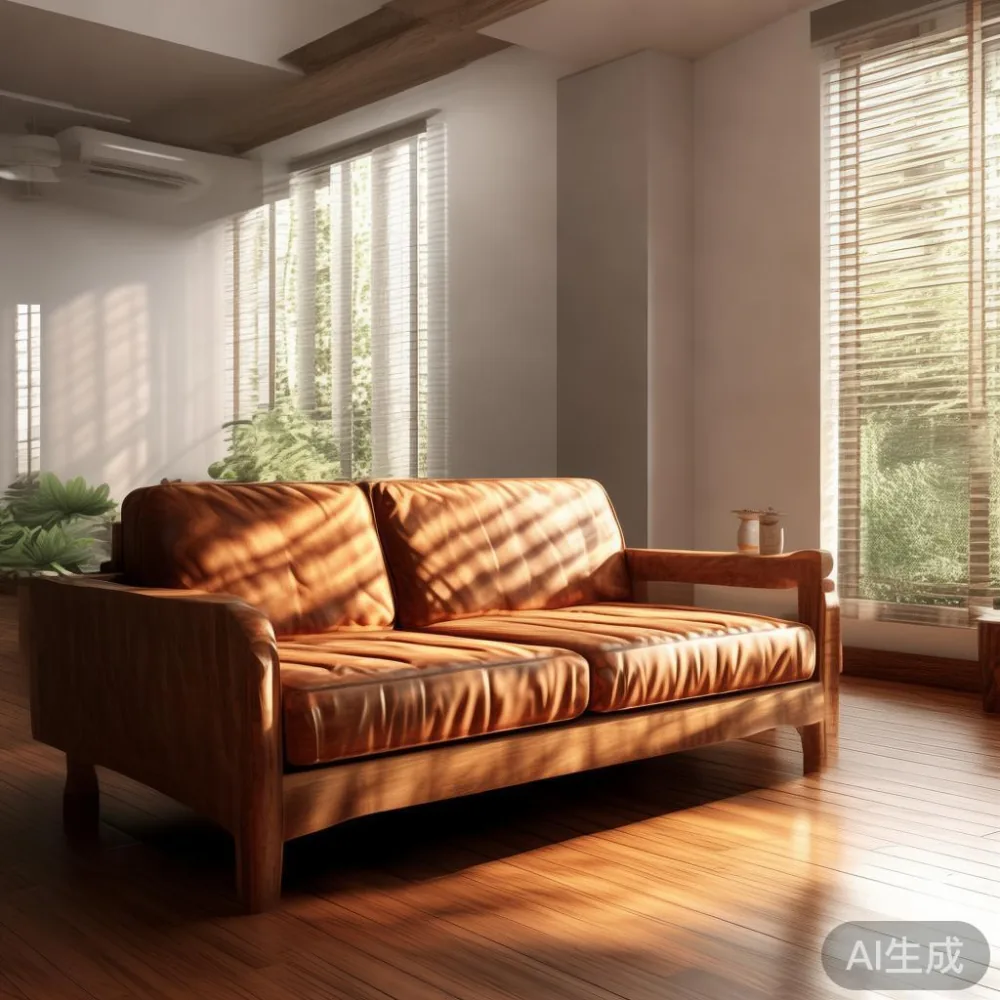
This guide explains what actually moves the price of a solid wood sofa, bed frame, dining table, wardrobe, nightstand, or marble table, and how Singapore buyers can assess value without relying on vague luxury claims.
What actually drives the price of solid wood furniture?
Four broad factors account for most of the price: raw material, construction, design complexity, and commercial support. Each factor can change the selling price by hundreds or thousands of dollars, but the effects overlap rather than adding mechanically.
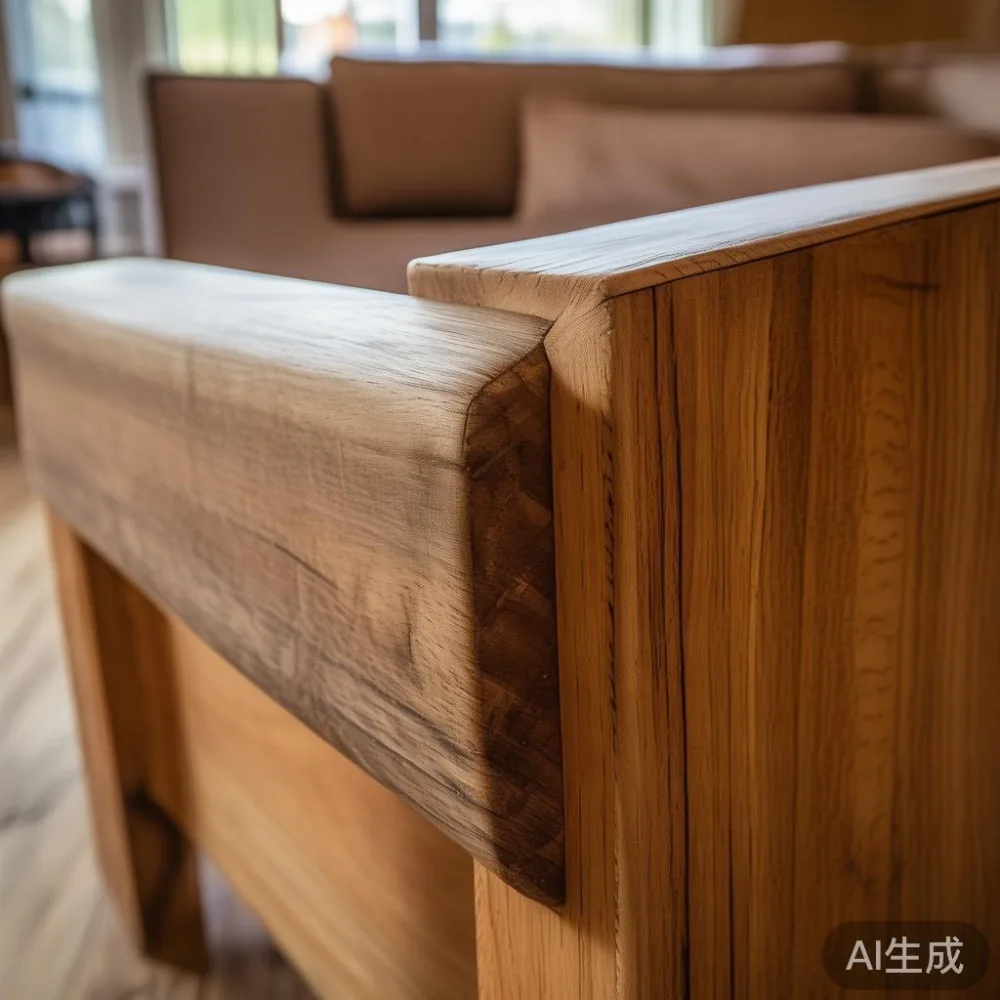
Solid timber is commonly sold by board-foot or cubic metre, while hardwood species command different rates. Moisture control also matters. A kiln-dried board at 8–12% moisture content is less likely to move or crack in Singapore’s humid conditions than stock that has not been properly conditioned. That controlled preparation adds cost, but reduces later movement.
Construction determines how much skilled work sits inside the piece. Mortise-and-tenon joints, dowels, bracing, and carefully sanded edges take longer than concealed screws and basic butt joints. A factory can spend 18–40 minutes on one complex corner, while a simpler assembly may take 4–8 minutes.
Design complexity affects labour. A straight-edged solid wood sofa with a fixed timber frame may require 12–16 hours of production. A curved chaise, tufted upholstery, or sculpted back can require 24–36 hours. A carved French provincial dining table may require 35–55 hours, depending on its ornament.
Commercial support also has a price. Warranties, replacement parts, refinishing, packaging, and delivery need funding. MIDHILL’s 10-year structural warranty and lifetime refinishing are examples of support that creates long-term value, although specific terms should be confirmed in writing for each product.
Is solid wood automatically more expensive than engineered wood?
Not always. The board type, thickness, finish, and assembly method all influence the final price. A high-quality plywood or engineered-wood bed frame can cost SGD 420–900, while a straightforward solid oak or ash model can cost SGD 680–1,500. But a thick solid wood dining table with hardwood joinery may cost SGD 1,450–3,600.
Use a useful test: ask the seller to identify the wood species, face veneer thickness, structural panel, joint type, and moisture treatment. “Solid wood” on a product label may describe only certain visible parts. Some frames combine solid timber rails with plywood or MDF panels for stability. That can be entirely sensible if the construction is disclosed.
Price should rise with the amount of genuine timber used. A 200 × 90 cm dining table with a 20–25 mm top and solid hardwood legs may cost more than a decorative model with a thinner top and lighter frame. An 80 kg wardrobe with 18 mm sides and a 22 mm back panel will usually weigh more than a 48 kg unit built around hollow-core panels.
The key is proportionality. A 220 cm solid wood bed frame using 30 mm rails may justify SGD 1,200–2,800 if it has restrained detailing and a reliable warranty. A similarly priced 110 kg model with plastic brackets and 15 mm boards may offer less structural confidence.
How much should a solid wood sofa cost in Singapore?
A practical solid wood sofa in Singapore may range from SGD 980 to SGD 5,500. A 160–190 cm straight model with medium-density foam, linen or cotton-blend upholstery, and a kiln-dried timber frame commonly sits around SGD 1,400–2,800. A larger 220–250 cm design with deeper seating, better cushion layers, and more elaborate finishing can reach SGD 3,200–5,500.
For buyers comparing a light luxury sofa vs Nordic sofa, the distinction is not simply price. Nordic silhouettes often favour pale timber, clean lines, and restrained profiles. Light luxury adds depth through proportion, tactile upholstery, refined edges, and controlled detailing. French light luxury may use curved arms and a soft, upholstered finish; American light luxury may use broader forms and substantial timber frames; post-modern light luxury may combine unusual geometry with solid wood construction.
Here, frame construction deserves more attention than decorative tufting. Look for hardwood rails, corner bracing, and joints that are mechanically fixed. Check the frame’s total height and weight as well as its appearance. A 205 cm sofa weighing 72 kg may need two people and a 90 cm lift, while a compact 145 cm model weighing 42 kg may pass through one 76 cm doorway more easily.
For practical guidance, searches for the best Japanese sofa for 2026 should focus on compact dimensions and removable covers rather than a national style label. A 145–175 cm Japanese-inspired sofa may fit a Tampines HDB living room better than a 220 cm statement piece. Its seat depth should still suit the occupants: 48–55 cm is easier to use in a multipurpose room than 65–70 cm.
Why do some dining tables cost several thousand dollars?
A dining table’s price is driven by board dimensions, timber species, edge treatment, joinery, and finish. A 180 × 90 cm table in rubberwood with a simple finish may cost SGD 680–1,200. The same footprint in kiln-dried oak, walnut, or ash may cost SGD 1,600–3,200. A 240 × 100 cm French provincial dining table with carved apron details, shaped legs, and a multi-layer finish can reach SGD 3,500–6,500.
Tree species are only part of the story. Material selection reduces waste. A maker may buy 30–45% more boards than the finished tabletop needs because knots, sapwood, and colour variation must be cut out. Long, well-matched grain also requires selective timber sourcing. That visible consistency can justify a premium over random, rustic boards.
Surface preparation can take 8–16 hours for a stained table and 18–30 hours for a natural oil or matte lacquer system. A water-based finish may be more practical in Singapore than a thick gloss coating, but the substrate still needs careful sanding and sealing. Scratches and moisture marks remain possible; maintenance is part of ownership.
Before buying, measure the route. A 220 cm tabletop may not pivot inside an HDB stairwell, and lifting it above a corridor handrail can be difficult. Ask whether the table disassembles. Tops may separate from bases for transport, reducing a two-person lift to a more manageable 35–55 kg package.
What makes a marble table worth its price?
A marble table combines a mineral slab with a timber or metal structure. The slab usually costs less to explain than to source: thickness, pattern, cut, and defect treatment all matter. A 120 × 60 cm Carrara-style slab with a 20 mm thickness may retail for SGD 900–1,600, while a book-matched or highly figured 180 × 90 cm slab may add several hundred dollars.
Natural stone varies, so “the same” marble table may not look identical. A slab with grey veining, warm movement, and controlled polishing may cost more than a heavily filled surface. Structural quality matters too: an 18–20 mm slab over a properly sized frame can carry daily use, whereas an 8–10 mm decorative top may need more careful placement.
A well-built marble table may cost SGD 1,800–4,500, but its price is not a guarantee against damage. Stone can chip at corners or stain near lemon juice, wine, and oil. Transport is another cost factor. A 75 kg tabletop may require 3–4 movers in a condo without a loading dock.
For coordinated interiors, marble should be treated as an accent rather than assumed to match every solid wood piece. Ask for actual slab photographs and a sample. Lighting at 2700–3000K changes the appearance considerably from a neutral 4000K showroom.
How should you judge a bed frame, wardrobe, or nightstand?
A solid wood bed frame’s price reflects timber volume and structural method. A queen-sized model measuring 160 × 200 cm may weigh 38–65 kg and cost SGD 780–2,200. Slatted bases with 12–16 curved hardwood slats generally support the mattress better than a solid platform, while a floating design adds machining and concealed supports.
For wardroards, usable internal dimensions and movement allowance matter more than exterior styling. A 150 × 60 cm wardrobe may cost SGD 1,100–2,800, but hanging space, drawer boxes, hinge brands, and back-panel construction deserve close attention. Hinges rated for 80,000 cycles are used in better assemblies; lower-cycle fittings may feel fine initially but fail sooner with frequent use.
The MIDHILL wardrobe range illustrates the value of comparing specifications rather than only finish swatches. Confirm carcass thickness, drawer construction, hanging rail material, hinge type, and warranty coverage. Allow at least 5 cm behind sliding doors and 8–12 cm in front of hinged doors for drawers, subject to the actual opening mechanism.
A solid wood nightstand may cost SGD 220–680. Check whether the drawer moves smoothly on wooden runners or metal slides, whether the back is solid or thin, and whether the piece can stand unsupported when loaded. A 10 kg lamp is a reasonable test load for a small top surface.
Fit is critical in local homes. A 120 cm nightstand may fit beside a queen bed, but a 55 cm HDB bedroom can restrict a 100 cm wardrobe. Measure the room, skirting, sockets, door swings, and lift dimensions before selecting.
Does light luxury mean paying for a name?
Light luxury is not defined by one logo. It can be seen in proportion, material tactility, fine edges, quiet upholstery, and furniture that remains useful after the trend passes. French light luxury often draws on curved profiles and upholstered softness. American light luxury favours generous scale and substantial woodwork. Post-modern light luxury may pair conventional solid wood frames with unexpected shapes.
A useful example is an Italian light luxury for guest room concept built around a compact bench or daybed. Italian influence may appear in balanced proportions, elegant timber grain, and precise joints rather than decorative excess. In a 9 m² Tampines guest room, a 140 cm bench, 35 cm side table, and 12 cm wall shelf can create a coherent corner without crowding the walkway.
The same discipline applies to a coastal apartment in Bedok or Punggol. A phrase like for sale Coastal furniture can sound appealing, but furniture still has to suit the architecture and climate. Pale oak, rattan accents, and light linen may work in a bright condo; darker teak-like finishes may suit an older HDB interior. Confirm material rather than inferring quality from a style description.
For a bedroom, guidance on how to style American sofa in bedroom should begin with dimensions. A 190–210 cm sofa can work against a 320 cm wall, but it should not block a door or circulation route. Keep the sofa 60–90 cm from a bed where possible and use one large artwork rather than several tiny pieces. The goal is visual rest, not a crowded showroom.
How do Singapore delivery conditions affect furniture pricing?
Delivery is part of the purchase price, even when it is quoted separately. A flat-pack sofa may travel in 2–3 cartons; a fully assembled solid wood dining table may need custom crating. Urban delivery from a Singapore warehouse to a HDB block can take 3–7 days after stock is confirmed, while made-to-order furniture may take 30–90 days.
Lift and corridor dimensions should be recorded before dispatch. Standard HDB lift openings vary, so a seller should confirm the actual measurements with the buyer rather than assume every route is clear. A 205 cm sofa may need to be checked against a 200 cm corridor turn and a 210 cm lift door. The lift’s internal depth and cabin height also matter because the sofa cannot always be tilted safely.
Stair carries add labour. A two-person delivery may cost around SGD 60–120 in some Singapore routes, while a difficult stair carry or extra-person service can increase that. White-glove placement, assembly, and packaging removal may add SGD 80–250. These figures vary by operator, access time, and distance, so requests should be confirmed before payment.
At the checkout, Singapore buyers should see GST clearly. On a SGD 2,000 before-GST item, 9% GST is SGD 180, making the total SGD 2,180. A refund under a 14-day return policy may be reduced by non-returnable delivery charges, restocking fees where legally permitted, and any damage caused after delivery.
Last month I visited a colleague’s three-room HDB flat in Bedok and watched a solid wood dining table arrive. The carton was protected, but the route included a 76 cm doorway and a tight turn near the kitchen. The table separated into a 41 kg top and two 9 kg legs, which made the move manageable. A fully assembled unit of the same size would have been much harder. That experience reinforced why deliveryability is a design issue, not a last-minute service issue.
What questions should you ask before paying for solid wood furniture?
Ask for the species of the main visible components, the dimensions, the weight, the timber thickness, the joint method, and the finish. A credible seller should be able to distinguish oak from ash, rubberwood, or a stained lower-cost species. Photos alone do not reveal grain, density, or moisture condition, so a physical sample or detailed specification is valuable.
Also confirm the warranty scope. A 10-year structural warranty should state what is covered, what is excluded, and how a claim is processed. Lifetime refinishing is valuable when the definition of refinishing and the cost of transport are clear. For MIDHILL, buyers should retain the invoice and confirm the applicable terms for the specific order.
Compare the total delivered price rather than the headline discount. For a SGD 2,400 table, adding SGD 120 for delivery, SGD 90 for a stair carry, and SGD 180 GST produces SGD 2,790. A lower-priced product can become more expensive once protective packaging, assembly, and suitable replacement components are added.
Solid wood furniture is priced most rationally when timber, labour, finish, logistics, and after-sales support are visible in the specification. In Singapore, the right piece must also survive the route from the van to the room. A carefully proportioned solid wood sofa, bed frame, dining table, wardrobe, nightstand, or marble table can justify a premium when it is built for daily use and supported for the long term.