Solid Wood Furniture Prices: The Singapore Story
Solid wood furniture can look similar from across a showroom yet vary by thousands of dollars. The visible grain tells only part of the story. Timber species, moisture control, joinery, finish, hardware, dimensions, and delivery logistics all affect the final price. For Singapore homes, measurements and access matter just as much as design: a 220 cm dining table may fit a Tampines HDB dining area but still be difficult to manoeuvre around a 110 cm corridor bend or into a 90 cm lift.

This guide explains what actually drives the price of solid wood furniture, from a solid wood sofa and bed frame to a dining table, wardrobe, nightstand, and marble table. The figures are practical rather than promotional, with costs expressed in SGD and dimensions in centimetres.
What material should you expect to pay for?
<The largest price variable is often the timber itself. Solid wood is not one material with one fixed price. Dense hardwoods such as teak, walnut, and white oak require different harvesting, seasoning, machining, and finishing methods. Lesser-used species can be more affordable, but defects, unstable supply, and complicated fabrication may push up the final cost.
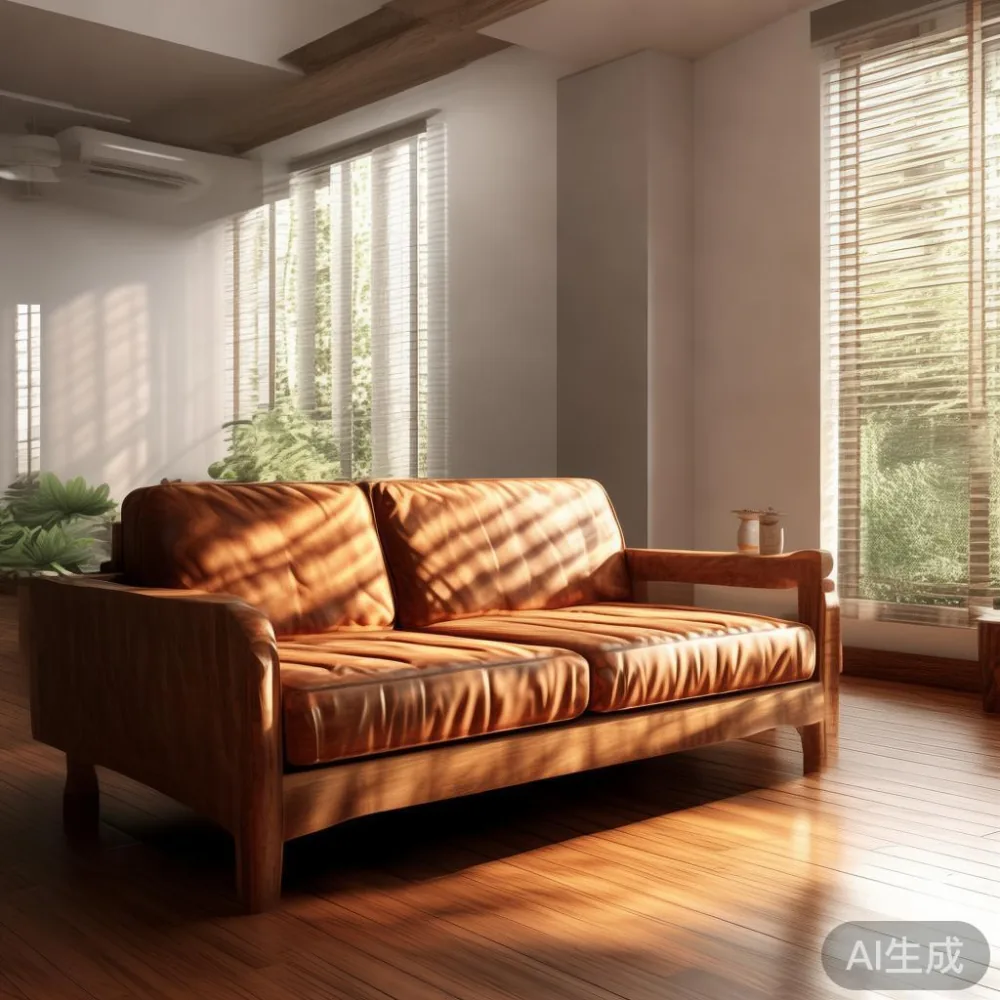
Here are indicative retail ranges for well-finished, solid timber pieces sold for home use in Singapore:
- A 3-seat solid wood sofa with a timber frame and quality upholstery: SGD 2,800–6,500.
- A 160–180 cm solid wood bed frame: SGD 1,200–3,600.
- A 180–220 cm solid wood dining table: SGD 1,600–5,200.
- A 150–200 cm solid wardrobe: SGD 2,200–6,800.
- A 45–60 cm solid wood nightstand: SGD 480–1,300.
- A 90–140 cm marble table with a stone top and metal or timber base: SGD 1,900–7,500.
Those figures are not universal price rules. A straight, simple bed frame can cost less than an ornate wardrobe because the wardrobe contains more timber, more engineered fittings, more moving parts, and more hours of installation. Conversely, a visually plain dining table can command more when its top is one carefully selected slab rather than several finger-jointed boards.
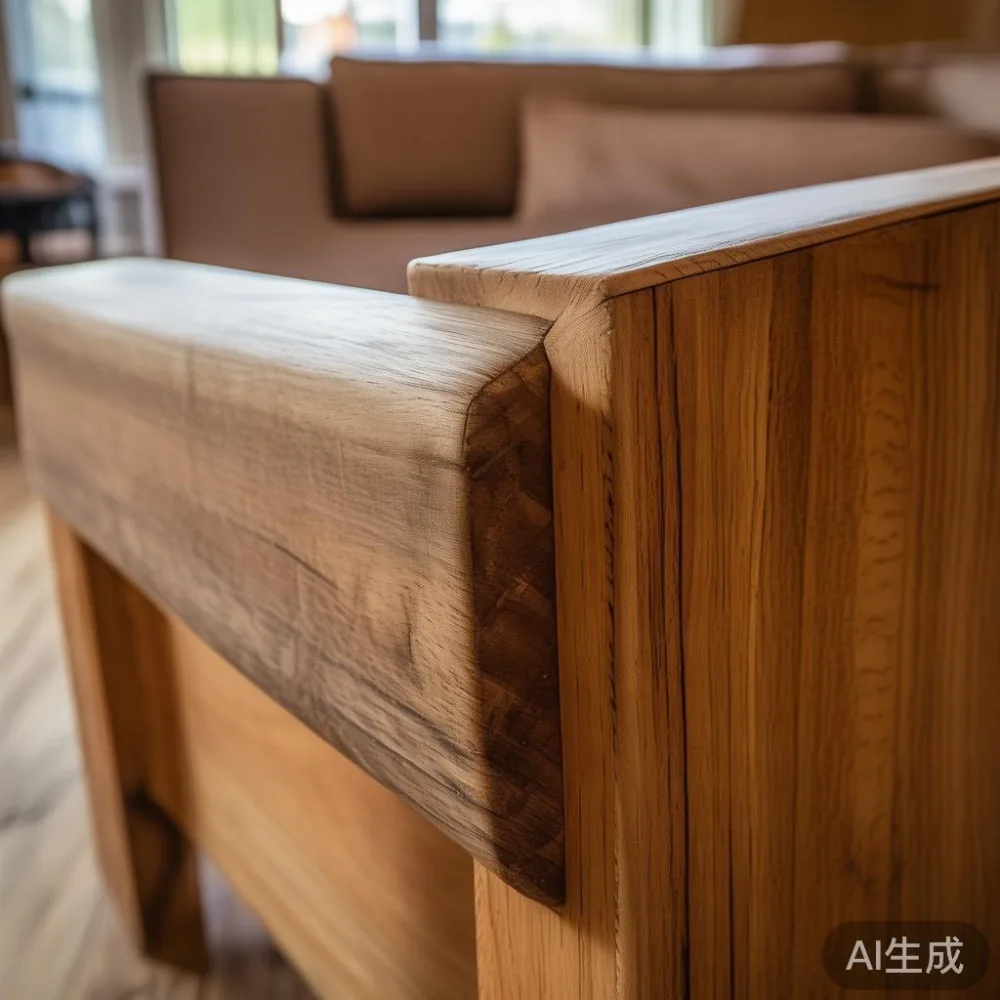
The term “solid wood” also deserves scrutiny. A sofa may have a solid timber frame, plywood seat deck, foam cushions, fabric covers, and a sprung suspension. A bed frame may use solid rails and legs but plywood or MDF for a concealed headboard insert. A wardrobe can combine solid oak fronts with a carcass made from birch plywood. That mixed construction can be sensible: it controls movement, weight, and cost while preserving solid timber where the customer sees and touches it.
Ask the seller which components are solid wood and which are not. A clear floor plan, edge details, and material schedule are more useful than a broad claim on a product page.
Is timber thickness more important than timber species?
Both matter, but thickness reveals whether the seller understands load paths. For a dining table, a top around 25–30 mm is common in mid-range and light-luxury pieces; 35–45 mm tops feel substantial and can resist visible deflection. A 12 mm shelf, however, should be supported at intervals no more than 35–40 cm to prevent sagging.
For a bed frame, side rails around 30–50 mm and properly secured legs are more relevant than decorative carving. For a wardrobe, 18–22 mm door fronts and full-extension runners rated for 35–50 kg per drawer create a noticeable difference in daily use. A nightstand may look refined with 18–20 mm sides, yet still wobble if the rear joints and wall fixing are weak.
Species still determines the character. Teak suits humid climates and develops a warm tone; oak has pronounced grain and visible medullary rays; walnut offers darker colour but is often more expensive. Cherry can shift from reddish brown to deeper brown over 5–10 years, while ash and rubberwood can be economical options when stained or finished to imitate another species.
I tested several sample panels last month at MIDHILL’s Foshan workshop, including teak, oak, and walnut under the same clear finish. The teak board expanded less after a 48-hour humidity cycle, while the walnut board showed the strongest grain contrast. More important, the samples with consistent moisture treatment stayed flat at their joints. The lesson was simple: stable construction could matter more than a fashionable species label.
Why do joinery and hardware change the price so much?
Joinery is where a product earns its structural price. Dowels, mortise-and-tenon joints, dovetails, and bridle joints lock parts together with less dependence on screws alone. Machine-cut CNC parts can also be highly accurate, but only when edges, holes, and assembly tolerances are controlled.
A 220 cm dining table may require a central support, apron placement, and leg geometry designed around the load. A sofa frame must hold a person weighing 80–100 kg through repeated sitting. A bed frame must resist repeated movement around its sides. Price rises when those loads are addressed through reinforcement rather than appearance alone.
Hardware should match the movement of the piece. Solid wood expands and contracts as humidity changes, so a fixed wardrobe back can work with a ventilated carcass, while a rigidly trapped panel may cup. European soft-close hinges rated for 35 kg, full-extension drawer runners, and adjustable shelf supports are common quality markers. Brass or zinc-alloy handles may add SGD 30–180 per wardrobe, and a premium gas lift on a lift-up nightstand can add SGD 80–220.
MIDHILL’s 10-year structural warranty gives buyers a useful benchmark: the frame should remain structurally sound for a decade under normal domestic use, although surface finish and moving components may have separate terms. Warranty length is not itself proof of quality, but it indicates whether a maker is prepared to stand behind joinery and frame construction.
Why does the finish add so much to a solid wood price?
Finishing protects timber while changing its colour, sheen, and texture. An unfinished 180 cm bed frame might sell for SGD 900; the same frame with sanding, filling, sealing, and a durable topcoat could reach SGD 1,600. That difference is not merely “paint.” It covers labour, abrasives, several coats, drying time, and controlled sanding between layers.
Water-based polyurethane often offers low odour and short drying times, suitable for occupied Singapore homes. Oil-wax finishes look tactile and repairable but may need maintenance every 12–24 months. Lacquer creates a deep, even sheen but can be harder to repair locally. A light-luxury finish normally favours a thin, smooth surface that reveals grain rather than a heavily textured “rustic” effect.
Three styles illustrate the range:
- French light luxury often uses pale oak, cream upholstery, curved profiles, and softly muted finishes.
- American light luxury uses clean lines, generous proportions, warm woods, and restrained hardware.
- Post-modern light luxury mixes precise geometry with selected curved or reeded details.
For customers comparing a European light luxury bed vs French provincial bed, the finish may be as decisive as the design. A European bed with a matte walnut tone can look architectural; a French provincial bed with a warm cream finish can suit a traditional HDB interior. Finish samples should be viewed beside the sofa or wall, because daylight around 3,000–4,000 K can shift a pale timber towards yellow.
How much should delivery and installation add in Singapore?
Delivery is priced by distance, size, access, and handling risk—not simply the number of cartons. A flat-pack nightstand might cost SGD 35–80 to deliver to Tampines, while a wardrobe delivered to a Bedok condo with lift access may add SGD 120–280. If the item must be carried up 6 flights without a usable lift, expect an additional SGD 90–220 per crew member where the minimum charge applies.
Measure the route before buying. For a Punggol HDB flat, note the flat-floor entry, the stair or lift dimensions, turning radius, and any 90-degree corners. A 210 cm dining table can be disassembled into sections, yet a 110 cm top that cannot turn through the corridor may still be impossible. Record door widths of at least 80–90 cm, lift door widths of about 90–110 cm, and lift depth and diagonal capacity.
Marble table delivery needs extra care. A 140 cm top weighing 65–95 kg usually needs two people and a rated trolley; a 160 cm slab may reach 110–140 kg. Scratched edges, cracked corners, and lift-door impacts can turn a simple delivery into a replacement. Confirm whether the quote includes carrying to the room, unpacking, assembly, and removal of packaging.
Singapore shoppers should also check GST. Displayed retail prices may exclude 9% GST, so a SGD 3,200 item becomes SGD 3,488 before delivery. For orders above US$350, MIDHILL offers free shipping, but the destination surcharge, remote-area fee, and any lift or access charges should still be confirmed in writing. A useful practice is to request an all-in quotation rather than comparing product prices alone.
Are bespoke dimensions worth the extra cost?
Custom sizing can solve a difficult room, but it removes some purchasing flexibility. Non-standard widths may add 10–25% to a table, bed frame, wardrobe, or sofa because timber must be cut, joined, and finished around dimensions that cannot use standard stock lengths.
For HDB interiors, a dining table of 180–200 cm may offer a practical balance: four people can sit comfortably, and a 200 cm length can fit a rectangular dining zone of roughly 240–280 cm if circulation is planned. A 220–240 cm table may work in a larger condo dining room, but it needs at least 90–110 cm around the ends for chairs and service movement.
For a bed, internal mattress sizes matter. A “queen” description is less precise than a 150 × 200 cm mattress paired with a 156–165 cm external frame. Custom headboards to match a 270–310 cm wall recess can cost SGD 150–600 more, depending on shape and material. A wardrobe built to a 240 cm recess may also gain useful storage, but a wall filler of 20–40 mm is often wiser than forcing a wider unit into an uneven opening.
Compare a European light luxury bed vs French provincial bed not only by style but by external dimensions, centre rails, drawer boxes, and access. A storage bed may need 55–60 cm of depth, while a slim French provincial bed may open up visual space but offer less drawer capacity.
How do light-luxury storage and upholstered pieces affect pricing?
Storage adds functional value, but it also adds hardware, internal parts, and labour. A wardrobe with hanging space, six shelves, three drawers, soft-close hinges, and adjustable compartments may cost more than an open solid wood frame by SGD 800–2,400. A nightstand with a 30–40 cm drawer and open shelf may fall between SGD 520 and SGD 980.
Upholstery is another major cost area. A solid wood sofa may be offered in fabric from SGD 1,900, while a carefully graded material, higher-resilience foam, feather-blend cushioning, stronger webbing, and tailored seams can move the price above SGD 4,000. Removable covers and seat cushions are practical for families with children or pets in HDB flats.
For buyers searching for Italian light luxury with storage, note that Italian-inspired styling does not automatically mean Italian manufacture. The origin of components, joinery method, and fit should be documented. Likewise, a search for for sale European light luxury furniture should include the timber species, finish type, dimensions, and warranty in the comparison.
Style can guide the search without dictating quality. Anyone asking how to style French provincial wardrobe in room should measure the wardrobe first, then coordinate its curved edges with a cream solid wood sofa, a marble table, or a light-oak bed frame. In a compact Tampines flat, repeating one timber tone across 2–3 main pieces usually creates more cohesion than adding many unrelated colours.
What is the difference between a fashionable name and a durable product?
A French provincial or Italian-inspired label can carry a premium because of design, branding, and perceived rarity. That premium can be justified, but it should be matched with evidence. Look for board thickness, timber species, moisture treatment, joint details, drawer ratings, and finish care instructions. A product page that lists only “premium solid wood” is less useful than one that states “18 mm white oak fronts, birch plywood carcass, full-extension runners, and 9% satin water-based finish.”
For the best French provincial sofa for 2026, comfort should lead. Check seat depth, which is often 52–60 cm, and back height, commonly 78–90 cm. A sofa with a 210–230 cm width may suit a living room of at least 300 cm across, while a 180–200 cm model can work in a narrower HDB living area. Test the seat edge, lumbar support, and ability to stand up from a 45–48 cm seat height.
The best French provincial bed for 2026 will similarly depend on room dimensions, access, and storage needs. A low-profile frame may look elegant but make high-frequency drawers difficult to use, especially for someone aged 65 or above. A 35–45 cm frame height is often easier to access than a very low 25–30 cm design.
Price should follow measurable value: more timber, better preparation, stronger joints, finer hardware, controlled finishing, and responsible delivery. Finish and colour trends may change, but warped panels, sagging rails, and drawer misalignment tend to remain expensive problems.
How can you compare quotations without getting confused?
Ask each supplier for the same 10 details:
- External and internal dimensions in cm.
- Solid timber species for every visible component.
- Any plywood, MDF, veneer, stone, metal, foam, or fabric components.
- Top thickness for tables and side-rail construction for beds.
- Joint and hardware specifications.
- Finish type, sheen level, and maintenance interval.
- Product weight in kg and number of cartons.
- Delivery lead time in working days.
- All-in price including GST, delivery, carrying, and installation.
- Structural warranty and return conditions.
For a sofa sg purchase, a factory-direct website can offer useful specifications, but the local delivery address and building access still need confirmation. A project-based quotation may be more accurate than a generic online price. For example, an SGD 2,400 sofa may become SGD 2,736 after GST, with another SGD 140 for lift handling, producing a total of SGD 2,876.
Lead times also affect value. Stock pieces may be ready in 7–14 days, while custom solid wood furniture may take 30–60 days. A rushed 10-day custom order can carry a premium because production slots, veneer matching, and finishing schedules cannot be compressed safely. MIDHILL provides a 14-day return window, while its lifetime refinishing service addresses wear over years of use; both terms should be read alongside care and eligibility conditions.
Ultimately, the price of solid wood furniture is driven by the material beneath the surface, the engineering that keeps it stable, and the labour that gives it a refined finish. Singapore conditions sharpen that equation: humidity, compact rooms, lift limits, GST, and access all influence the real amount paid. A carefully specified SGD 3,000 piece that fits, functions, and lasts may offer more satisfaction than an SGD 5,000 piece selected only for a fashionable label.
For product questions or a tailored quotation, MIDHILL can be contacted on +86 188 2788 2512. Provide room dimensions, photographs, preferred timber, and access measurements so the quotation reflects the actual delivery route rather than an optimistic floor plan.