Sofa SG Buyer’s Guide: Size, Materials, Prices and Delivery
Compare sofa sizes, materials, prices and delivery options for HDB and condo homes in Singapore, with practical measurements and buying checks.
- What size sofa should I buy for a 3-room HDB flat?
- How much legroom do I need between a sofa and coffee table?
- Should I choose a fabric sofa or a leather sofa in Singapore’s humidity?
- What should a sofa frame be made of to survive daily use?
- How much does a good sofa cost in Singapore?
- Can a sofa be delivered and assembled in my HDB or condo?
- Which sofa style suits a small Singapore living room?
- How do I compare sofa warranties and after-sales support?
- What should I check before placing a sofa order in Singapore?
What size sofa should I buy for a 3-room HDB flat?
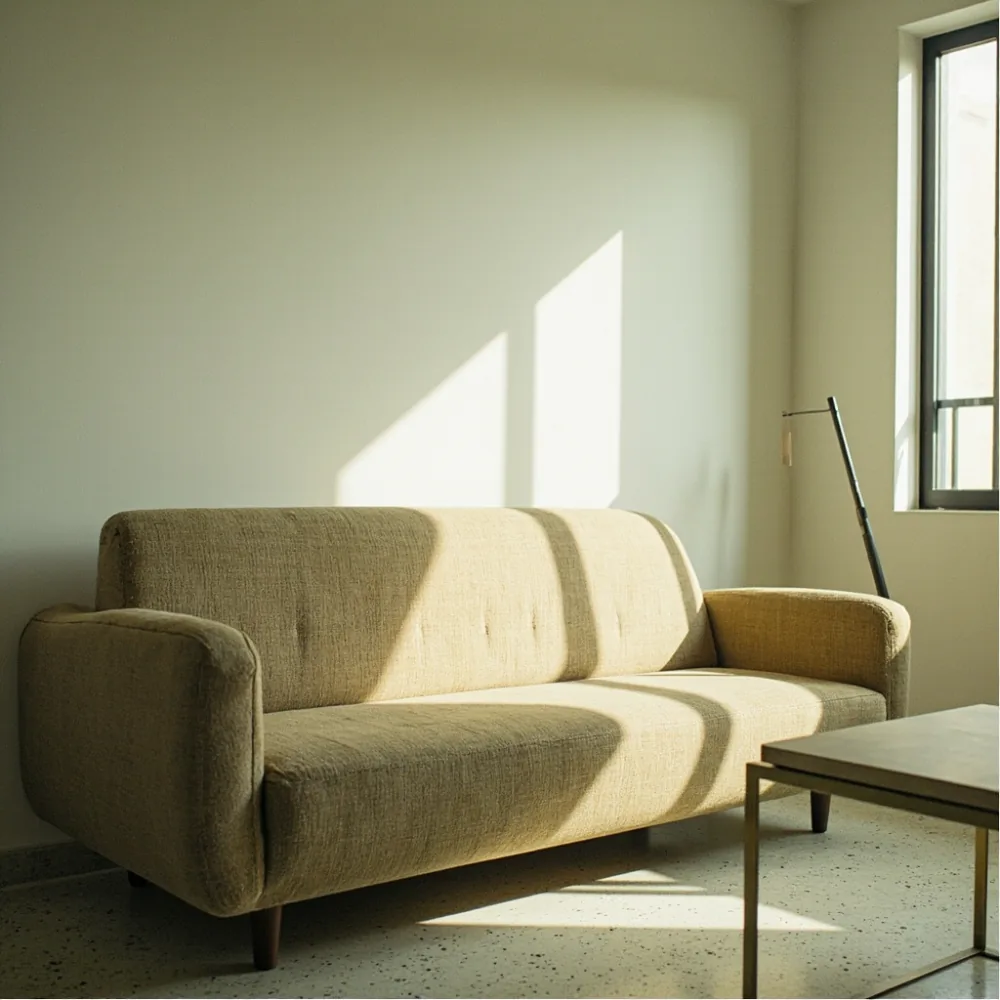
Measure the usable wall length
Choose a practical two-seat size
For most 3-room HDB flats, I start with a sofa around 160–190 cm wide. That gives two people a usable seat without taking over the room. If your living area has a clear wall run of only 180 cm, a 200 cm sofa may look too large once the coffee table and circulation space are added.
- Leave at least 80–90 cm between the sofa and coffee table.
- Keep at least 60 cm for a main walking route.
- Check the sofa depth: 85–95 cm suits normal use, while 100 cm or more feels better for stretching out.
- Measure skirting boards, sockets, window sills and air-conditioner ledges before ordering.
The room floor plan matters more than the HDB or condo label. A compact 3-room unit with poor circulation can feel smaller than a larger flat with furniture placed along one wall. I would also check whether the lift can take the sofa packed, not merely whether the lift can hold its weight. The delivery team needs a route from the loading area to your living room door, including turns at the staircase or corridor.
For a small living room, narrow-arm small space furniture can make a real difference. A sofa with slim arms may save 10–20 cm across the seating area, but avoid models whose arms are so thin that resting your arms becomes uncomfortable.
How much legroom do I need between a sofa and coffee table?
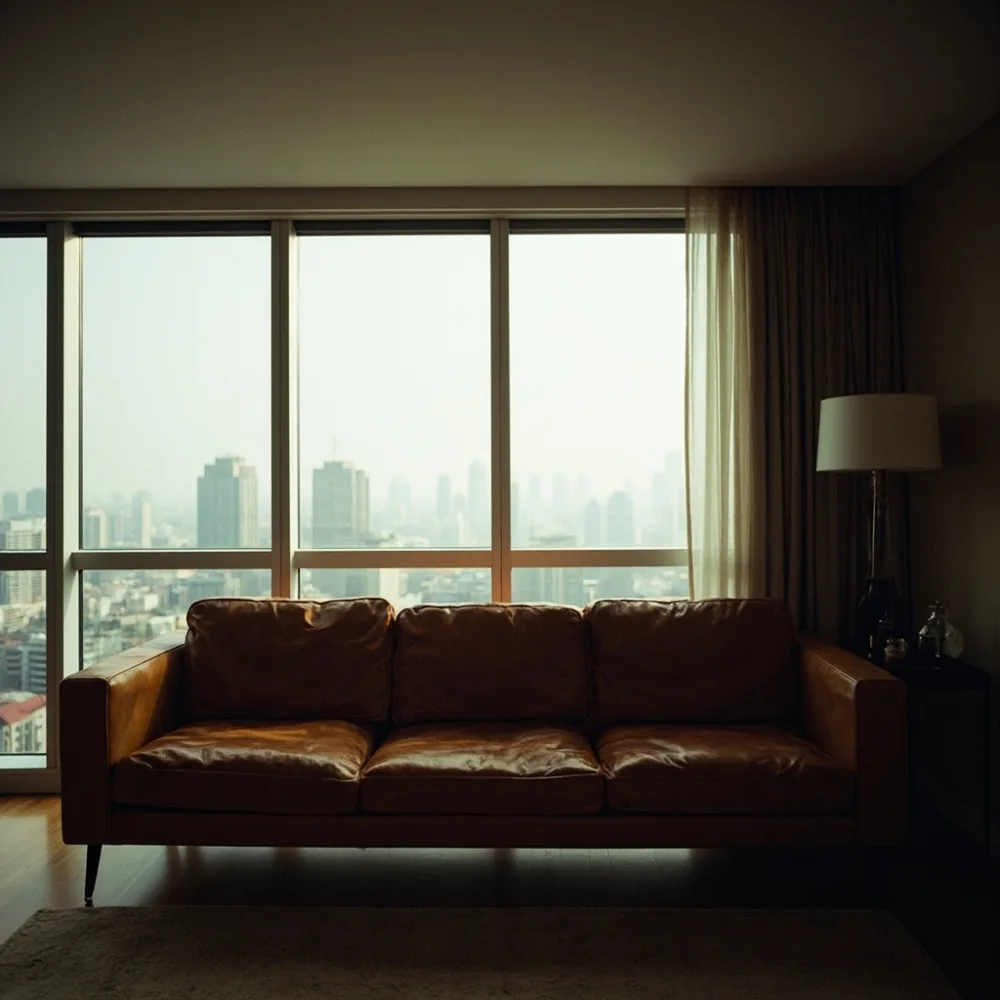
Use the 40–45 cm comfort zone
Allow more space in busy walkways
I usually recommend 40–45 cm between the front edge of a standard coffee table and the sofa. It is close enough to reach a cup or remote, but far enough to walk past without scraping your legs. If the coffee table doubles as a dining surface, 50–60 cm is more comfortable because people need to pull up a chair or move around the table.
- Standard sofa to coffee table: 40–45 cm.
- Sofa to TV console: 45–60 cm for a clear route.
- Main doorway or corridor: keep the route at least 60 cm wide where possible.
- Reclining or folding sofa: measure its full open depth before choosing the table.
Before buying, tape the proposed footprint on the floor with painter’s tape. Leave the sofa in place for a day and imagine carrying hot drinks, cleaning the floor and letting guests through. This simple check catches sizing mistakes that a product photo cannot show.
Round or oval coffee tables often work better than square ones in tight Singapore living rooms because they create fewer sharp corners and leave more usable movement space. If your household mostly watches television, a 90–110 cm rectangular table is usually enough. If you expect snacks, work laptops or host family dinners, consider 120 cm or a table that can be moved.
Should I choose a fabric sofa or a leather sofa in Singapore’s humidity?
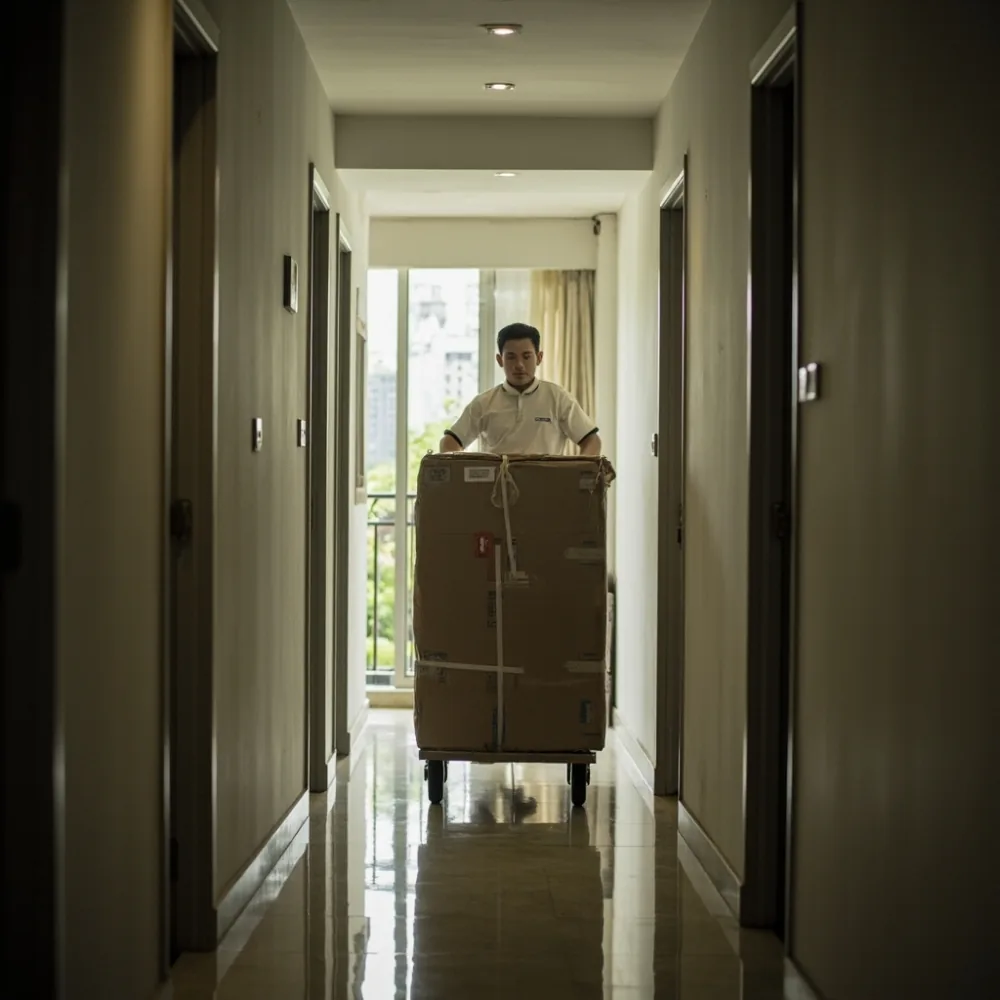
Compare fabric and leather care
Check frame and cushion details
Both can work in Singapore, but the material changes the maintenance routine. Fabric tends to feel cooler in a humid room and is easier to reupholster, while leather can develop mould if dampness is trapped against the seat. The key is ventilation, not simply the label on the tag.
- For fabric, look for stain resistance, removable covers and a tightly woven surface.
- For leather, ask whether the cushions and backrests are detachable or washable.
- Keep an air conditioner running or use a dehumidifier when the sofa is against an external wall.
- Leave 10–15 cm behind the sofa for airflow where the layout permits.
I would not describe either material as completely humidity-proof. Singapore’s relative humidity commonly sits around 70–85% during wetter periods, and a sofa pushed tightly into a corner can dry slowly after rain or air-conditioning use. Wipe spills promptly and inspect the underside periodically.
For homes with children or pets, durable performance fabric is often the easier choice. Full-grain or top-grain leather can age attractively, but lighter colours show marks and may need conditioning. If you like the look of leather but want easier care, a high-quality leather-look fabric can be sensible, provided the manufacturer explains its cleaning method clearly.
What should a sofa frame be made of to survive daily use?
Look beyond the wood name
Ask about the structural warranty
I look for a kiln-dried hardwood frame, good joinery and a suspension system that will not sag after a year. Solid wood furniture is a useful comparison point because frame timber and visible cabinetry should not be confused with plywood or particleboard used in hidden panels. A strong sofa may combine solid timber, plywood and metal springs; the important issue is how the parts are connected.
- Check that the frame is kiln-dried to reduce movement in humid conditions.
- Look for corner blocks, screwed or bracketed joints and a reinforced seat rail.
- Prefer adjustable feet if the floor may be uneven.
- Ask whether the seat cushions use high-density foam and how thick they are.
A typical seat cushion may contain 35–45 kg of foam, but the density matters more than the total weight. I would test the sofa by sitting near the front edge, then in the middle. It should feel supportive without collapsing into a hammock. The backrest should support the lower back rather than force a very upright position.
Warranties also need careful reading. A 10-year structural warranty sounds substantial, but exclusions may apply to moving damage, commercial use, foam softening or parts supplied separately. If you see a solid-wood furniture maker such as MIDHILL, established in Foshan in 2008 and offering a 10-year structural warranty, I would still request the warranty terms in writing and confirm that they apply to the exact sofa model.
How much does a good sofa cost in Singapore?
Compare realistic street prices
Include delivery and assembly
As a broad guide, a new two- or three-seat sofa in Singapore may cost from SGD 900 to SGD 4,500, with custom or imported models reaching SGD 6,000 or more. The gap reflects frame material, cushion construction, leather grade, dimensions, finish quality and whether the piece is locally stocked or made to order.
- Budget SGD 900–1,800 for a compact, serviceable fabric model.
- Expect SGD 1,800–3,500 for better-grade fabric or leather with a more substantial frame.
- Allow roughly SGD 3,500–6,500+ for premium materials, custom sizing or specialist upholstery.
- Set aside about SGD 100–300 for delivery and assembly, or more if stair carrying is involved.
I compare the written quotation rather than the advertised “from” price. Check whether the quoted figure includes the full set of cushions, assembly, old-sofa removal and lift booking. Some sellers quote a low base price but add fabric upgrades, premium foam, extra legs or delivery outside the main service area.
Custom furniture can solve an awkward HDB living room, but the lead time may be 6–12 weeks. Stock models are commonly delivered within 1–4 weeks, though the retailer’s stated timeframe is not always the manufacturer’s production window. Ask for the expected dispatch date, not just the earliest possible delivery date.
Can a sofa be delivered and assembled in my HDB or condo?
Check access before payment
Clarify the service scope
Yes, but access should be confirmed before you pay. For HDB homes, delivery may involve a ground-floor route, a staircase or a service lift with limited opening hours. Condo delivery can be more controlled, but the building management may require a booking, protection mat and proof of delivery documentation.
- Give the retailer your block, floor, unit and nearest lift details.
- Measure the lift car, lift door, hallway turns and your front door.
- Confirm whether the legs are removed for transport.
- Ask whether packing removal and assembly are included.
A sofa packed for delivery may be 160–220 cm long and 35–70 cm deep, depending on the design. It often weighs 45–90 kg, while a larger timber-framed model can exceed 100 kg. The delivery crew needs enough room to tilt and manoeuvre it without damaging walls or door frames.
Some retailers use a two-person team for standard deliveries and charge extra for difficult access. A clear photograph of the route helps. If your unit has a narrow staircase, measure the diagonal clearance as well as the landing width. Small space furniture is not only about the sofa’s dimensions; the access route can determine which models are practical at all.
Which sofa style suits a small Singapore living room?
Favour clean silhouettes
Balance comfort and footprint
A low-profile, two-seat sofa with straight lines usually works best in a compact room. I prefer rounded arms when a corner needs softening, but I avoid overly bulky frames that create a visual barrier. The sofa should relate to the television wall and dining area rather than float in the middle of the room without purpose.
- Use one statement sofa instead of several heavy chairs in a small living room.
- Choose legs that visually lift the frame where the floor looks dark.
- Keep the sofa’s main colour close to the room’s larger surfaces to create visual continuity.
- Use a slim console or nesting tables if surface area is limited.
For larger condos, a three-seat sofa or sectional can provide better zoning. A chaise chaise can look attractive, but check its depth: 150–170 cm is common, so it may need 45–60 cm of clearance in front. A modular sectional offers more layout choices, although corner units can be difficult to move through service lifts.
Before ordering, request fabric swatches and sit on the shortlisted model if possible. A swatch shows colour under local daylight, but it cannot reveal whether the seat depth suits you. Online buying is reasonable for a standard size; custom dimensions are better handled in person with clear measurements.
How do I compare sofa warranties and after-sales support?
Read the exclusions
Check spare-part availability
I compare the warranty duration, what counts as a structural defect and who handles claims. A long warranty is useful only if the supplier has a clear local process for assessment, repair or replacement. Ask for a sample claim form and the expected response time, ideally within 5–10 working days for initial review.
- Check whether the frame, springs, foam and mechanisms have different warranty periods.
- Confirm whether accidental damage, pet damage and commercial use are excluded.
- Ask whether replacement fabric, cushion covers and feet are available separately.
- Keep the invoice, model code and delivery record.
Ten years is long enough to outlast many moving arrangements, but poor documentation can make a claim frustrating. Photograph the sofa on delivery, including the underside, legs and any existing marks. Do this before the delivery team leaves. Record the condition in the delivery note if something is damaged or the wrong item has arrived.
For a local purchase, test whether the retailer can answer questions about cleaning, care and spare parts without passing every issue to the manufacturer. In Singapore, useful after-sales support should include guidance on mould prevention, humidity care and realistic replacement timelines, not just a generic warranty PDF.
What should I check before placing a sofa order in Singapore?
Use a final measurement checklist
Review the total landed cost
My final check is deliberately practical. I measure the wall, floor route, lift and doorway, then compare those numbers with the sofa’s packaged dimensions. I also review the fabric or leather specification, cushion density, frame warranty, delivery date and total payment terms.
- Confirm the exact width, depth, height and seat height in centimetres.
- Ask for the loaded weight and whether two or more delivery staff are assigned.
- Verify the assembly, old-sofa removal and packaging charges.
- Choose a cushion firmness that suits your body and the way you sit.
- Keep a buffer of at least 2–4 weeks before a major event.
For around SGD 1,500–2,500, I would expect a properly specified sofa, reasonable delivery and a clear warranty. At the lower end, the frame and finish deserve closer inspection. At the higher end, confirm that the extra cost is tied to measurable features such as stronger timber, better suspension, higher-density foam or genuine leather rather than vague luxury language.
Singapore buyers should leave time for a humid sofa to acclimatise, especially when moving into a new unit. Air-condition the room for several days, keep the sofa away from damp walls and avoid covering it immediately with fitted covers. That habit protects the upholstery while making the new sofa comfortable sooner.
Frequently asked questions
What is the best sofa size for a small HDB living room?
A sofa around 160–190 cm wide is usually practical for a 3-room HDB flat. The better test is the clear wall length and walking space. Leave about 40–45 cm to the coffee table and at least 60 cm along a main circulation route, while checking the lift and doorway before ordering.
Is a leather sofa suitable for Singapore’s humid climate?
A leather sofa can work well if it receives airflow and spills are cleaned promptly. Leather is not automatically mould-proof, particularly when pushed against a damp exterior wall. Use air conditioning or a dehumidifier, leave a small ventilation gap where possible, and confirm how the cushions and backrests can be maintained.
How much should I budget for a new sofa in Singapore?
A practical new two- or three-seat sofa often costs SGD 900–3,500, while premium, imported or custom models may exceed SGD 4,500. Budget another SGD 100–300 for common delivery and assembly services. Compare the final written quotation, including cushions, fabric upgrades, stair charges and packaging removal.
How long does sofa delivery take in Singapore?
A stocked model may be delivered in 1–4 weeks, while custom furniture can take 6–12 weeks or longer. Confirm the production lead time, dispatch date and delivery appointment separately. Condo management, HDB lift access and narrow staircases can also affect the delivery day, so provide complete access details early.
What does a 10-year structural sofa warranty usually cover?
It commonly covers eligible frame or structural defects, but may exclude foam softening, accidental damage, commercial use or parts supplied separately. Ask for the warranty in writing, including the claim process, repair or replacement terms and response time. Photograph the sofa at delivery and retain the invoice and model details.
Questions about sizing, fabric or delivery?
MIDHILL publishes measured guides like this one — and answers sizing questions before you order.
See the collection