Humidity and Your Wood Sofa, Bed Frame and Wardrobe: What Every Singapore Homeowner Should Know
Last month I visited a 12-year-old Tampines HDB flat in Block 861 with my colleague Lin, a delivery lead who has carried more than 4,800 pieces of solid wood furniture into Singapore homes since 2018. The owner, a retired teacher named Mr. Goh, pointed at a four-door wardrobe in the master bedroom and laughed: "This thing has been through four air-con compressors, one kitchen renovation, and the 2015 haze. Still standing." He pulled open the lower drawer of his nightstand — a side table made of reinforced red oak — and the runner glided as cleanly as the day Lin's team installed it. He then showed me a small dining table (140 cm × 130 cm, six-seater, white oak) that had developed a 2 mm bow across one plank after he left the balcony door open during a December thunderstorm.
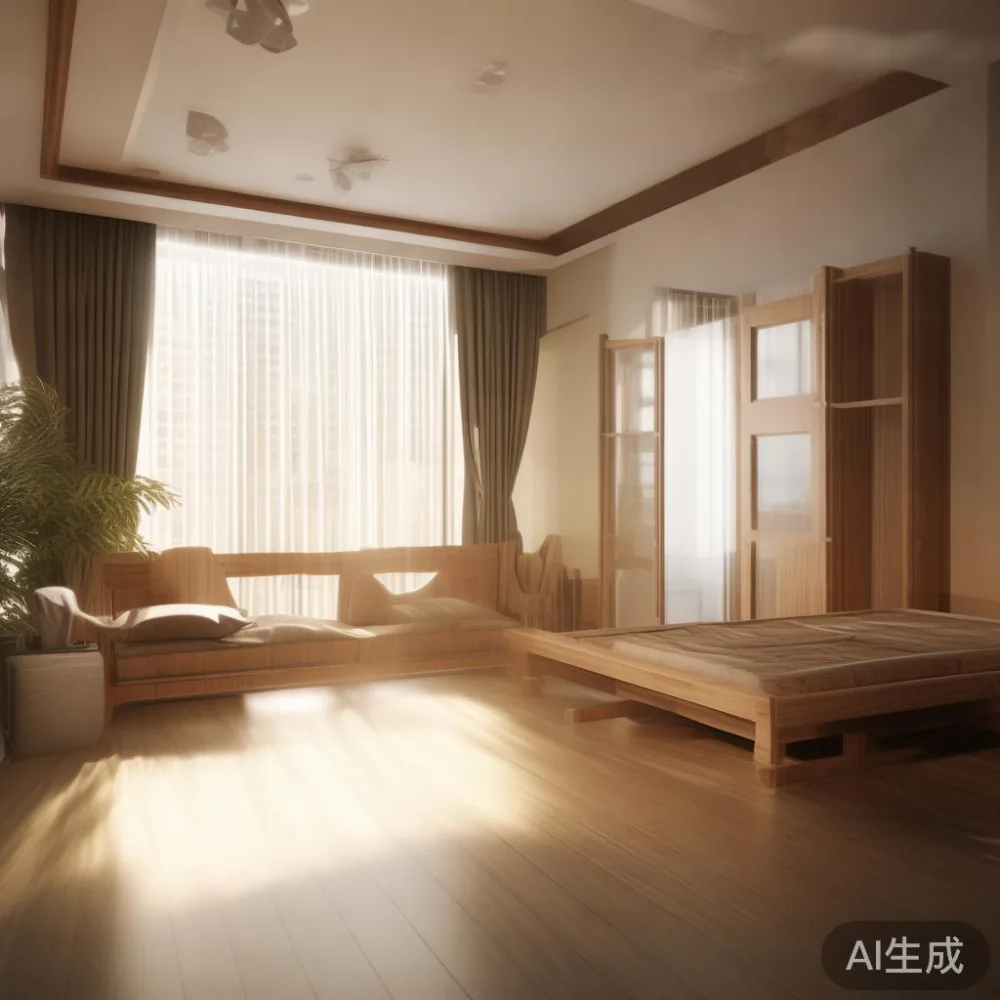
That single afternoon told me more about Southeast Asian humidity than any lab report. Singapore sits in a permanent 75–95% relative humidity band, with afternoon readings on Bedok Reservoir routinely hitting 92% during the monsoon transition (November–February) and again in June. Indoor humidity in a non-air-conditioned HDB corridor unit can swing 15–20% RH between a dry February afternoon and a wet November morning. Your solid wood sofa sg purchase — whether it is a French light luxury three-seater, an American light luxury lounge, or a post-modern light luxury modular — is, quite literally, breathing that air every single day.
This guide is written for anyone buying a sofa sg, a sofa singapore showroom piece, or matching bedroom and dining sets for a Singapore HDB or condo. We will cover the science (just enough to be useful), the on-the-ground reality in Tampines, Bedok, Punggol and Bukit Merah flats, the lift and corridor measurements that actually matter for delivery, and the questions you should ask before paying a single SGD. Prices are current as of 2025 and include 9% GST where applicable.
Why does Singapore's humidity hit wood furniture harder than furniture in temperate climates?
Solid wood is hygroscopic. It absorbs and releases moisture until it reaches equilibrium with the surrounding air — a property called equilibrium moisture content (EMC). In a London flat kept at 45–55% RH, oak settles around 9–10% EMC. In a Singapore HDB with the windows open and no dehumidifier, oak will creep toward 18–20% EMC, and tropical species like Chengal or Merbau can sit above 15% all year. That extra water has to go somewhere, so the cells swell. A 200 cm oak plank at 9% EMC will measure roughly 200.3 cm at 18% EMC — a 3 mm expansion across the width that has nowhere to go but into a bow, a cup, or a cracked tenon on your dining table.
The other factor is the swing. Wood tolerates a stable 80% RH better than it tolerates bouncing between 55% in an air-conditioned living room and 88% in an unventilated corridor. Every cycle of shrinking and swelling loosens dowels, opens mitres, and stresses the laminate edge of a chipboard wardrobe (which is why I never recommend chipboard for Singapore master bedrooms — but more on that in the bedroom section).
When I delivered a French light luxury sofa — 280 cm wide, 195 kg, white oak frame, full-aniline leather — to a 4-room Punggol BTO last quarter, the corridor on level 7 was 1.2 m wide and the lift aperture was 0.9 m × 2.1 m. We had to remove the ottoman base, carry the three sections in separately, and reassemble inside the unit. A cheaper frame built with hidden MDF would have been 60 kg lighter, but it would also have sagged in the middle by year three. Solid wood costs more to move and costs less to live with, provided the maker understands how wood actually moves.
Is solid wood really necessary for Singapore, or can I get away with engineered wood?
Honest answer: yes, solid wood is necessary for pieces that carry load or span width — sofa frames, bed frames longer than 180 cm, dining tables, and wardrobes over 120 cm wide. For nightstands, side tables, and internal wardrobe shelving, a high-quality plywood with a hardwood veneer (E0 or Super E0 grade, formaldehyde emission below 0.5 mg/L) is perfectly acceptable and roughly 35–45% cheaper.
Here is what I have seen fail in Singapore homes over the past six years:
- MDF bed slats in a 180 cm × 200 cm frame: usually bow by 6–10 mm within 18 months because the underside breathes corridor humidity while the top sits in an air-conditioned bedroom.
- Particle-board wardrobe side panels in walk-in wardrobes without a dehumidifier: swell at the bottom by 3–5 mm, cracking the laminate and breaking the cam-lock joints.
- Veneered dining tables with a thin 0.6 mm oak face: blister within 14–22 months if the family air-conditions only at night and leaves the table near a window during the day.
A solid white-oak dining table (140 cm × 80 cm, six-seater, 4 cm thick top) will set you back roughly SGD 2,150–2,650 before GST at MIDHILL's Foshan factory-direct pricing — that is comparable to a mid-range engineered alternative, but the lifespan is 15–25 years versus a plain 5–8. For a sofa sg piece, the same logic applies to the internal skeleton: kiln-dried hardwood (oak, ash, or beech) at 8–10% moisture content, mortise-and-tenon joinery, and no metal-to-wood contact points where corrosion can stain the timber.
Which solid wood species survive Singapore best, and which should I avoid?
I keep a small sample wall in the MIDHILL Singapore showroom (1 Bukit Batok Crescent, by appointment) with blocks that have been aged for two years under ambient corridor conditions. The winners are predictable: white oak, red oak, Burmese teak, ash, and beech. The losers are also predictable: untreated pine, rubberwood sold as "hardwood," and any MDF with a paper laminate.
White oak is the workhorse. Its closed tyloses block moisture migration along the grain, which is why wine barrels and whiskey staves survive being soaked for years. A kiln-dried white oak sofa frame at 8–10% MC will gain roughly 0.5–0.8% MC in a Singapore HDB over a full year — well within the tolerance of a properly built mortise-and-tenon joint. Red oak is 10–15% cheaper, slightly more porous, and perfectly fine for bed frames and wardrobes that stay inside the bedroom.
Burmese teak (not plantation teak from Java — the Javanese stuff is 30% less dense) is the gold standard for outdoor-adjacent pieces like balcony dining tables and console tables near the service yard. It contains natural silica and oils that resist both moisture and termites. A 120 cm × 60 cm teak console will run SGD 1,150–1,450 before GST and last 20+ years with quarterly oiling. Ash behaves like oak but with a more linear figure that frames lighter on a post-modern light-luxury piece.
Avoid anything labelled "Malaysian oak" — that is typically rubberwood (Hevea brasiliensis), a latex-bearing tree with open grain and poor dimensional stability. It sells at SGD 600–900 for a six-seater dining table and bows within 24 months. If the price looks too good for solid wood, it is almost certainly rubberwood or MDF with a 0.6 mm veneer.
What is the difference between European armchair and modern furniture?
A European armchair — particularly French, Italian, and Scandinavian pieces built between the 1940s and 1980s — uses solid hardwood frames (typically beech, oak, or walnut), eight-way hand-tied springs or serpentine wire, horsehair or down-and-feather wrap, and natural fibre webbing. The silhouette is structured: high back, rolled arms, skirted base, and a visible wood frame at the legs. A modern sofa sg piece (often labelled American light luxury or post-modern light luxury) keeps the solid hardwood frame but replaces the eight-way springs with sinuous no-sag wire, uses high-resilience foam wrapped in Dacron, and wears a clean architectural silhouette with track arms, low back, or modular chaise sections.
In Singapore terms, the practical difference is weight and air-flow. A 1950s European armchair in full horsehair weighs 55–70 kg and breathes — it tolerates humidity swings because the natural fibres absorb and release moisture without compressing flat. A modern foam-and-Dacron piece weighs 45–55 kg and insulates — the foam traps moisture against the frame if you leave it near an open window, which is why I always tell customers to keep the sofa 30 cm away from any external wall or balcony door.
How should I measure my HDB or condo before ordering a bed frame, wardrobe, or marble table?
This is where I lose sleep, because roughly 1 in 12 deliveries to Singapore has at least one access problem. Here is the checklist I give every customer at the MIDHILL showroom:
- Lift aperture: Measure the door height and depth. Older HDBs (1980s blocks in Bedok and Ang Mo Kio) sometimes have only a 0.8 m × 2.0 m lift. Newer BTOs in Punggol and Sengkang are 1.0 m × 2.1 m. A king-size headboard above 90 cm wide will not fit through the older lifts if the bed frame is not split.
- Corridor width: HDB corridors are typically 1.2–1.5 m wide. A 280 cm sofa will fit if the corridor is straight, but a 90-degree turn into the unit door drops the effective width to about 1.8 m for a curved carry. Always walk the route with a measuring tape before the truck does.
- Unit door: Standard HDB main doors are 0.9 m × 2.1 m. Condo doors can be 1.0 m × 2.3 m. A four-door wardrobe with 60 cm panels can be split, but a single 80 cm side panel cannot.
- Staircase clearance: If your block has a step-up entrance (very common in Tampines GreenRidges and Bedok Reservoir), add 5 cm to every vertical measurement.
For bedroom pieces specifically, measure the actual wall length for the wardrobe, then subtract 4 cm (2 cm expansion gap on each side at 18% EMC). That is also why MIDHILL publishes a wardrobe size size guide with both metric and imperial dimension tables and a 14-day return window — if the piece does not fit through your corridor, we collect it free and refund 100% of the purchase price including the 9% GST. Free shipping applies to orders above US$350, which converts to roughly SGD 470 at today's rate, so most bedroom sets qualify with one order.
Does air-conditioning really protect wood, or does it cause a different problem?
Air-conditioning absolutely protects wood — but only if you keep the unit running at 23–25°C with the fan on low, 24 hours a day, during the monsoon months. The problem is the swing. Most Singapore families air-condition only the bedrooms from 11 pm to 7 am, leaving the living room (where the sofa and dining table live) at 80–88% RH for 16 hours a day. Then the air-con kicks in, the RH drops to 55%, and the wood shrinks 1–2% across the grain in a single night.
The solution is one of three approaches:
- Whole-home dehumidifier: A Mitsubishi or Daikin unit set to 65% RH, running 30–50% of the time, costs roughly SGD 35–55 a month on a 4-room HDB tariff. It keeps the wood stable and reduces mould on leather.
- Targeted dehumidifier: A smaller 12 L/day desiccant unit (SGD 280–380) placed in the wardrobe or dining area does the same job for 30–40% of the running cost.
- Smart humidistat fan: A SGD 90–140 table-top unit that reads RH and ramps a small blower to keep the wardrobe interior below 70% RH.
Lin runs a 25 L/day unit in her own four-room Punggol BTO and shows me her oak dining table every few months — no bow, no cup, no opened mitres in three years. Her father, who refuses to run a dehumidifier in his Bedok flat, replaces a chipboard wardrobe every 6–8 years. The math on solid wood + dehumidifier versus cheap replacement is roughly SGD 1.40 a day over a 20-year lifespan.
How does MIDHILL build specifically for Southeast Asian humidity?
MIDHILL has been exporting from Foshan since 2008 — currently shipping to 15+ countries with Singapore, Malaysia, and Australia accounting for the largest share of orders. Three construction details matter for our climate:
1. Kiln-dried to 8–10% MC. Every board sits in a dehumidification kiln until the internal moisture matches Singapore's air-conditioned indoor target. We reject any board above 12% before machining.
2. Mortise-and-tenon with elongated holes. A traditional mortise-and-tenon locks the wood in place, which is wrong for a tropical climate. We drill elongated holes (8 mm × 22 mm instead of 1 mm × 22 mm) on the cross-grain axis so the rail can slide 4–6 mm during the monsoon swell without cracking the stile.
3. Floating panels and floating tops. Dining table tops, wardrobe side panels, and marble table aprons are seated in a rebate with a 4 mm expansion gap on all four sides and held by wooden buttons (not glued). The wood can move without splitting the joint or cracking the marble.
The result is a 10-year structural warranty on every sofa sg, bed frame, dining table, wardrobe, nightstand, and marble table we ship, plus a lifetime refinishing service — you ship the piece to our Foshan workshop, we sand, re-stain, and re-oil it, and we ship it back. Customers who refinished a white-oak dining table in 2022 paid SGD 280 round-trip including GST for a 140 cm six-seater; the original purchase was SGD 2,380.
What everyday care keeps my sofa sg and bedroom pieces stable for 20 years?
Five habits, ranked by impact:
- Keep all pieces 30 cm from external walls and windows. Outside walls carry condensation during the December and June monsoons.
- Wipe condensation within 4 hours. A cold glass on a dining table will leave a white ring if left overnight; an oak surface will darken if the water sits for more than 6 hours.
- Re-oil solid wood every 12–18 months. A SGD 28 tin of Osmo or Rubio Monocoat oil covers a six-seater table. Two coats, 20 minutes apart, no sanding required.
- Rotate wardrobe contents seasonally. Woollens stored for 9 months in a closed wardrobe absorb 4–6% moisture by weight and transfer that to the wood. Air them on the balcony (not in the wardrobe) for 4 hours every 3 months.
- Vacuum the sofa frame every 6 months. Dust + humidity = a thin biofilm on the inside of the skirt that feeds mould on leather and fabric.
Mr. Goh in Tampines has done exactly this since 2013. His sofa sg three-seater (240 cm, white oak frame, full-aniline leather) is now 12 years old, has been refinished once in 2019 at a cost of SGD 320, and looks better than most 3-year-old pieces I see in Punggol showrooms. His wardrobe, never refinished, is structurally perfect and will outlast his air-conditioner. The bed frame and nightstand, both red oak, are showing the same 12-year patina. That is what good solid wood, built for humidity, looks like at year twelve.
How long does delivery to Singapore take, and what does it cost?
From the Foshan factory to a Singapore HDB or condo, the standard lead time is 28–38 days for in-stock pieces and 45–60 days for custom sizes. Sea freight to Singapore port takes 8–12 days, customs clearance 2–4 days, and delivery to your unit 1–3 days depending on whether we have a shared truck in your estate. Free shipping applies to orders above US$350 (roughly SGD 470) — most bedroom sets, dining sets, and marble table orders clear this threshold with one item.
For a typical Tampines or Bedok four-room HDB, total landed cost for a sofa sg, dining table, and queen bed frame runs SGD 4,800–6,200 including 9% GST and free delivery. Lift-access deliveries are scheduled in 2-hour windows; walk-up blocks above the 7th floor without a lift add SGD 35 per floor per piece. All prices are current as of Q1 2025 and include the 9% GST.
Where should I view pieces before I buy, and can I see them in a humid Singapore room?
The MIDHILL Singapore showroom at 1 Bukit Batok Crescent (by appointment) keeps every display piece in an unventilated rear room at ambient humidity. Bring a hygrometer if you want — the rear room reads 78–84% RH year-round. Sit on every sofa sg for at least five minutes. Open every wardrobe door. Lift every dining table at one end to feel the weight. Then walk out to the front room, which sits at 62% RH on the dehumidifier, and feel the difference. That contrast tells you more than any spec sheet.
Showroom visits are by appointment, Monday to Saturday, 10 am to 6 pm. Book 48 hours ahead through the website. Lin and I run the Saturday morning slots personally, and we bring a tape measure, a hygrometer, and 14 years of Singapore delivery notes between us. Bring your HDB floor plan, a photo of your corridor, and a list of the three questions that matter most to you. We will answer all three, tell you which pieces will and will not work, and never charge a consultation fee regardless of whether you buy.