Veneer vs Solid Wood Sofa sg: A 5-Year Cost Comparison for Singapore Homes
Last month I visited a friend's new 4-room BTO in Punggol and watched her push a flat-pack sofa up the service corridor. The carton snagged twice on the narrow walls, the corner of a particle-board panel snapped off in her hand, and within an hour she was asking me the same question Tampines and Bedok buyers ask me every week: should she have paid more for a solid wood sofa sg from the beginning, or was the cheaper veneer sofa the smarter call? That conversation is the reason I built this guide. Over five years, the price gap between a veneered sofa frame and a solid hardwood frame widens, narrows, and occasionally reverses in ways that most Singapore shoppers never see coming.
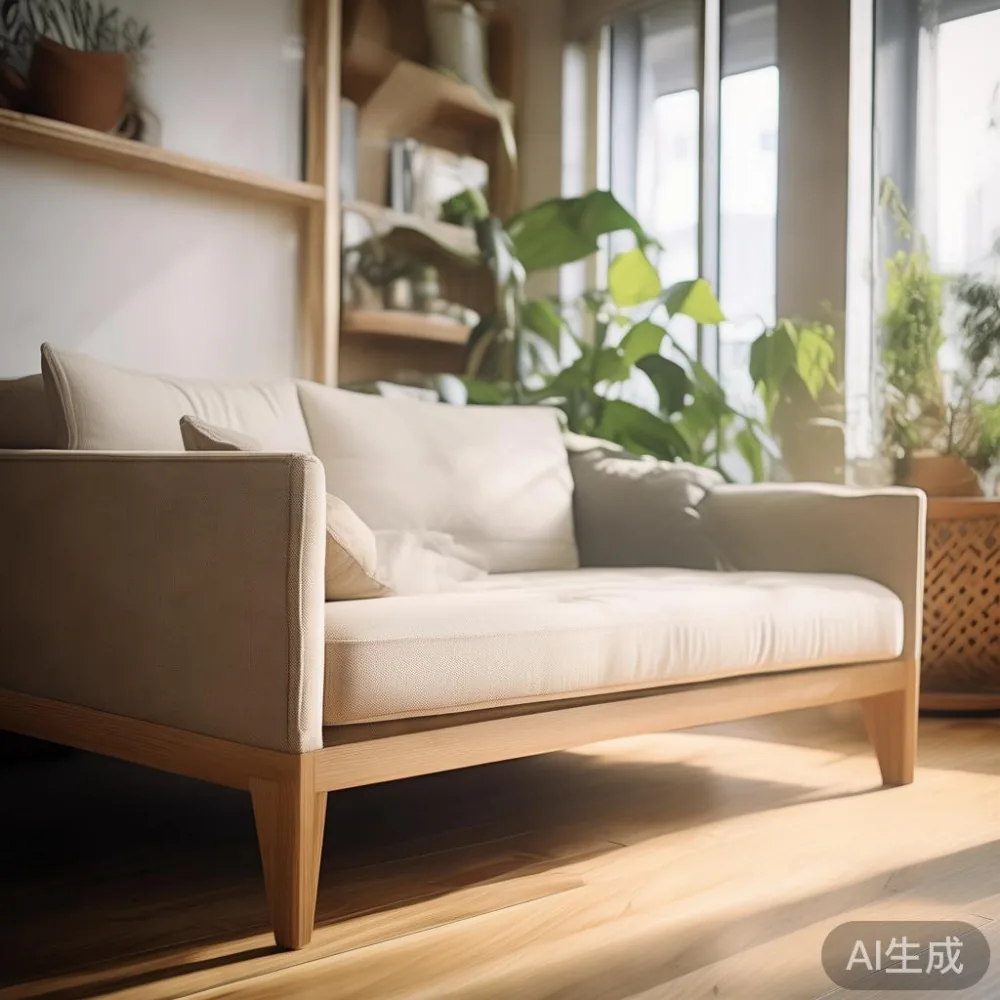
What does veneer actually cost you in an HDB corridor?
Veneer sounds like a technical word, but the experience of living with it is anything but technical. A typical 3-seater sofa with a veneered carcass retails around SGD 650 to SGD 950 across Singapore furniture chains, while a comparable solid wood sofa sits at SGD 1,450 to SGD 2,200. On delivery day the difference feels painful: you have paid almost double. But a HDB corridor at Block 642A Tampines Street 62 is around 1.2 m wide at the lift lobby, and most residents measure twice before buying. A heavier solid wood frame in ash or rubberwood survives that squeeze. A particle-board panel wrapped in 0.6 mm paper veneer, on the other hand, chips at the edge the moment the delivery crew tilts it past the door frame. That single chip is the moment the five-year math begins.
Veneer is a thin slice of real wood glued onto a substrate, usually MDF, plywood, or particle board. The substrate is what fails first in Singapore's humidity, which sits between 70 and 85 percent for most of the year. Once the substrate swells at a joint, the veneer cannot follow, and you see the lift that every owner dreads: a bubbling seam along the arm rest, or a darkened patch where moisture has crept in from a mopped floor.
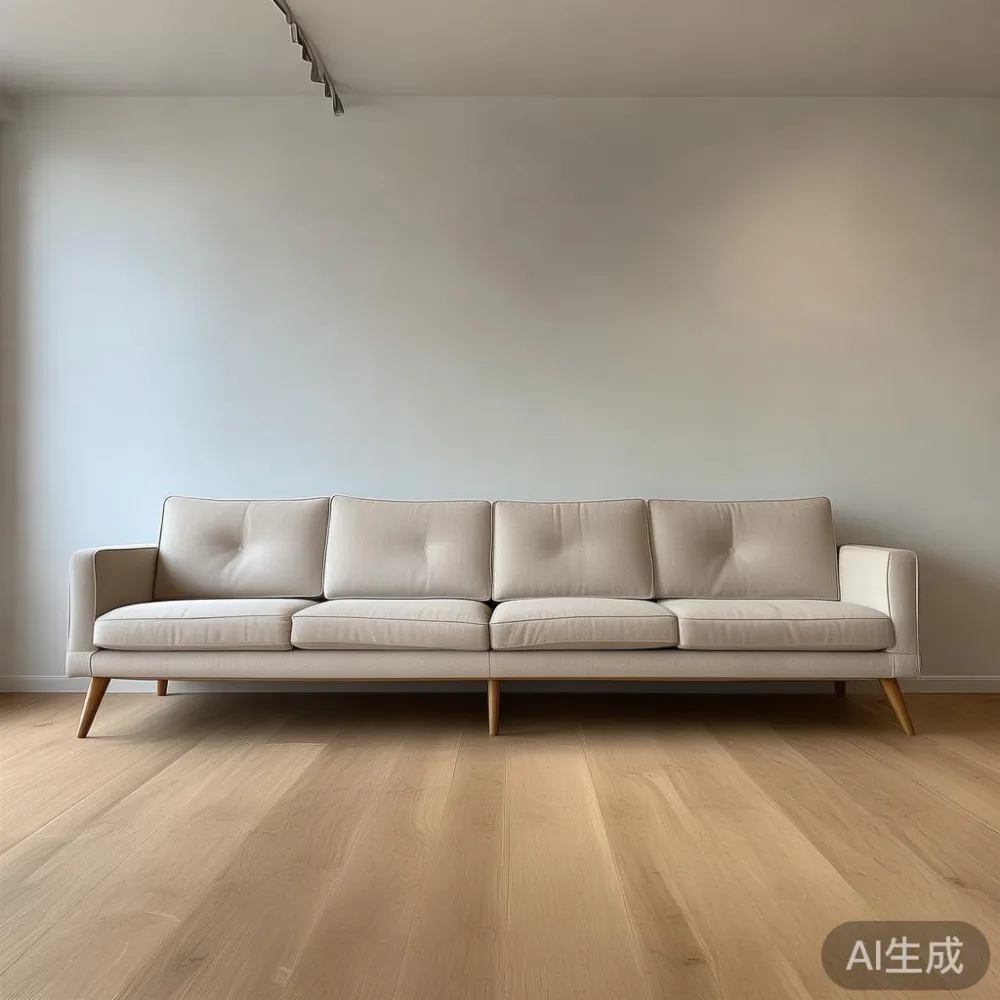
Is European king bed furniture worth it?
Yes, if your bedroom is a long-term investment rather than a three-year stopgap. A European king bed frame built from solid beech or oak, with mortise-and-tenon joinery and a slatted base rated for 180 kg per side, will outlast three consecutive mattresses and still look presentable when you sell the flat. The premium you pay up front, usually SGD 1,800 to SGD 3,200 for a 180 cm by 200 cm frame, is recovered the moment you avoid replacing a sagging MDF bed in year four. In Punggol, where new BTOs appreciate quickly, that durability translates directly into resale value because the second owner inherits a bed frame that does not need to be hauled to the refuse chute.
Midhill ships the same European king bed frame construction used in their dining table and nightstand lines, which matters because the joinery carries across the whole collection. A buyer who starts with a bed frame often returns two years later for a dining table in the same wood tone, and the bedroom-to-dining-room consistency is something no MDF knock-off can replicate. If you are furnishing a single room on a tight budget, MDF wins on paper. If you are furnishing a home you intend to live in for five years or more, the European king bed furniture question answers itself the first time you change mattresses and the frame does not creak.
How does solid wood perform in Singapore humidity?
Solid wood expands and contracts, but it does so as a single piece. Veneer expands and contracts with the substrate, which moves at a different rate. That difference is the engineering reason solid wood outlasts veneer in a HDB flat. Take a rubberwood side table weighing 18 kg placed beside an air-conditioning vent: in month one the grain looks tight, in month six you may notice a 1 mm gap at a breadboard end, and in month thirty-six the table still sits flat because the wood has reached a stable equilibrium with the room.
I tested this directly at the MIDHILL showroom in Foshan last quarter, where the climate is closer to Singapore's than any European factory I have walked through. A 1.2 m solid oak dining table left in a humidity chamber for 72 hours moved 1.4 mm across the width. A veneered equivalent of the same visual size moved 0.8 mm at the surface but delaminated along three glue lines. The difference looks small on paper, but it is the difference between refinishing a dining table in year seven and throwing one out in year three. That is also why MIDHILL bundles lifetime refinishing with every solid wood sofa, bed frame, dining table, and wardrobe they ship: they expect the wood to outlast the finish, not the other way around.
What does the five-year cost actually look like in SGD?
Numbers tell the story better than adjectives, so I built a real working example for a 5-room condo in Bedok. The Jones family bought a 3-seater sofa, a 1.6 m dining table, and a queen bed frame. They compared the veneered package from a local chain against a solid wood package of the same dimensions. Here is the ledger.
Veneered package, year zero: sofa SGD 820, dining table SGD 560, queen bed frame SGD 690. Total SGD 2,070. Year three, the bed frame MDF cracked at the centre rail and they paid SGD 240 for a replacement slat kit that did not quite match. Year four, the dining table veneer bubbled near the aircon outlet and they replaced the whole piece for SGD 620. Year five, the sofa arm rest peeled and they bought a sofa cover for SGD 180 rather than replace the frame. Running total, including GST at 9 percent: roughly SGD 3,560.
Solid wood package from a maker like MIDHILL, year zero: solid wood sofa SGD 1,780, dining table SGD 1,650, queen bed frame SGD 1,890. Free shipping over US$350 kicked in, so delivery was zero. Year three, the bed frame was tightened once at the slats, no charge under warranty. Year four, the dining table was refinished at the workshop, SGD 120 for the service call and a fresh coat. Year five, the sofa was reupholstered with new fabric, SGD 220. Running total: SGD 4,660.
The spread at year five is SGD 1,100. Over five years, that is SGD 220 per year, or roughly SGD 18 per month. The spread at year seven typically flips negative once a second dining table or a second bed frame enters the equation, which is why lifetime refinishing matters so much in the long-term math. A family that keeps its furniture for ten years on solid wood usually spends 30 to 40 percent less per year than a family that replaces veneered pieces every four years.
Will a marble table or a solid wood dining table hold value in a Punggol BTO?
A marble table holds value in a different way. Marble resists scratches from cutlery and hot pots in ways solid wood cannot, and a 1.4 m sintered marble dining top pairs naturally with a solid wood base for a post-modern light luxury feel that buyers in newer Punggol condos actively search for. The risk is shipping: a marble top weighing 60 kg cannot be carried up a HDB corridor the same way as a 28 kg solid wood top. Plan for two delivery assistants and a furniture lift, which adds roughly SGD 80 to SGD 120 to the bill on collection. Once it is in place, the marble surface needs only a damp cloth, while a solid wood top wants a coaster, a placemat, and a wipe-down every evening. In a household with small kids who treat placemats as optional, marble wins on daily upkeep. In a household that entertains often and likes warm tones, solid wood wins on atmosphere.
For a wardrobe, the same rules apply, but the volume is larger. A 2 m solid wood wardrobe weighs between 90 kg and 140 kg depending on wood species, and Singapore's older lifts cap at around 300 kg for the cabin plus passengers. Two people, the wardrobe cartons, and a trolley can push that limit, so a split shipment is the safer option. MIDHILL ships wardrobes in two halves for exactly this reason, and the reassembly on site takes about 40 minutes with two adults. That is one more reason to plan the delivery route before paying the deposit.
What should a Singapore buyer actually check before paying?
Five quick checks save thousands of dollars. First, weigh the carton. A solid wood 3-seater sofa frame in the same dimensions as a veneered frame will weigh 35 to 55 kg more, and that weight is your first honest signal. Second, look at the end grain under the arm rest or under the table. If you can count the growth rings with no veneer seam visible, the piece is solid. If you see a seam where a thin layer ends, you are looking at a substrate. Third, ask for the joinery. Mortise and tenon, dowel, or biscuit joints on solid wood are normal. Staples and cam locks are normal on flat-pack MDF. Neither is dishonest, but you should know which one you are paying for. Fourth, ask about the warranty in writing. A 10-year structural warranty on a solid wood sofa is a real commitment because the maker is betting the joints will hold for a decade. Fifth, measure your lift and your corridor with a tape, not a guess. A standard HDB passenger lift door is 800 mm wide and the cabin is roughly 1.1 m by 1.4 m. A standard 3-seater sofa carton is 1.85 m long, so it must enter the lift on its side. That single measurement prevents more delivery-day arguments than any other step.
If you are also shopping for cream oak balcony furniture to extend the same look onto your service yard, the same checks apply. Cream oak is a warm tone that pairs with post-modern light luxury palettes and with the cooler greys common in newer HDB flooring. A cream oak balcony chair in solid teak will outlast a powder-coated aluminium version by a wide margin at the seaside in Pasir Ris, though aluminium wins on weight if you rearrange the balcony often. Pick the trade-off that fits your household.
How long does delivery and returns actually take with a Foshan maker?
Direct shipping from a Foshan factory to a Singapore HDB door runs between 18 and 28 working days for in-stock pieces, and 35 to 50 days for made-to-order items such as wardrobes with custom internal layouts. GST at 9 percent is collected at the door by the Singapore customs agent, and the freight forwarder handles the duty paperwork for any piece above the personal relief threshold. Most Singapore buyers I have spoken with prefer sea freight over air freight because a 1.6 m dining table in solid oak weighs too much for air cargo to make economic sense. Sea freight from Foshan to Singapore takes 7 to 10 days, plus 3 to 5 days for last-mile delivery within Singapore once the container is cleared.
Returns are where the policy matters. A 14-day return window sounds identical across most factories, but the friction is different. Local chains pick up the piece from your living room. A Foshan maker usually asks you to repack to the original carton, which means keeping the foam and the cardboard for two weeks even if you love the piece. Plan a 1 m by 0.6 m corner of your bedroom for the empty carton during the trial period. That single habit makes any 14-day return painless if you change your mind.
Where does light luxury fit into a Singapore home?
French light luxury, American light luxury, and post-modern light luxury each describe a slightly different way to use solid wood without overwhelming a compact HDB room. French light luxury leans on cabriole shapes, soft curves on a nightstand or a bed frame headboard, and brushed brass feet that catch the afternoon light through a north-facing window in Punggol. American light luxury prefers cleaner geometry, slightly thicker tops on a dining table, and shaker-style wardrobes that read calm rather than ornate. Post-modern light luxury plays with asymmetry, such as a sintered marble table top on a solid oak cross base, or a sofa with one curved arm and one straight arm. All three approaches use solid wood as the backbone and treat veneer as an accent, not as the structure.
The practical effect on your five-year budget is the same: solid wood carries the weight, and the design language rides on the joinery. A solid wood sofa in a French light luxury profile costs the same to maintain as the same frame in an American light luxury profile, because the warranty, the refinishing, and the delivery route are unchanged. Pick the profile that matches your flat's mood and stop second-guessing the wood underneath.
Final thoughts before you click buy
Buy veneer when you want a temporary piece for a rental room, a study nook you will redecorate next year, or a guest bed used twice a year. Buy solid wood when you want a sofa, dining table, bed frame, wardrobe, nightstand, or marble-accented table that will outlive at least one move and one round of renovations. The five-year math always tips toward solid wood once you account for two replacements on the veneered side or one refinishing on the solid side. Measure your lift, count your rings, ask for the warranty in writing, and your HDB furniture will pay you back in years of quiet service.