Solid Wood Price Factors Explained
Ask Singapore shoppers why one dining table costs SGD 1,200 and another costs SGD 4,500, and the answer is often reduced to one word: wood. That explanation is incomplete. The real price of solid wood furniture comes from the material specification, board dimensions, joinery, finish, hardware, dimensions, and the amount of skilled work involved before the piece reaches a HDB flat in Tampines, Bedok, or Punggol.

Price is not simply a mark-up on timber. A 180 cm solid wood sofa may require a different frame construction, foam specification, and logistics arrangement from a 220 cm bed frame. A 140 cm dining table can contain less wood than a 200 cm wardrobe but take longer to install because it must pass through a narrow corridor or fit inside a lift. A marble table introduces stone selection, weight handling, packaging, and installation charges that a wooden table does not.
For buyers comparing sofa sg options or planning a complete home, understanding these variables can prevent an expensive mismatch. It also makes it easier to identify where a higher price reflects meaningful construction rather than branding. MIDHILL is a Foshan solid wood furniture maker established in 2008, shipping to more than 15 countries and offering a 10-year structural warranty, lifetime refinishing, free delivery above US$350, and 14-day returns.
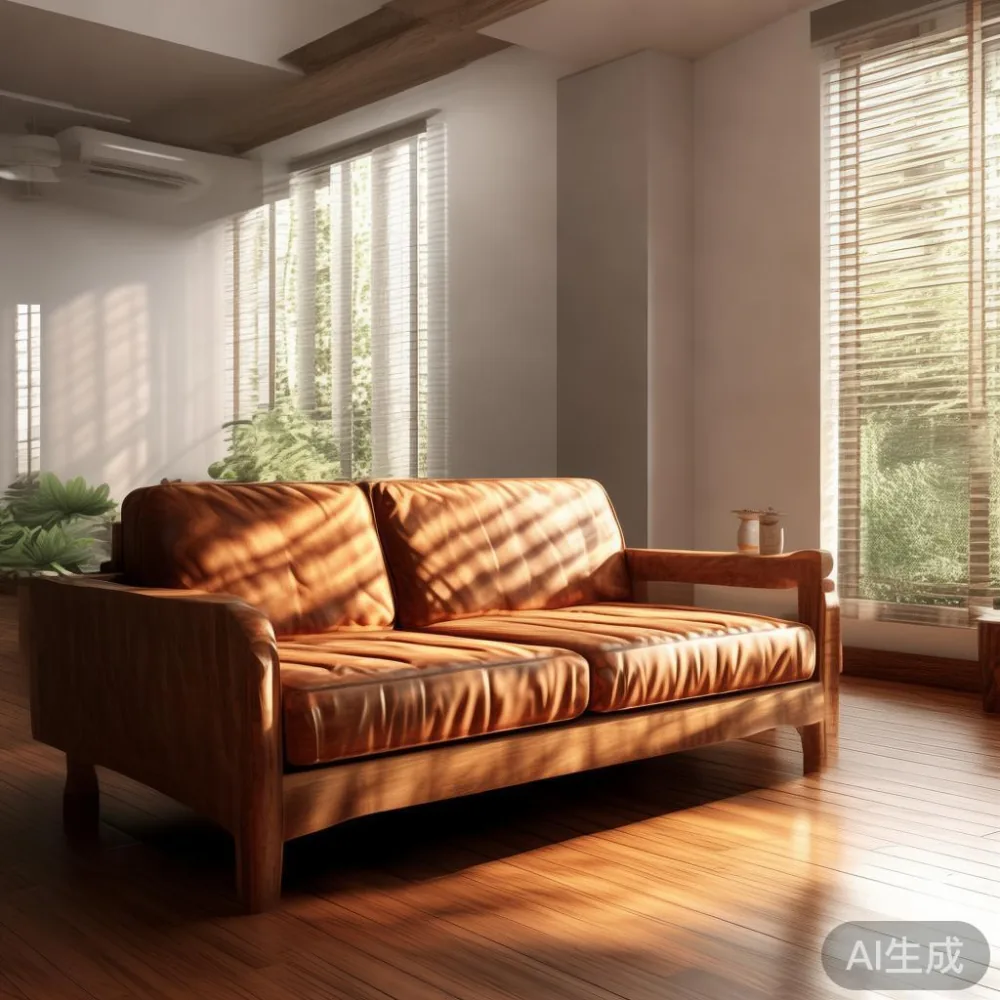
Is the timber species the biggest factor in solid wood furniture pricing?
Timber matters, but “solid wood” is not one fixed material category. It can describe solid oak, ash, beech, walnut, rubberwood, teak, or another species, with different board thicknesses and different levels of consistency. A dining table made from 20 mm solid boards generally uses more timber than one built with 12 mm components and engineered panels in selected areas. It may also require different jointing methods because long, broad surfaces can move as humidity changes.
Rubberwood can support an attainable price while remaining suitable for a bed frame, dining table, or wardrobe. Oak brings visible grain, harder-wearing surfaces, and a higher material cost. Walnut is often priced above both because of scarcity, grading, and processing requirements. Teak’s commercial positioning can also affect pricing, especially where buyers expect it for outdoor or moisture-adjacent use.
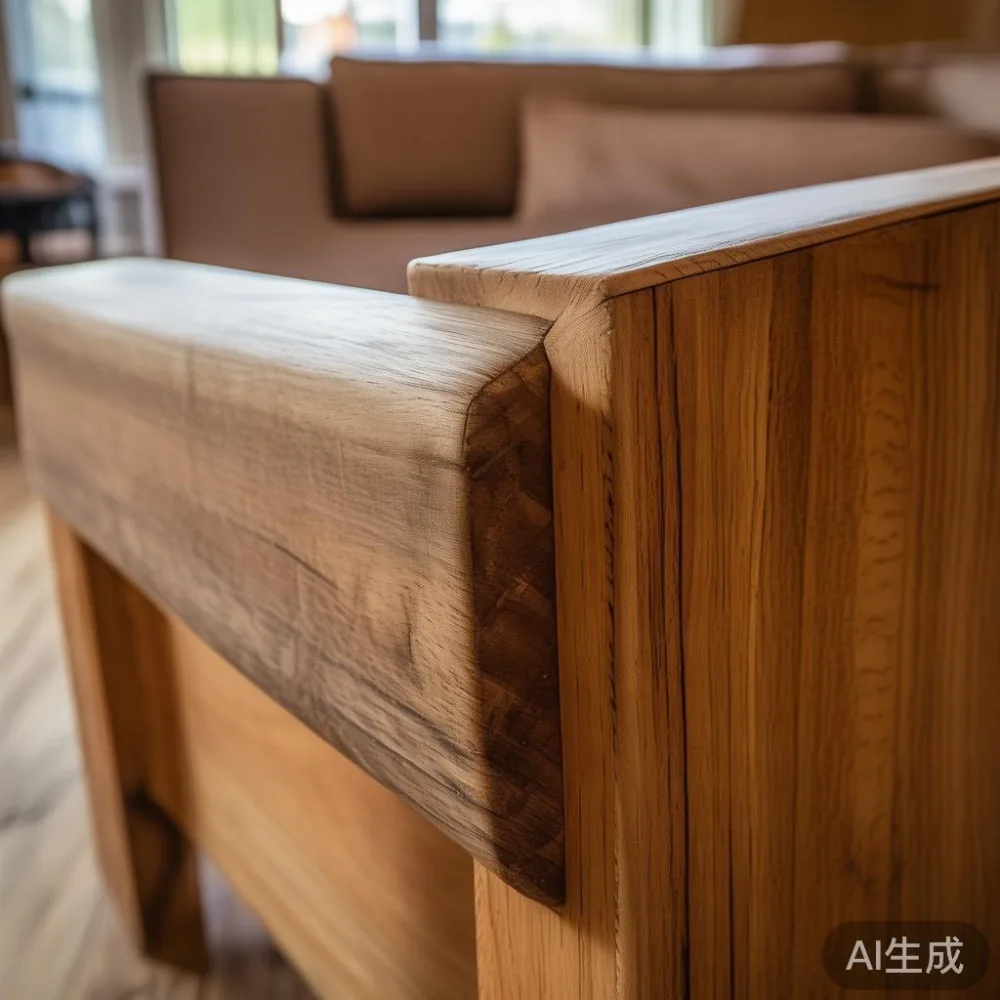
The underside matters too. Some pieces use solid wood throughout, while others combine solid timber with plywood or MDF in concealed sections. That is not automatically poor construction; it can improve stability where it makes engineering sense. The useful question is whether the load-bearing parts are appropriately specified. For a 180 cm dining table seating 6 people, look for a frame that resists sagging, not merely a photograph of attractive grain.
For a solid wood sofa, the visible timber and the internal frame should be judged separately. Seat rails, corner blocks, and suspension components determine daily performance. Marketing language such as “solid wood sofa” says little if the seller will not state the species, board thickness, and construction details.
What does joinery, labour, and engineering add to the price?
Cutting a board to size is only one part of making furniture. The cost rises with shaping, sanding, edge treatment, joinery, assembly, quality control, and finishing. A bed frame may use mortise-and-tenon joints at the rail intersections, while a simpler knock-down construction may use bolts and metal brackets. Each method has a cost, and each responds differently to movement and repeated loading.
Curves require more setup and sanding than straight components. A 220 cm wardrobe with adjustable shelves needs accurately aligned carcasses, hinges, runners, and doors. A nightstand with 2 drawers adds slides, alignment, and hardware installation. A marble table needs a base designed around the selected slab’s dimensions rather than a generic frame placed underneath it.
Finishing is frequently underestimated. Multiple sanding stages, stain matching, sealing, and final touch-up can add hours to production. American light luxury often uses clear finishes that preserve the timber character, while French light luxury may lean toward restrained colours and refined profiles. Post-modern light luxury can pair warmer wood tones with metal or stone, requiring additional preparation to prevent visual inconsistency.
Last month I visited a Foshan workshop where a craftsman showed me the difference between a raw component and the same component after 4 sanding passes. The material cost had barely changed, but the finishing time had increased from about 20 minutes to roughly 70 minutes for that sample. That visit made the labour component of retail pricing much easier to understand.
How much do size, weight, and Singapore delivery add?
Dimensions affect both factory cost and the final delivery quote. A 200 cm solid wood dining table may weigh 65 kg, while a 140 cm table may weigh 38 kg. A 3-door wardrobe can exceed 100 kg. Those figures influence packaging, loading, transport, and the number of handlers needed at the destination.
In a Singapore condo, the delivery team may need to measure the lift door, lift car, corridor turns, and unit entrance. A lift with a 90 cm door and a 210 cm internal depth may reject a boxed table even when the table itself fits through the front door. Service lifts in HDB blocks may have different limits from private lifts, and staircase carries require another labour rate.
Singapore’s GST should also be shown clearly. On a SGD 3,000 before-tax furniture order, GST at 9% adds SGD 270, making the payable total SGD 3,270. Delivery and installation may be quoted separately, so compare the landed cost rather than focusing only on the catalogue price.
Large orders can qualify for free delivery above US$350, but the threshold and currency conversion should be confirmed for each checkout. Returns are generally allowed within 14 days under the stated policy, yet custom dimensions or special finishes may carry different terms. A useful purchase record includes the drawing, wood sample, finish code, dimensions, and photograph of the access route.
Which materials explain the price difference between oak, walnut, marble, and engineered boards?
Solid wood does not compete with every material on the same basis. Engineered wood can offer excellent dimensional stability and lower cost because it uses veneers or bonded fibres over a controlled core. Solid timber offers a distinctive material story and repair possibilities, but the outcome depends on species, thickness, and workmanship. Neither label alone guarantees performance.
Marble tables follow another cost structure. The slab has a purchase price, but thickness, veining, cutting waste, edge treatment, and weight determine what reaches the customer. A 160 cm marble table may weigh 75 kg and require a reinforced base, two-person lifting, and specialist installation. Damage risk during transport can also affect insurance and packaging choices.
Accents are useful when comparing projects. A Mid-century modern accent chair can add character to a living room without replacing the main seating. A Boho for dining room scheme may combine a solid wood dining table with woven seating and simple lighting. Those decorative choices should complement the room rather than conceal weak core specifications.
Buyers searching for for sale Modern light luxury furniture or best light luxury furniture should compare each item’s construction sheet, not infer quality from a visual style label. Also, the American sofa vs Japandi sofa question is not really about nationality. It is about seat depth, arm profile, cushion density, frame construction, and the dimensions that suit the room.
Does solid wood furniture always cost more than engineered furniture?
Not necessarily. A well-specified engineered wardrobe may cost less because material yield and consistency are easier to control. A simpler solid wood nightstand can also cost less than a complex marble table with premium hardware. The correct comparison is like-for-like: species and grade, thickness, dimensions, joints, finish, hardware, and warranty.
A fair quotation should state the visible material and important structural components. For example, a wardrobe might use 18 mm solid oak fronts, plywood internal panels, soft-close hinges, and adjustable rails, with a 10-year structural warranty. A dining table should identify its top and apron construction. A bed frame should disclose slat spacing and centre support, especially for heavier occupants.
Design complexity also affects the result. A rectangular dining table may require less labour than a round marble table, while a wardrobe with curved doors and concealed channels needs more precise setup. Light luxury is not one material or one style; it is the control of proportion, detail, texture, and finish.
How should you compare two quotations without comparing the wrong things?
Start with a written specification. Record the exact product dimensions, wood species, board thickness, finish, joinery, hardware, delivery scope, installation charges, GST, and warranty. A quotation at SGD 2,400 that includes delivery and assembly may be more useful than one at SGD 2,100 with extra access charges discovered later.
Then assess the physical fit. Measure the room, doorway, lift, and corridor. For a sofa, leave roughly 90 cm for circulation behind it and check whether the chosen 220 cm model suits a 4.2 m living-room wall. For a dining table seating 6, allow about 75 cm of space behind each occupied chair in a frequently used route. For a bed frame, check the mattress size and the space needed to make the bed.
Ask what happens if a component arrives damaged, who carries it upstairs, and whether the warranty covers movement-related cracking or finish changes. Clarify care instructions. Singapore humidity can affect solid wood, so maintain ventilation and avoid leaving damp cloths against the surface.
Buyers looking for wholesale European light luxury furniture or wholesale European light luxury furniture should remember that trade pricing may use different minimums, finish options, and packaging rules from retail orders. Distributor quotes and homeowner quotes are not directly interchangeable. MIDHILL’s 10-year structural warranty and lifetime refinishing offer a useful basis for comparison, but the exact coverage should still be read before payment.
What is a sensible way to budget for a complete solid wood room?
Budget by category and by performance, then include logistics and tax. For a Singapore home, the largest price differences often come from width, height, storage capacity, stone use, and custom matching. A living room sofa, bed frame, dining table, wardrobe, nightstand, and marble table may be bought separately over several months, but matching wood tones across different makers can create a coherence premium.
A practical review uses 3 stages: verify the specification, test the fit and access route, and confirm the total delivered price. I would also request finish samples where possible. Colour can shift under Singapore’s warm interior lighting, and a dark walnut stain may look different from the small board displayed online.
Price in solid wood furniture is a total of inputs, design hours, structural decisions, surface treatment, and delivery logistics. When two pieces look similar, the hidden differences usually explain the gap. Paying more can be justified when those differences are measurable, documented, and useful to the way you live; paying more for vague claims alone is less convincing.
For current product details and quotations, MIDHILL’s website at www.midhill.co provides a starting point for comparing solid wood furniture with the dimensions and construction details that matter in Singapore homes.