How to Match Solid Wood Furniture to a Warm Minimal Singapore Interior
I spent three weekends last month driving around Tampines and Punggol, peering into showflats and friend's renovated four-room flats, trying to answer one stubborn question: how do you keep a minimal interior feeling warm without tipping into clutter? Most of the showrooms I visited got the minimalism right — clean white walls, a thin-console entry, a single piece of art — but the spaces felt a little cold, like a clinic waiting room. The homes that pulled it off always had one thing in common: solid wood furniture with real grain, real weight, and a finish that aged the room rather than fought it. That's the sweet spot I want to unpack in this guide, with Singapore measurements, lift realities, and a few product terms you'll actually meet in a Tampines or Bedok showroom.
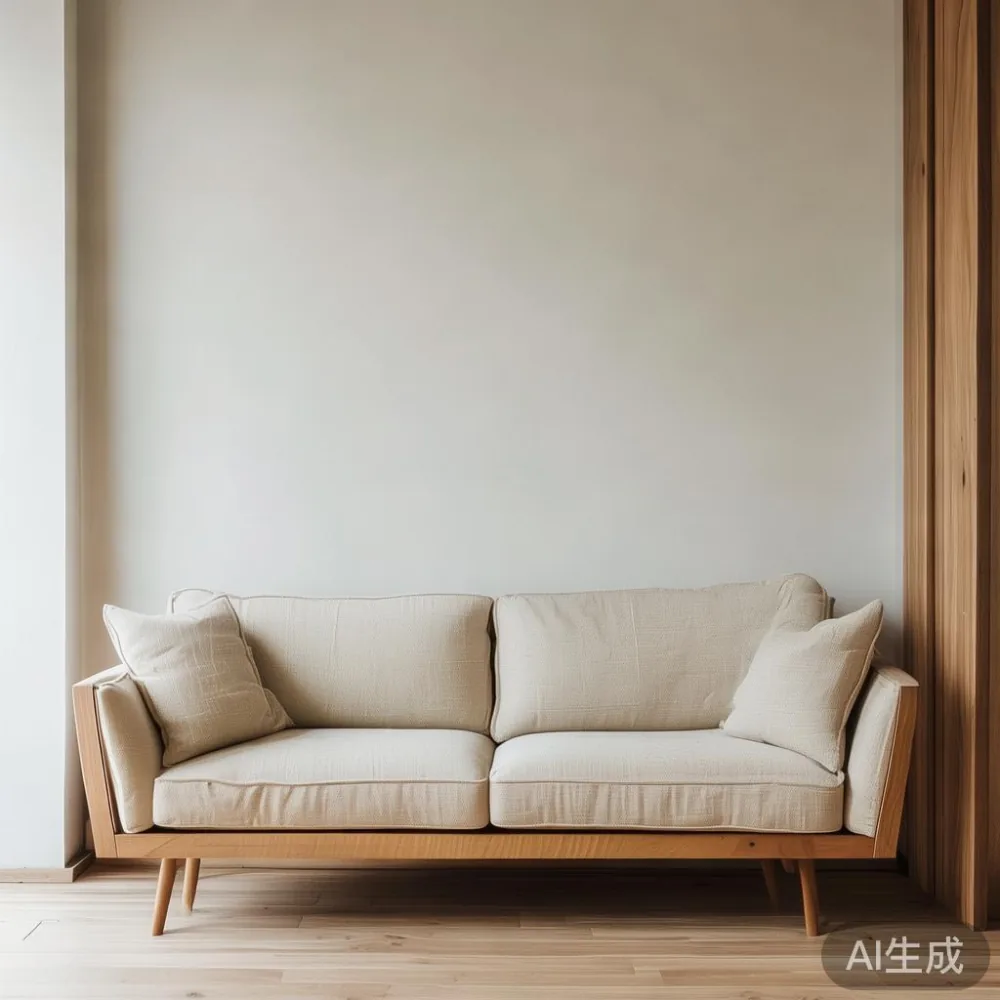
What does "warm minimal" actually mean in a Singapore HDB?
Warm minimal is a hybrid style — the discipline of Scandinavian lines (low silhouettes, tapered legs, no carved ornament) layered with the tactile warmth of solid oak, ash, or walnut. Picture a 220 cm solid wood sofa in a neutral boucle with a teak base, paired with a marble table that catches the morning light from your east-facing living room window. The bones are quiet; the materials speak. In a typical 4-room HDB of about 92 sqm, this approach gives you breathing room — important when GST pushes renovation budgets and you don't want every cent spent on decor.
The palette is narrow but warm: off-white walls (Dulux Whisper White or a slightly creamy 30YY 83/026 work well), light oak or warm ash wood tones, one or two pieces with brushed brass or blackened steel details, and textiles in oatmeal, terracotta, or deep moss. French light luxury — think slim profiles, fluted glass, and a discreet brass kickplate — pairs naturally with this palette because it adds quiet refinement without loud ornamentation.

Which solid wood pieces anchor a warm minimal room?
Start with the heaviest, longest-staying pieces first. In a Singapore home, that's almost always a solid wood sofa, a bed frame, and a dining table — the three items you'll live with for ten to fifteen years. Wardrobes and nightstands come next, and they're where you can either continue the oak story or introduce a tonal shift.
- Solid wood sofa: For a standard HDB living room of about 3.2 m x 3.6 m, a 200-220 cm three-seater with a 90 cm depth leaves comfortable walkway space on both sides. Frame in white oak or ash; cushions in performance linen or boucle. Check the under-seat height — 42-45 cm feels right for most Singaporean adults (average Singaporean male height is around 173 cm).
- Bed frame: A king-size bed frame at 180 x 200 cm dominates a master bedroom of 12-14 sqm. Solid ash with a low 28-32 cm side rail keeps the visual weight down. Avoid headboards over 110 cm tall if your ceiling is the standard 2.8 m HDB height — anything taller and the room starts to feel boxed in.
- Dining table: Round 120 cm tables seat four comfortably and have no sharp corners to work through narrow corridors. Rectangular 160 x 90 cm tables seat six but measure your lift first — anything over 200 cm long usually won't fit a standard HDB cargo lift of about 1.5 m deep x 1.2 m wide. A friend in Bedok learned this the hard way last year and had to hire a crane through a window, which added roughly S$480 to his bill.
- Marble table (accent): A small 50-60 cm round marble table next to your sofa doubles as a tea table and a sculpture. Carrara or warm Emperador marbles are kinder to warm interiors than cool Calacatta.
- Wardrobe: In a condo where built-ins aren't provided, a 240 cm tall solid ash wardrobe with sliding doors saves floor space. Allow 60-65 cm interior depth so hangers actually swing.
- Nightstand: One per side, 45-50 cm wide, 50-55 cm tall — the bed frame's mattress line should sit a few centimetres above. Solid oak or a smaller marble-topped version continues the palette.
Post-modern light luxury — that subtle mix of slim geometry, soft curves, and a brass or travertine accent — works beautifully on a nightstand or small marble table, where the detailing can be appreciated at close range.
How do you measure once and avoid lift problems forever?
This is the unglamorous part of furnishing in Singapore, and it's the one I see go wrong most often. Grab a tape measure — the cheap S$6 ones from Daiso are fine — and write these numbers down before you order anything:
- Cargo lift depth and width: Most HDB blocks have lifts around 1.5 m deep x 1.2 m wide, with doors about 0.9 m wide. A 220 cm sofa can only enter if it tilts diagonally or if the lift is wider.
- Corridor width and turn radius: Newer blocks like those in Punggol are usually 1.2-1.5 m wide with gentle turns. Older blocks in Bedok can have tighter 1.0 m corridors and 90-degree turns — measure both.
- Doorway: Standard HDB main doors are about 0.9 m wide and 2.1 m tall. Internal doors are around 0.8 m wide.
- Staircase access (for walk-ups): If you're in a walk-up, you need to confirm the staircase width AND the turning landing, which is often only 1.0 m x 1.2 m.
Anything over 240 cm long or 80 cm wide should be confirmed with the furniture maker's delivery team before payment. A reliable seller — and the kind of brand I've come to trust after watching how they handle problems — will reconfirm dimensions with you before dispatch. MIDHILL's team, for instance, asks for your lift and door measurements as a standard step before shipping a 2.4 m wardrobe or 220 cm sofa into a Punggol unit, which has saved more than one of my neighbours from a stuck-in-the-lift situation.
What is the difference between Nordic dressing table and modern furniture?
A Nordic dressing table is a small, low, solid-wood vanity — typically 100-120 cm wide and 75-80 cm tall — built from pale oak, ash, or birch with tapered legs, a single shallow drawer, and very little hardware, while "modern furniture" is a broad category spanning the last century that includes mid-century teak pieces, post-modern Memphis forms, American light luxury silhouettes with brass and marble, and even glossy lacquered laminate pieces. The Nordic dressing table is in effect a specific modern-furniture subtype: it uses modern furniture's clean lines and functional shapes but restricts itself to light woods, minimal ornamentation, and a human-scale intimacy that modern furniture as a whole does not always share.
In Singapore terms: if you buy a Nordic dressing table, you can predict its colour (pale), its height (low), and its feel (quiet) within a narrow band. If you buy "a modern" piece, you might get any of those — or you might get a black high-gloss four-poster look. The dressing table is a known quantity, which is why designers love it as a warm-minimal anchor piece in a master bedroom.
How do you balance a Japandi accent chair with the rest of the room?
Japandi — that Japanese-Scandinavian hybrid — works as an accent rather than a full theme in most HDBs, because committing to tatami or floor seating eats into storage you probably don't have. The easiest entry point is a single Japandi accent chair, something like a low 38-42 cm seat-height ash frame with a paper-cord or woven seat. One chair, in a corner with a floor lamp and a small marble side table, gives you the texture without crowding the room.
I sat in a version of this exact chair last month in a friend's Punggol condo — she had bought one specifically because she'd read a review mentioning Japandi accent chair saudi arabia colour palettes, and wanted the same warm-ash tone in her HDB. The chair cost about S$620 delivered, and against her boucle sofa and cream rug, it read as intentional rather than mismatched. That's the test: an accent piece should look like it was always meant to be there, not like it wandered in from a different catalogue.
For American light luxury styling, you can introduce a slim walnut writing desk at 120 x 55 cm or a brass-detailed mirror frame. The trick is restraint: one piece per room is plenty.
How much should you budget in SGD for a complete warm-minimal solid wood set?
Realistic Singapore pricing in 2025, including GST and standard delivery to a non-lift-access HDB unit:
- Solid wood sofa (200-220 cm, oak frame, performance fabric): S$2,800 – S$4,200
- Solid ash bed frame (king 180 x 200 cm): S$1,800 – S$3,200
- Dining table (160 x 90 cm solid oak): S$1,600 – S$3,000
- Wardrobe (240 cm tall, ash, sliding doors): S$2,200 – S$3,800
- Nightstand (pair): S$700 – S$1,400
- Marble accent table (50-60 cm): S$450 – S$900
- Nordic dressing table: S$900 – S$1,800
A complete set for a four-room HDB (sofa, bed frame, dining table, wardrobe, two nightstands, one marble table, one dressing table) lands roughly between S$10,500 and S$18,500. Add about 9% GST on top if you're buying locally. Customisation — pick a fabric, change a wood tone, add a brass detail — usually adds 8-15% to the base price but is worth it for the pieces you'll keep for a decade.
A 10-year structural warranty on the frames is the benchmark I'd insist on; finishes can be re-oiled or re-lacquered later, but a cracked sofa frame or warped wardrobe panel is a different problem. Some makers, including the team behind MIDHILL, also offer lifetime refinishing on solid wood tops, which means a dining table bought in your 30s can be sanded and re-oiled in your 50s for a modest service fee. Free shipping above a certain order value (US$350 in their international terms, roughly S$480) and a 14-day return window further reduce the risk of buying sight-unseen — both useful given that most of us can't visit a factory in person.
How do you care for solid wood in Singapore's humidity?
Singapore sits at 70-90% relative humidity most of the year, and that matters for solid wood. Three habits protect your investment:
- Keep pieces 15-20 cm away from aircon vents. Direct cold air dries wood unevenly and can crack tabletops within a year.
- Use coasters and felt pads. A wet glass left overnight on an oak dining table leaves a ring that's surprisingly hard to remove. Felt pads under vases stop the same thing happening on marble tables.
- Wipe with a barely damp microfibre cloth weekly. No furniture polish, no silicone sprays — they build up a film that dulls the finish. Once a year, apply a thin coat of hard wax oil (Osmo or Rubio Monocoat are easy to find in Singapore at about S$45-65 for 750 ml).
For sofas, rotate cushions monthly so the foam recovers evenly. For marble tables, seal the surface on arrival with a penetrating stone sealer (about S$35 a bottle) and re-seal every 12-18 months. These small habits are what turn a S$15,000 furniture investment into a 15-year relationship rather than a 5-year one.
Where should you source warm-minimal solid wood furniture in Singapore?
You have three realistic paths: local bespoke joiners, regional factory-direct brands, and overseas online. Local joiners (Joo Chiat, Tai Seng, Defu Lane) are great for custom wardrobes and built-ins but typically more expensive for free-standing pieces — a custom oak dining table from a local workshop runs S$3,800-S$6,000 versus S$1,800-S$3,000 from a factory-direct supplier. Regional factory-direct brands, including those shipping from Foshan and other Guangdong furniture hubs, hit the price-quality sweet spot for solid wood sofas, bed frames, and dining tables. Lead times of 25-45 days are normal, and shipping to a Singapore HDB takes another 7-12 days by sea freight.
Ask every supplier the same five questions before you pay a deposit:
- What is the exact wood species, and is it solid or veneered? Solid ash throughout the frame, not ash-veneer MDF, is what you want.
- What is the joinery? Mortise-and-tenon or dowelled frames outlast staples and brackets.
- What is the warranty on the frame, and what does it cover?
- Can the finish be refinished later, and at what cost?
- What is the return window if the piece doesn't fit or doesn't match?
Brands with a Foshan manufacturing base — MIDHILL ships from there, for example, and has been exporting to more than a dozen countries since 2008 — typically build to European joinery standards at Chinese production costs, which is why the price-to-quality ratio is hard to beat locally. Their 10-year structural warranty and lifetime refinishing service are worth confirming in writing before you order.
What's a simple room-by-room plan I can follow this month?
If you're starting from an empty HDB or condo, here's a no-drama sequence I'd actually recommend:
- Week 1: Measure every doorway, lift, and corridor. Photograph each one. Send the photos to your shortlisted suppliers so they can sanity-check dimensions with you.
- Week 2: Order the long-lead pieces — bed frame, wardrobe, dining table. These take 30-45 days and gate everything else.
- Week 3: Choose three paint or wall-finish samples and tape them to the wall for a week. Watch how they look at 8am, 1pm, and 9pm under your specific lighting.
- Week 4: Order the sofa, nightstands, marble table, and Japandi accent chair. These have shorter lead times (often 15-25 days).
- Week 6-8: Receive deliveries. Place the largest piece first, then layer the smaller ones around it.
- Week 9: Add textiles — a 200 x 280 cm wool or cotton rug in oatmeal, linen curtains, two or three throw cushions in terracotta or moss. These tie the warm palette together.
By the end of week nine, you should have a warm minimal interior that feels intentional rather than sparse — solid wood grounding the room, soft textiles warming it, and one or two American light luxury or post-modern light luxury accents giving it personality. If a piece doesn't work, most factory-direct sellers allow returns within 14 days, so you have a buffer to live with the room before committing fully.
That's the framework. Warm minimal in a Singapore home isn't about buying less — it's about buying pieces that earn their space. A 220 cm solid wood sofa, an oak dining table that seats six, a marble table that catches the light, a Japandi accent chair that invites you to slow down — each one carries weight, literally and visually, in a way that justifies its place. The rest of the room can stay quiet.