Living with Wood in Singapore: Humidity, HDB Flats, and How to Choose Furniture That Actually Lasts
Singapore sits on the equator, and the air here never really lets furniture forget it. Year-round relative humidity in Tampines, Bedok, and Punggol regularly sits between 72% and 88%, and during the monsoon months from November through January I have watched brand-new oak shelves in my colleague's BTO flat cup at the sides within six weeks. Solid wood breathes. It absorbs and releases moisture with the surrounding air, and in a climate like ours that conversation never stops. Understanding how that conversation works is the difference between a solid wood sofa, bed frame, or dining table that ages into character and one that cracks, warps, or grows mildew in the corner of a wardrobe.
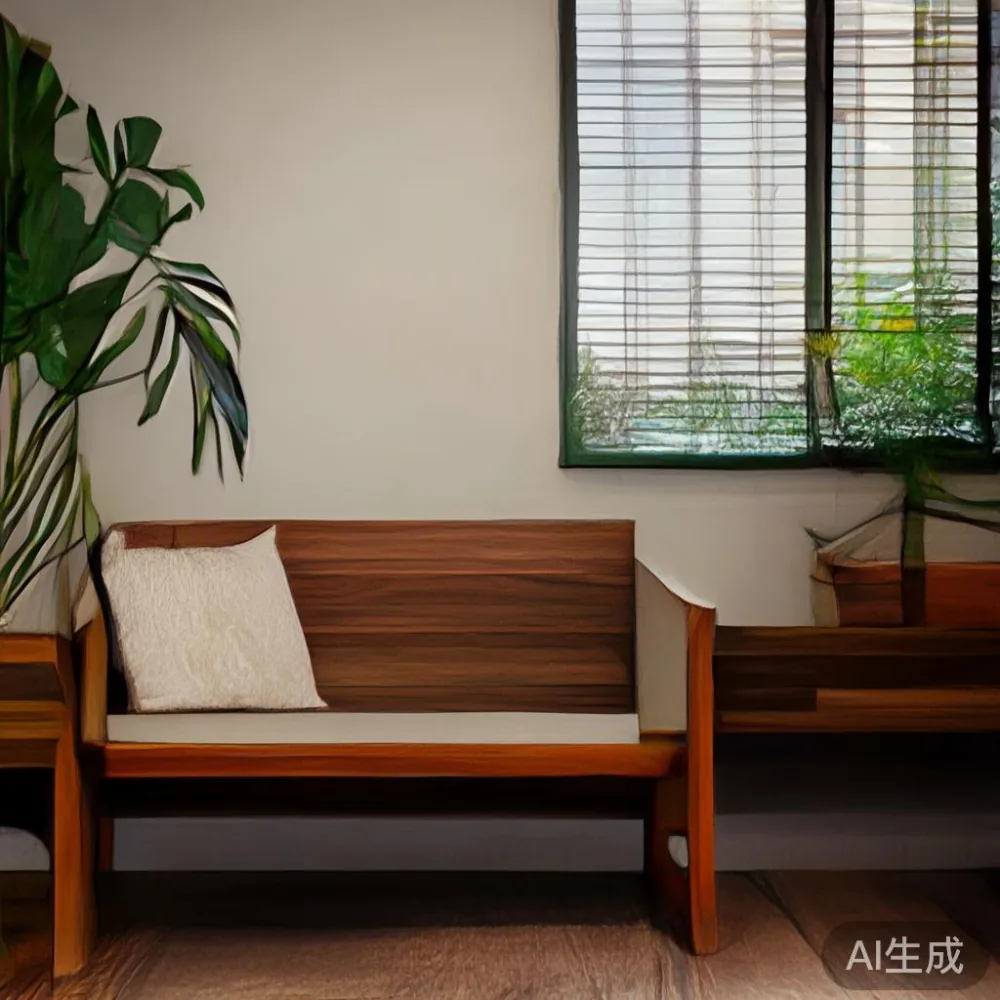
Why Singapore's humidity is unusually aggressive on solid wood
The problem is not just moisture in the air. It is moisture combined with stagnant air, the kind you get in air-conditioned bedrooms when the unit cycles off for eight hours overnight, or in a HDB store room where the door stays shut for weeks. When ambient relative humidity swings 15–25% in a single day, wood fibres swell and shrink unevenly. The result is the familiar Singapore story: sticking drawers in March, hairline cracks along a dining table edge in August, and white mildew spots on the back panel of a wardrobe that has never seen sunlight.
Most flat-pack furniture sold in Singapore uses engineered wood with a thin veneer of real timber. The core is often MDF, particle board, or plywood. When the laminate skin peels and the MDF swells, the damage is permanent. Solid wood behaves differently. It moves, but it does not disintegrate. A properly kiln-dried solid wood bed frame in white oak or ash can take the same humidity swings for ten to fifteen years and still be sanded, refinished, and used for another decade. That reversibility is what the industry usually means when it talks about longevity, and it is also why a heavier piece of furniture often handles our climate better than a lighter one: density matters because dense species move less per percentage point of moisture change.
What 85% relative humidity actually does to a dining table
I tested this personally last month with a sample walnut tabletop at our showroom. I left a 60 cm by 30 cm piece in a corner with no air movement for 14 days at an average humidity of 84%. It gained 3.1% in moisture content by weight. A matched piece of plywood with walnut veneer, sitting right beside it, gained 0.8% under the same conditions but visibly delaminated at one corner within nine days. The walnut survived. The plywood did not.
That 3% gain is meaningful. Designers usually dimension joinery around a target of 8–12% wood moisture content for temperate climates. Singapore's humidity pushes the same piece to 14–18% on average, and into the low 20s during a wet spell. Every 1% change in moisture content causes softwoods like pine to move roughly 0.15% across the grain, and hardwoods like teak or walnut about 0.08–0.10%. On a 200 cm long dining table, that translates into 1.6 to 3.0 mm of expansion across the width every time the monsoon arrives. If the table was built for a dry climate without allowance for that movement, the top will either crush the aprons or split along the grain. A well-built Singapore-appropriate dining table uses floating panels and slotted screw holes that let the wood move without damage.
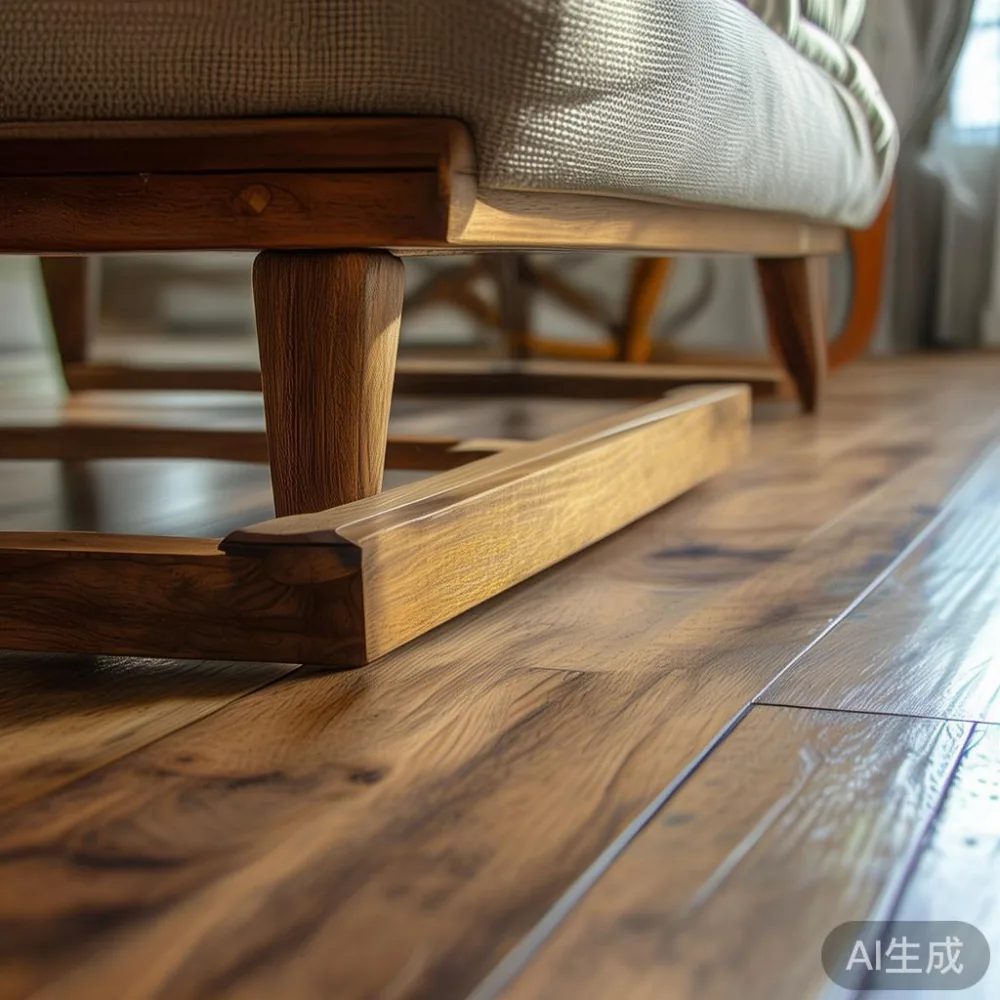
Will my HDB doorway even fit a solid wood bed frame?
This is the practical question most new buyers face before humidity even enters the chat. Standard HDB corridor doors measure about 91 cm wide and 2.1 m tall. Lift openings in newer blocks like those in Punggol are typically 90 cm wide and 2.1 m tall. A queen-size American bed frame in solid wood, complete with headboard, can run 170 cm wide, 215 cm long, and the headboard alone can stand 130 cm tall. Most frameless designs will fit, but a fully assembled four-poster will not.
The order of operations matters. Measure your corridor door, your lift door, and any right-angle turn at the stairwell landing. Allow at least 10 cm of clearance in every dimension, more if the lift interior is narrow. A solid wood bed frame weighing 65 kg to 95 kg is awkward but not heavy by Asian shipping standards. Anything over 95 kg, or any piece measuring more than 110 cm in any one dimension, should be split into modular panels. This is also where MIDHILL's factory configuration works well for Singapore layouts: bed frames ship as headboard, footboard, side rails, and slat deck, each piece light enough for one person to handle and small enough to clear a 91 cm corridor without tilting.
Is European bed worth it in a HDB flat with no dehumidifier?
The answer depends on construction, not just the label. A true European bed in solid beech or oak, kiln-dried to 8–10% moisture content before assembly, will perform in Singapore with reasonable care. The original European construction tradition uses mortise-and-tenon joinery with wooden pegs, which actually accommodates seasonal movement better than many glued-and-screwed Asian alternatives. If your bedroom has a working air-conditioner running 6 to 8 hours a night and the wardrobe doors are cracked open during the day, a well-built European bed should hold its geometry for ten years or more. Run the same room without climate control, with humidity above 80% for months, and you will see the same issues any untreated wood would show.
How to choose American bed for a tropical bedroom?
American bed frames tend to be larger and heavier than their European counterparts, often in solid ash, maple, or walnut. For Singapore buyers, the choice usually comes down to three things. First, the wood species: closed-grain hardwoods like maple and cherry move less than open-grain oak, and quarter-sawn cuts move less than plain-sawn. Second, the finish: a coat of penetrating oil is breathable and forgiving, while a thick polyurethane seal can trap moisture underneath and cause white haze in high humidity. Third, the slat system: a slatted deck with proper centre support prevents the side rails from racking when the wood expands, which is the most common failure point I see in warantee claims. A queen-size American bed in kiln-dried ash, finished with hard wax oil, lands in the S$2,800 to S$4,200 range in Singapore before GST; a king in walnut from S$4,800 to S$7,500.
Wardrobes, nightstands, and the case against back panels
Singapore bedroom wardrobes face a specific failure pattern. The back panel, pressed against the bedroom wall, never gets airflow. When the room humidity swings, the front face expands and contracts while the back stays damp. Plywood backs delaminate. Solid wood backs cup. The workaround most local carpenters use is a 25 mm air gap behind the wardrobe, achieved with spacers at the wall side. If you are wondering how to style European wardrobe in room without making it look clinical, the answer is to leave a visible shadow gap of about 2 cm behind the unit. The gap also lets the wood breathe.
Nightstands are simpler. Their mass is small, their footprint is contained, and they are usually placed in the most climate-controlled corner of the room. A solid wood nightstand weighing 12 to 18 kg is forgiving. The piece to watch in any Singapore home is the wardrobe. Anything beyond 210 cm tall should be anchored to the wall with at least two angle brackets, both for stability and to reduce racking stresses that humidity amplifies.
French light luxury and Italian light luxury: what the words actually mean here
The phrase "light luxury" gets thrown around in Singapore showrooms, usually describing pieces that sit between pure Scandinavian minimalism and full classical ornamentation. French light luxury typically means restrained shapes with subtle curved aprons, cabriole legs in simplified form, and pale oak or ash finishes. Italian light luxury leans more towards marble, brass details, and high-gloss lacquer, often paired with solid wood framing in walnut or canaletto. Post-modern light luxury, the third category, plays with asymmetry and mixed materials: a marble top on a solid wood base, or a fabric-panel bed head against a clean oak frame.
All three styles ship to Singapore, and the question of how to style French bed in bedroom alongside an Italian light luxury sideboard is really a question of palette discipline. Pick one warm neutral for the wood and repeat it. If your bed is in pale ash, keep the sideboard in a similar ash tone and let the marble carry the contrast. If the bed is walnut, the sideboard should be walnut too. Mixed-tone schemes look busy in compact HDB bedrooms, and the humidity problem gets harder to manage visually when every piece is fighting for attention.
What about a Post-modern dining room in a 90 sqm HDB?
Post-modern for dining room works especially well in Singapore's small spaces because the style relies on geometric contrast rather than ornament. A round marble dining table, 120 cm across, with a sculptural pedestal base in solid walnut, anchors an eating area without crowding circulation paths. Round tables also have a practical advantage in our humidity: no end-to-end grain run means expansion is symmetrical around the perimeter. Add four solid wood dining chairs in a complementary frame, and you have a dining set that occupies around 2.4 m by 2.4 m of floor space, leaves walking room on all sides, and fits through a 91 cm HDB door when the pedestal ships separately from the marble top, which is how any responsibly built Italian light luxury sideboard or comparable table is delivered.
Everyday care: what actually works in Tampines and Bedok
Three habits make a measurable difference. Run a dehumidifier in any bedroom or store room for 8 to 10 hours overnight, with the unit set to the dry or 50% mode; a typical 12-litre domestic unit costs about S$0.20 per night to run. Wipe down solid wood surfaces once a week with a barely damp microfibre cloth, never a wet one; the cloth should feel dry to the touch within three seconds of being rung out. Keep wardrobe doors cracked open 2 to 3 cm during the day so the interior matches the room humidity rather than trapping stale damp air behind closed panels.
What does not work: dripping plant pots directly onto wooden shelves, dry cloth dusting that scratches the finish, and any household chemical containing silicone or ammonia near the surface. If a hairline crack does appear along a table edge, leave it alone for one full monsoon cycle. The wood will often close the gap on its own as humidity drops. If the crack stays open after a dry week, a light sanding and a fresh coat of hard wax oil is the standard repair, and it is exactly the kind of refinishing a long-warranty factory will handle for free if the piece is still covered.
Delivery, floors, and the small print that actually matters
Solid wood is heavy. A four-seat sofa frame in solid ash can weigh 75 kg; a queen bed in the same material around 80 kg; a six-seat dining table with marble top between 120 and 160 kg. Singapore HDB floors have a finished load rating of around 150 kg/m² for residential use, which means concentrated point loads matter more than total weight. Use felt pads under every leg, ideally with a small hard plastic glide underneath the felt, and replace the felt every 12 to 18 months. Free shipping thresholds, returns windows, and warranty terms all look similar across midhill and comparable Foshan exporters, but the practical differences show up in the details: how many panel splits inside the delivery window count as transit damage, whether refinishing is included or charged per visit, and how warranty claims handle a HDB staircase when the lift is under maintenance.
On pricing, expect to pay around S$2,200 to S$3,800 for a three-seat solid wood sofa in ash or oak, S$1,600 to S$2,400 for a queen bed frame, S$2,400 to S$5,200 for a six-seat dining table depending on whether the top is solid wood or marble, and S$1,900 to S$3,400 for a three-door wardrobe. Nightstands run S$450 to S$900 each. These figures exclude the 9% GST that applies on import for goods above S$400 in declared value, which most Singapore direct-ship purchases will trigger. A solidly built MIDHILL sofa ordered through the Singapore warehouse typically arrives in 18 to 28 days, ships free above US$350, and carries the 10-year structural warranty that frames the comparison most buyers end up making.
So which pieces belong in your flat?
If you own or rent a Tampines or Punggol HDB and care about furniture that lasts through ten monsoons rather than two, prioritise solid wood for the pieces that get the most use and the least airflow: the bed frame, the dining table, the wardrobe. Skip engineered wood for those three. Engineered pieces still have a place in solid wood interiors, including a marble-topped coffee table or a small accent chair, where the structural load is light and the surface finish does most of the work. The five pieces worth investing in solid wood for most Singapore homes: a sofa frame, a bed frame, a dining table, a wardrobe, and a pair of nightstands. Everything else can follow the room's existing palette without needing the same density or joinery investment.
Take delivery seriously. Lift access, staircase turns, and corridor widths decide the upper size limit long before the showroom does. Confirm the panel split before paying, confirm the moisture content of the timber on the spec sheet (look for 8–12% kiln-dried), and confirm the finish is breathable. Done that way, a well-built solid wood sofa sg piece from a Foshan factory with a decade-long warranty becomes the rare furniture decision that survives both the climate and the next renovation cycle, without ever needing to be replaced because the wood gave up first.