What Actually Drives the Price of Solid Wood Furniture
I learned this the hard way last month. A couple in Punggol had asked me to help them compare two four-seater solid wood sofas. One was priced at S$2,180, the other at S$6,940. Same category on paper, same number of seats, both "solid wood." Within four minutes of looking at the underside of each frame, I could explain the gap. By the time you finish this article, you should be able to do the same in any showroom on Jalan Besar, along Tai Seng, or in a Tampines mall.

Solid wood furniture looks deceptively uniform from a sofa-sg product listing. Five photos, three dimensions, one price. But the price you see is the result of about a dozen separate decisions a factory made — wood species, joinery, finish, hardware, shipping weight, and after-sales support. Each one moves the number. Singapore buyers pay extra attention because lift access in HDB blocks restricts piece size, GST adds 9% at checkout, and delivery across the island adds S$60–S$180 per trip. A sofa-sg order that looks reasonable on a website can climb by 12–18% before it reaches your living room.
Let's break down what you are actually paying for.
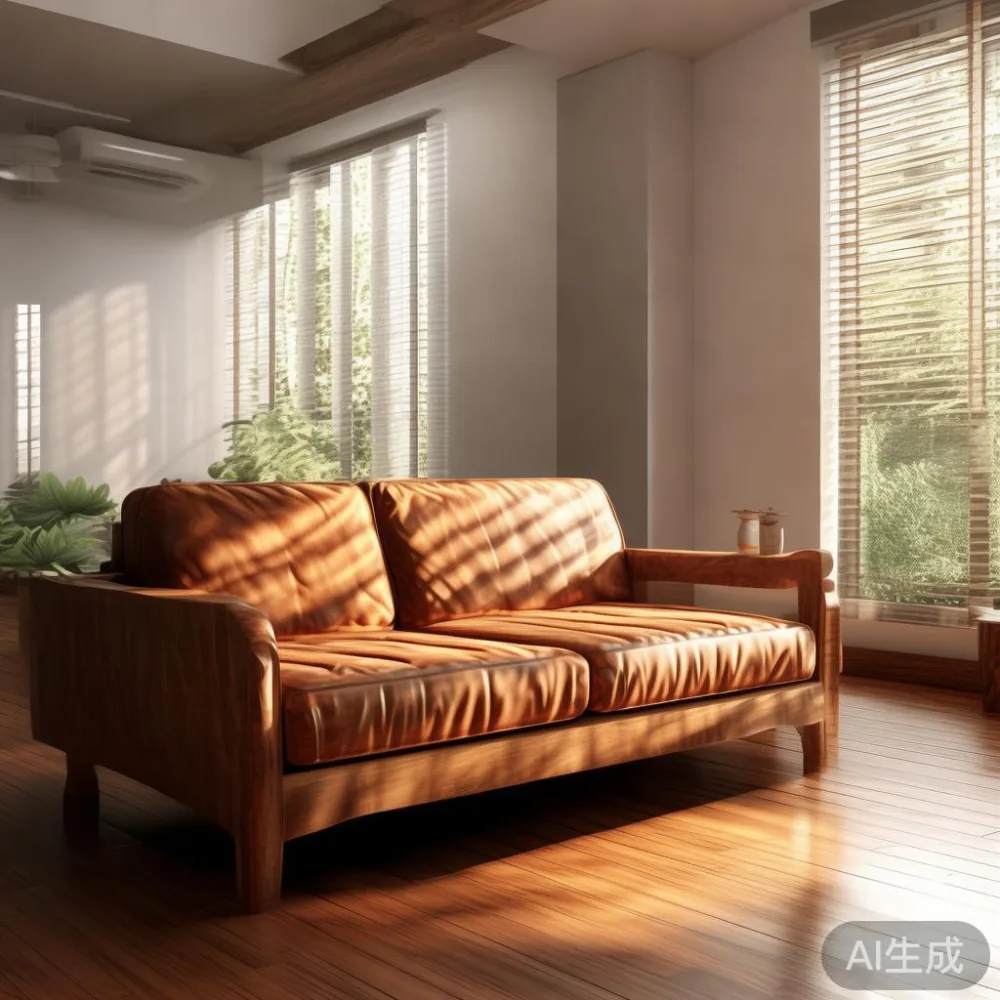
1. Wood Species: Why Oak Costs More Than Rubberwood
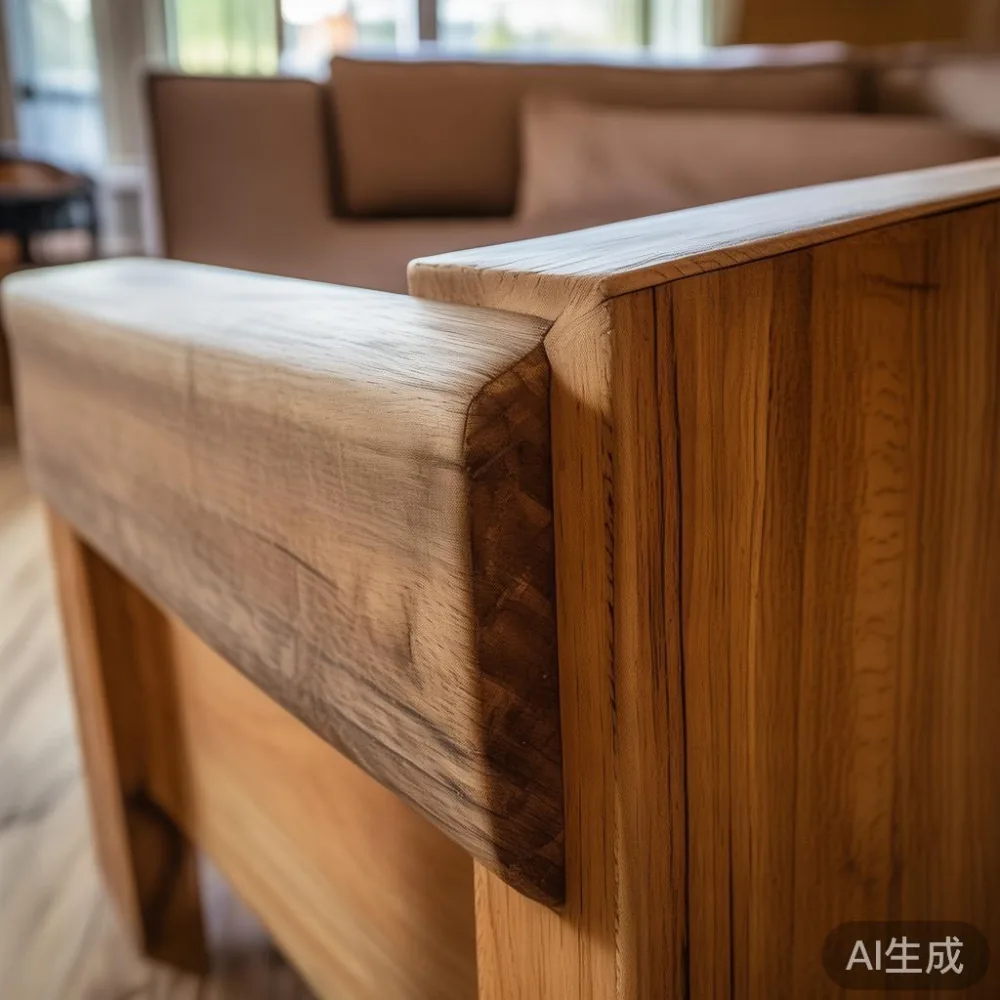
The single largest price driver is the species of wood. Rubberwood, a byproduct of the latex industry in Malaysia and Thailand, is dense, stable, and widely available — which keeps it affordable. A typical solid wood sofa frame in rubberwood might add S$300–S$600 to a sofa-sg product versus a comparable engineered-wood version. White oak, by contrast, grows slowly in colder climates, takes 30–50 years to reach harvestable size, and ships at a premium. White oak frames show up in post-modern light luxury collections and French light luxury lines where the grain pattern is treated as a feature, not a flaw.
Other species you will meet in Singapore showrooms:
Ash. Similar look to white oak, slightly lower price, excellent for dining table legs that need to take daily knocks. A six-seater ash dining table in a Tampines condo showroom was tagged at S$2,480; the equivalent oak piece sat at S$3,150.
Walnut. Deep chocolate tone, often used in American light luxury bed frames and nightstands. Walnut is roughly 2.2x the price of rubberwood per cubic metre. A queen-size walnut bed frame can run S$3,800–S$5,500.
Teak. Naturally oily, resists Singapore's humidity well, but has become heavily regulated. Genuine teak costs more than walnut and is usually reserved for outdoor or marine use.
Mango and acacia. Budget-friendly hardwoods often used in solid wood wardrobes and sideboards. Acceptable for many homes, but the grain is more irregular and the wood is softer than oak.
Ask the showroom assistant to show you the underside of a drawer or the back of a bed frame. If you see a uniform pale tone with tight grain, it is likely rubberwood. If you see longer rays and a warmer cast, you are probably looking at oak or ash.
2. Joinery: The Part You Cannot See Decides How Long It Lasts
This is the part most sofa-sg listings skip. Two bed frames can both say "solid wood" and "Malaysian oak," and one will wobble in three years while the other survives a decade of a child jumping on it. The difference is joinery.
Mortise and tenon, dovetail, and finger joints are the traditional methods used in heirloom-quality solid wood bed frames and dining tables. They use the geometry of the wood itself to hold the piece together, with glue as a backup rather than the primary connector. A well-made mortise-and-tenon joint on a dining table leg can take 80–120 kg of lateral force before it loosens.
Staples, screws, and brackets are quicker to install in a factory and cheaper to ship because the components can be flat-packed thinner. They are also what fails first. In my colleague's experience restoring furniture in a Bedok HDB workshop, about 70% of "broken" wardrobes that come in are actually intact — the particleboard backing or the cam-lock screws have failed, not the wood.
How to spot the difference in a showroom:
• Pick up a dining chair by the seat and wiggle it. Any creak or shift is a sign of staple-only construction.
• Open a drawer. Dovetail joints show interlocking finger-shaped pins on the sides. Finger joints show a comb-like pattern. Metal drawer runners on the underside mean the drawer body is likely MDF or plywood, not solid wood.
• Look at the back panel of a wardrobe. A 12–18 mm solid wood back, recessed into a groove, is a good sign. A 4 mm hardboard panel nailed on is not.
A well-joined piece is heavier. A solid wood dining table for six in oak will weigh 55–75 kg. If a competitor's "solid oak" table weighs 28 kg, something is off.
3. Finish: Lacquer, Oil, or Wax — and Why It Matters in Singapore's Humidity
Singapore sits at 78–92% relative humidity for most of the year. Wood moves. A solid oak dining table can swell 1–2% across its width between January and July. The finish is what controls how gracefully it does so.
Polyurethane lacquer. A plastic-like film that sits on top of the wood. Cheap, scratch-resistant, but it chips rather than wears. Once it chips, moisture gets underneath and the finish starts flaking. Common on budget sofa-sg pieces.
Conversion varnish. A harder, more chemically resistant lacquer used in higher-end American light luxury production. Holds up to alcohol and household cleaners better than polyurethane.
Hardwax oil. Penetrates the wood and leaves a thin protective layer on the surface. The wood still breathes. Scratches can be sanded out locally and re-oiled without refinishing the whole piece. This is the finish you will find on premium European oak dining tables and on the better solid wood bed frames.
Natural oil (linseed, tung). The most natural look but the least protection. Needs reapplication every 12–18 months in a Singapore climate with air-conditioning running 8–12 hours a day.
A hand-rubbed hardwax oil finish can add S$400–S$900 to the cost of a dining table compared with a sprayed polyurethane finish on the same wood. It is worth asking about.
How do I style a Japandi furniture in a small apartment?
You treat each piece as a quiet anchor — pick one solid wood bed frame, one low-profile oak dining table, and one tall narrow wardrobe in pale ash or warm walnut, then leave at least 60 cm of walking space around every piece.
Japandi works in Singapore HDBs because it solves the same problem the Japanese and Scandinavian designers were solving: too few square metres, too much clutter. A 90 sqm four-room flat in Tampines, a 65 sqm condo in Bedok, a compact 50 sqm unit in Punggol — all of them benefit from the same rules.
Start with the largest piece. In a one-bedroom condo, that is usually the bed. Choose a low platform solid wood bed frame in white oak or ash, with the mattress sitting 25–35 cm off the floor. The visible wood becomes a horizontal line that widens the room visually. Skip the headboard if the wall behind is already textured or painted in a warm off-white (think Jotaplate 8028 or similar). If you want a headboard, go upholstered in linen, 8–12 cm thick, no tufting.
Choose one tall piece. In Japandi, vertical weight comes from a single wardrobe or a tall open shelving unit, not from many small cabinets. A 180–200 cm tall solid wood wardrobe in pale ash with sliding doors (instead of hinged) saves the 60 cm swing radius you would otherwise lose. Sliding doors also avoid the lift-access problem: a 200 cm wardrobe will not fit a typical HDB passenger lift (1.0 m wide x 1.2 m deep, 2.1 m tall) if its doors are hinged, but it usually fits flat-packed.
Pick a round or oval dining table. A 120 cm round solid oak dining table seats four comfortably and has no corners to bang a hip on while walking past. In a small condo, this matters more than the extra S$200–S$400 it costs over a rectangular 120 x 70 cm version.
Use a small marble table as a focal point. One piece of cool stone in a warm wood room keeps the palette honest. A 45 cm round Carrara marble side table next to a linen sofa, or a 50 cm marble-topped coffee table, is enough. Do not overdo it — one marble accent per room.
Nightstands should match but not mirror. Two identical 45 cm oak nightstands with one drawer each, sitting at mattress height, is the standard. In a tighter room, replace the second with a 35 cm stool or a wall-mounted floating shelf 12 cm deep.
Colour palette. Three tones only. Warm white walls (around 70% NCS coverage), light-to-medium wood (around 25%), and one dark accent — black hardware, a charcoal linen cushion, or a dark walnut tray (around 5%). Anything more starts to look cluttered.
4. Hardware: Drawer Runners, Hinges, and the S$200 Detail
Soft-close drawer runners from Blum or Hettich cost a factory about S$18–S$35 per drawer compared with S$2–S$4 for a basic roller runner. On a six-drawer solid wood wardrobe, that is a S$100–S$180 difference that rarely shows up on the product page.
Cabinet hinges work the same way. A clip-on, three-way adjustable hinge with integrated soft-close runs S$6–S$10 each at the factory level. A basic screw-in hinge is S$0.80–S$1.50. Multiply across a four-door wardrobe and the gap becomes obvious.
For marble tables, the hardware question is even more pointed. A real marble top of 15–18 mm thickness needs a sub-frame or a set of metal brackets to support it — the stone alone will crack under its own weight at unsupported spans over 60 cm. If a marble table you are considering weighs less than 35 kg for a 90 cm top, the marble is likely 8–10 mm and backed with plywood, or it is engineered stone labelled loosely as "marble."
5. Weight, Shipping, and the Singapore Lift Problem
This is the cost category that catches Singapore buyers off-guard. A solid wood bed frame in white oak, king size, weighs 85–110 kg. A comparable MDF bed frame weighs 35–50 kg. Shipping from a Foshan factory to a Singapore warehouse runs roughly S$0.85–S$1.40 per kg by sea, including insurance and GST. Heavier pieces simply cost more to move.
Then there is the lift. HDB passenger lifts are typically 1.0 m wide x 1.2 m deep x 2.1 m tall (some newer blocks have 1.2 m x 1.5 m lifts). A solid wood wardrobe taller than 2.0 m with hinged doors often cannot enter standing up. It must be flat-packed, which the factory should plan for, or the wardrobe must use sliding doors from the start. Some condo service lifts in Punggol and the River Valley area are larger — up to 1.5 m x 2.4 m x 2.4 m — which is why movers always ask which block and which tower.
Last month I visited a delivery in a Punggol HDB where the wardrobe had to be carried up six floors via the service lift because the passenger lift ceiling was 2.05 m and the wardrobe top panel was 2.08 m. The delivery team had to partially disassemble the unit on the loading bay, which added 40 minutes of labour at S$1.20 per minute. That cost was absorbed by the showroom. If you are buying direct from a factory without local warehousing, ask whether the piece can be flat-packed below 2.0 m and whether the corridor width in your block (usually 1.2 m in newer HDBs, 1.5 m in older ones) allows it to be carried horizontally to the lift.
MIDHILL, a Foshan-based solid wood maker shipping into Singapore since 2008, ships its larger wardrobes and bed frames flat-packed below 1.95 m specifically to clear local lift heights. Their free-shipping threshold over US$350 (about S$475) is set above the average sofa-sg order, so most pieces qualify.
6. Warranty, Returns, and What Happens in Year Six
A 10-year structural warranty on a solid wood sofa or bed frame is meaningful only if the company still exists in year six to honour it. Many Singapore importers carry one- or two-year warranties because they act as middlemen and cannot backstop longer coverage.
A factory-direct warranty of 10 years on frame joinery — the part that actually fails — is a different category of promise. It usually excludes surface finish, fabric, and hardware, but covers the structural integrity of the wood itself: cracked frame members, separated joints, splitting that exceeds normal seasonal movement.
Returns are a quieter but real cost driver. Singapore's Consumer Protection (Fair Trading) Act gives you certain rights, but a 14-day return policy from the seller is more generous than the statutory minimum and signals that the seller is confident in the product. It also means the seller has budgeted for return shipping and refurbishment, which is built into the price.
Refinishing services — sanding, re-oiling, replacing worn hardware — extend the working life of solid wood furniture well past the first decade. A dining table refinished in year eight looks new again at roughly 15–20% of replacement cost. This is one of the quiet financial arguments for solid wood over veneer or laminate: the asset can be restored, not thrown away.
7. Putting the Numbers Side by Side
Three concrete examples from recent Singapore price lists, all 2024–2025 figures, all-in before GST:
• Solid wood sofa, three-seater, rubberwood frame, fabric upholstery: S$1,580–S$2,400. Weight 65–80 kg. Hardware: basic. Finish: sprayed lacquer. Joinery: staples plus corner blocks.
• Solid wood sofa, three-seater, white oak frame, linen-blend upholstery: S$4,200–S$6,800. Weight 95–115 kg. Hardware: branded soft-close on any storage components. Finish: hardwax oil or conversion varnish. Joinery: mortise and tenon on load-bearing points, dowels elsewhere.
• Solid wood bed frame, queen size, walnut: S$3,800–S$5,500. Weight 80–100 kg. Slat system: beech or pine, 14–18 slats. Centre rail mandatory for queens and kings.
The middle category — the one that costs roughly 3x the entry-level piece — is where most Singapore buyers land once they understand what they are comparing. It is also where the better factories compete. MIDHILL's 10-year structural warranty and lifetime refinishing sit on this tier, which is why I tend to recommend it for buyers planning to stay in their home at least seven years.
8. The Questions Worth Asking Before You Pay
Five questions that take 90 seconds in a showroom and save S$1,000+ on a mistake:
1. What species, and can I see the underside?
2. Is the joinery mortise and tenon, dowel, or staple?
3. What finish is on the wood, and can it be re-oiled locally?
4. What is the packed weight and packed dimension?
5. What does the warranty cover, who honours it, and is refinishing offered?
If the salesperson cannot answer at least three of those clearly, the price is probably hiding something. A fair price on a well-made solid wood sofa, bed frame, dining table, wardrobe, nightstand, or marble table in Singapore is the price of the wood, the joinery, the finish, the hardware, and a warranty that survives the move-in day. Anything less, and you are paying for a category label rather than the furniture itself.